
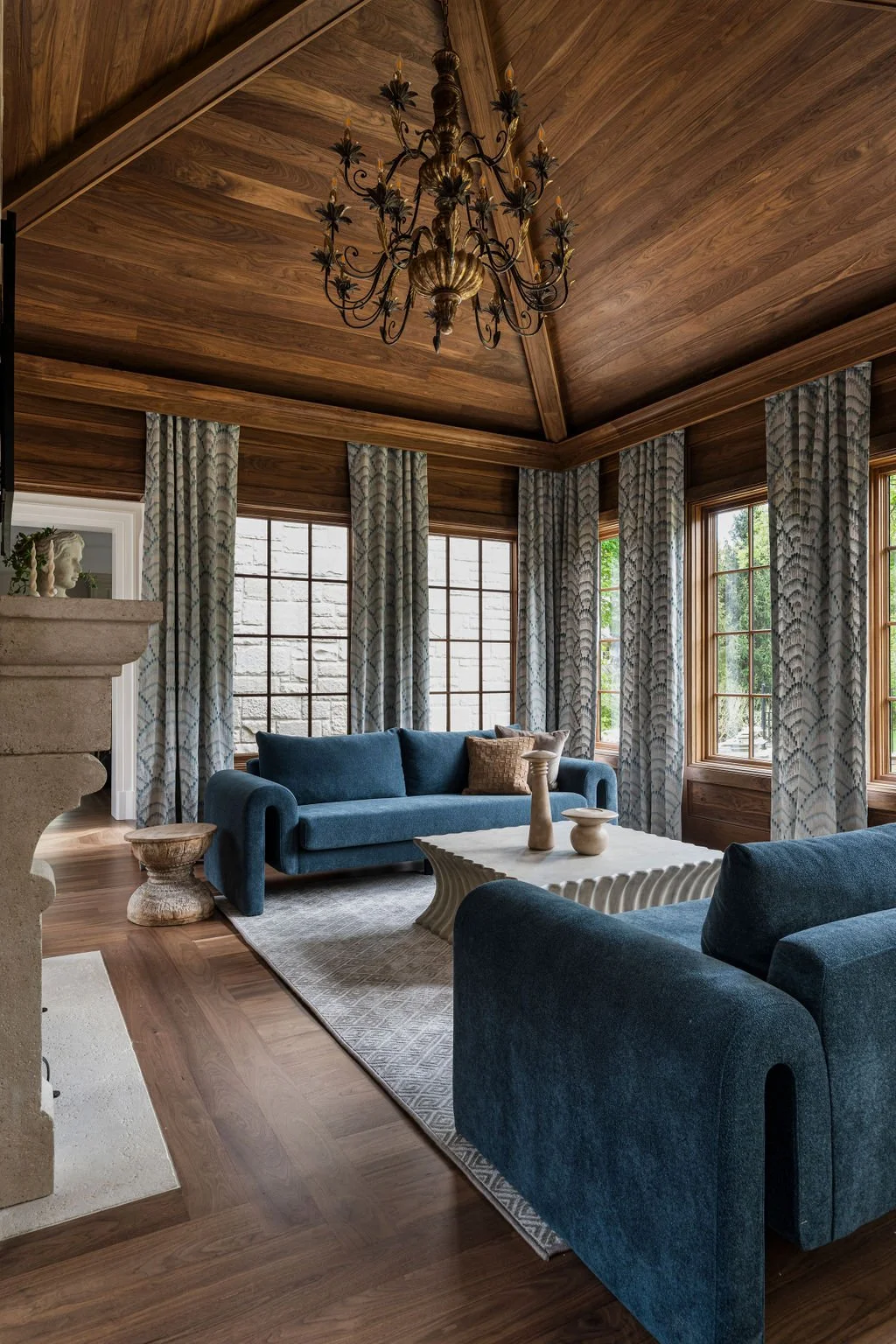
The Art of Invisibility: Redefining Estate and Pre-War Security in 2026
In 2026, UHNW homeowners prioritize invisible, intelligent security systems that protect physical and digital assets without compromising architectural beauty.
By RS MANNINO – Architect-Led Design Build
For the ultra-high-net-worth homeowner, the ultimate luxury isn't just security—it’s the complete absence of its visual footprint.
⸻
Introduction: The New Standard of Sanctuary
For decades, high-level residential security was defined by visibility: imposing gates, obvious camera surveillance, and fortified entry points. It was a deterrent based on intimidation.
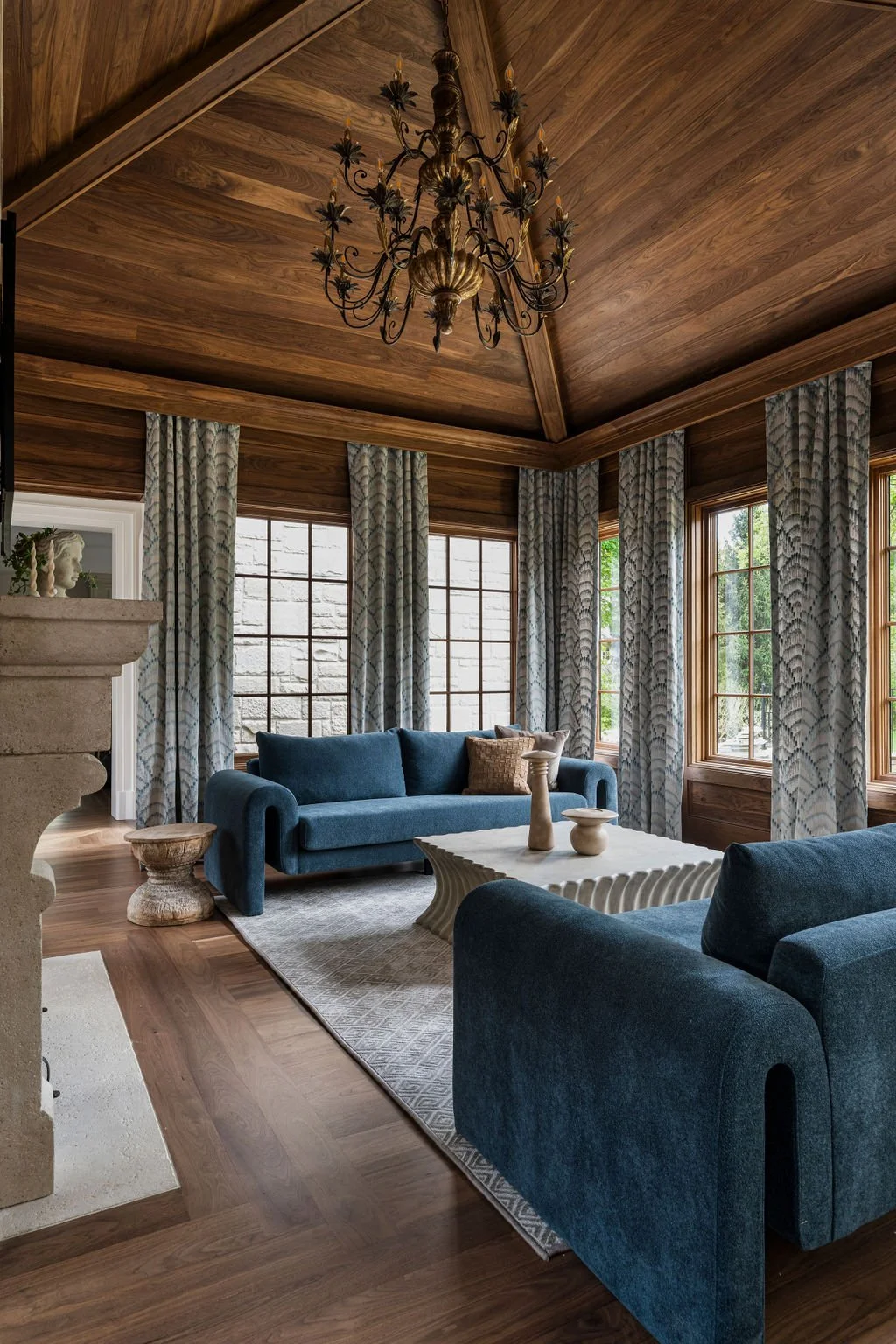
By 2026, the paradigm for Ultra-High-Net-Worth (UHNW) individuals has shifted entirely. True luxury today is the seamless convergence of safety and aesthetic purity. Our clients demand fortress-level protection that feels like an open, welcoming sanctuary. They want systems that are felt, not seen—technology that proactively manages risk without ever interrupting the architectural narrative of a historic Manhattan apartment or a sprawling New Jersey estate.
At RS Mannino, we believe that if you notice the security system, it has failed its design mandate.
⸻
The Evolution: From Hardware to Intelligence
The security landscape of the 2010s was dominated by obtrusive hardware. The security landscape of 2026 is dominated by artificial intelligence and miniaturization.
Modern protection is no longer reactive; it is predictive. We have moved beyond motion sensors that trip on a passing shadow. Today’s estate security utilizes behavioral AI that learns the patterns of a household—distinguishing staff, family, and regular deliveries from anomalies. It is a living system that adapts, ensuring that alarms only sound when a genuine threat is identified, eliminating the friction of false positives.
⸻
The Challenge of Heritage: Protecting Pre-War Manhattan
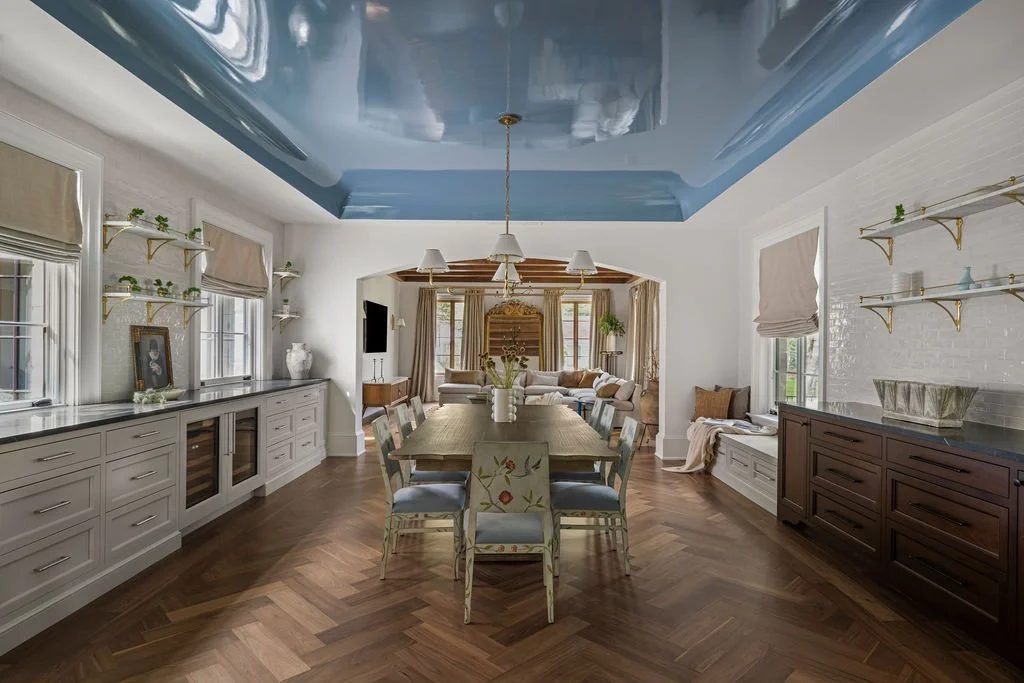
Securing a pre-war co-op on the Upper East Side or a loft in Tribeca presents unique architectural challenges. How do you introduce 2026 technology into spaces defined by 1920s plasterwork, irreplaceable molding, and strict board regulations?
The answer lies in symbiotic design.
Invisible Access: Chunky keypads are obsolete. In 2026, access control uses sophisticated, miniaturized biometrics—scanners hidden within custom millwork or flush-mounted into stone door surrounds—that recognize residents instantly while remaining virtually undetectable to guests.
Preservation-First Sensors: We utilize sensors so microscopic they can be recessed into historic window frames or concealed behind period-appropriate wall coverings, providing a digital shield without disturbing the analog beauty of the space.
Acoustic Intelligence: Advanced audio analytics can now detect sound anomalies—like breaking glass or forced entry—in specific zones of an apartment without requiring visible window sensors.
⸻
The Estate Perimeter: Layered, Not Fortified
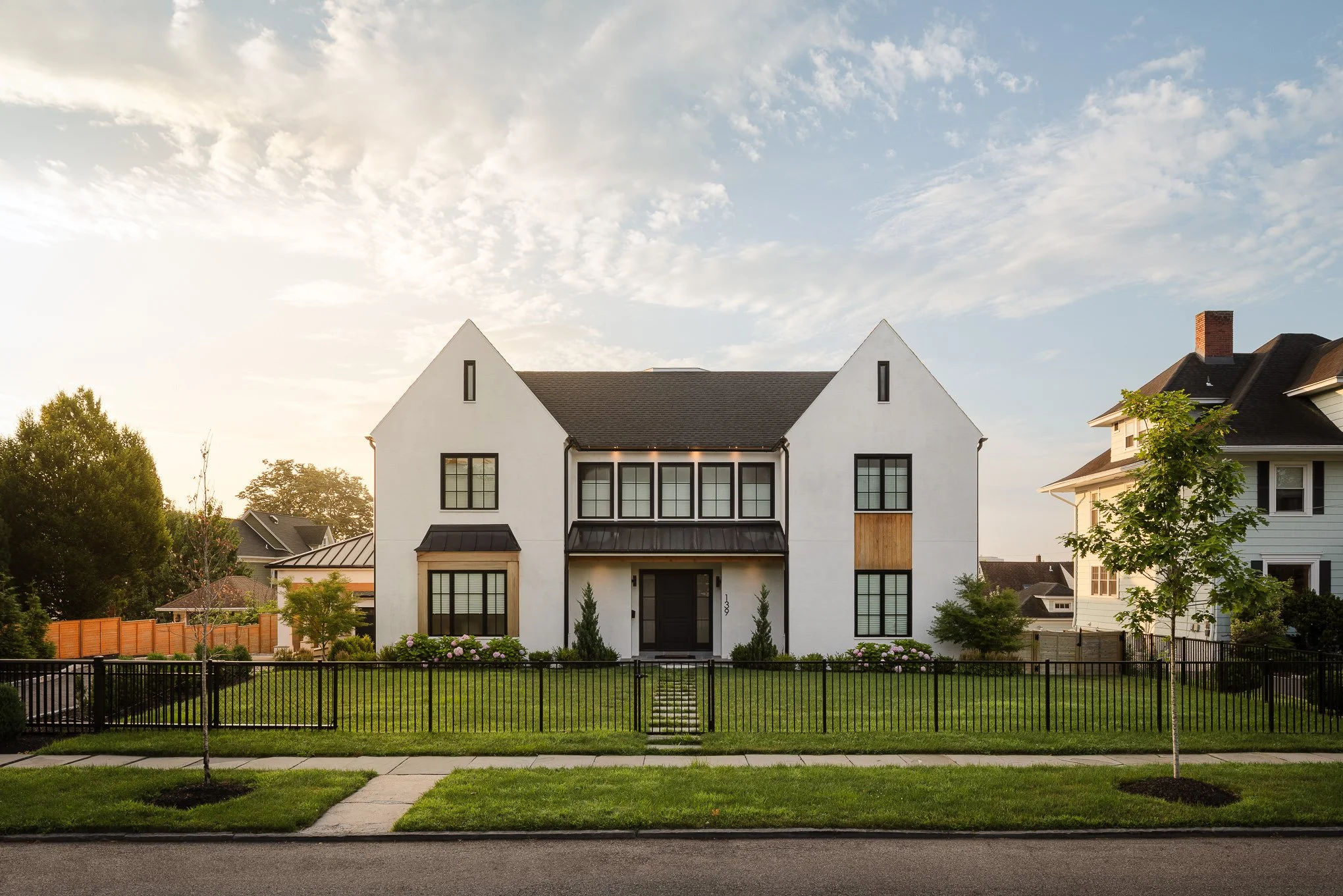
For our estate clients in Alpine or Franklin Lakes, the challenge is acreage. The goal is to track the perimeter without turning the property into a visible compound.
By 2026, the "fence" has become digital. We advise on layered approaches using thermal imaging and seismic ground sensors buried beneath landscaping. These systems classify ground vibrations—differentiating between a deer and a person—long before a visual confirmation is needed.
Drones, once a novelty, are now automated perimeter guardians housed in discrete charging stations, ready to deploy automatically to investigate anomalies detected by outer-layer sensors, providing real-time visual data to security teams without a human guard ever leaving the central post.
⸻
The Cyber-Physical Nexus
In 2026, physical security is inextricable from cybersecurity. A home cannot be safe if its network is vulnerable.
UHNW homes are hyper-connected ecosystems. The same system unlocking the front door is often integrated with lighting, climate, and audiovisual networks. "Invisible security" now means enterprise-grade network segmentation for residential properties, ensuring that an IoT device (like a smart refrigerator) cannot be used as a backdoor into critical security systems or personal data servers.
We are designing server rooms that rival small corporate data centers, securing the digital footprint just as rigorously as the physical doors.
⸻
The Architect-Led Advantage
Why discuss security on an architecture blog? Because true invisible security cannot be an add-on. It must be woven into the DNA of the home during the schematic design phase.
If a security integrator is brought in after the walls are closed, aesthetics will be compromised. As an architect-led design-build firm, RS Mannino orchestrates this integration from day one. We collaborate with top-tier security consultants before blueprints are finalized, ensuring conduits are hidden, server closets are properly ventilated, and camera sightlines are calculated to be discreet yet effective.
⸻
In 2026, security is the silent partner to luxury living. It is the deep breath taken when walking through the door, the assurance that your family and your legacy are protected by a system that respects the beauty of the home you’ve built. It is the ultimate art of invisibility.
⸻
Build With Clarity, Craft With Purpose
Every exceptional home begins with a clear foundation: vision aligned with reality.
At MANNINO, our integrated process transforms complexity into confidence — ensuring every detail, from structure to finish, reflects the architecture’s intent.
Ready to begin your Feasibility Study?
Contact MANNINO to start your journey toward a home worthy of its setting — crafted with integrity, precision, and permanence.
⸻
Photography: MANNINO Project Portfolio
Written by: Rosario S. Mannino, AIA, LEED AP
© 2025 MANNINO. All Rights Reserved.
The Beauty of Imperfection: Why Natural Stone Outlasts the Synthetic Standard
In a world of synthetic perfection, natural stone offers something more valuable: a story. Discover why authentic materials age with grace while man-made surfaces simply break.
By RS MANNINO – Architect-Led Design Build
In the world of high-end residential design, there is a quiet but significant distinction between a house that looks new and a home that feels timeless. While the marke3t is flooded4 with engineered "miracle" surfaces promising indestructible perfection, the discerning eye often returns to where it all began: the earth.
⸻
The Grace of the Patina
For an architect, the primary flaw of man-made materials is not their appearance on day one, but their trajectory thereafter. Engineered quartz or sintered stones are designed to be static. When they inevitably scratch, chip, or dull from heat, they simply look broken. There is no "fixing" a synthetic surface; its story ends the moment it loses its factory finish.
In contrast, natural stone - be it a deep-veined Calacatta marble or a moody, matte soapstone is a living material. It possesses the unique ability to age gracefully. Through years of dinner parties and morning coffees, natural stone develops a patina that tells the story of the home. This evolution is not a degradation; it is an enhancement of character that man-made materials can never replicate.
⸻
Mother Nature’s Narrative: Authenticity vs. Replication
Every slab of natural stone is a singular piece of history, millions of years in the making. When we select a stone for a project, we are choosing a specific architectural texture that cannot be found elsewhere.
Authenticity: There is an inherent soul in the irregular veining of natural materials that synthetic patterns, however high-resolution, fail to capture.
Depth: Natural stone has a luminosity and crystalline structure that reacts to light in a way that printed resins cannot.
Legacy: Using authentic stone aligns with the philosophy of designing for generations. It is a material that doesn't just survive time; it celebrates it.
⸻
Technical Realities: Durability and Maintenance
While man-made quartz is marketed as "maintenance-free," the reality of a luxury kitchen often favors the resilience of natural stone.
Heat Resistance: Natural stones like granite and quartzite are born of extreme geological heat and can withstand a hot pan directly on the surface. Synthetic resins in man-made stone can scorch or melt under the same conditions.
Repairability: A chip in a marble edge can be feathered and smoothed by a craftsman, becoming part of its history. A chip in a man-made surface often leaves a permanent, dull scar.
Environmental Impact: For the eco-conscious homeowner, natural stone is the "greener" choice. It is quarried directly from the earth, whereas man-made stones are factory-produced using chemical resins and pigments.
⸻
The Designer’s Verdict
In high-end design, we aren't just looking for surfaces that stay the same; we are looking for surfaces that become more beautiful the longer you live with them. Natural stone offers a sense of individuality—no two slabs are ever identical, making your home a true work of art.
⸻
Build With Clarity, Craft With Purpose
Every exceptional home begins with a clear foundation: vision aligned with reality.
At MANNINO, our integrated process transforms complexity into confidence — ensuring every detail, from structure to finish, reflects the architecture’s intent.
Ready to begin your Feasibility Study?
Contact MANNINO to start your journey toward a home worthy of its setting — crafted with integrity, precision, and permanence.
⸻
Photography: MANNINO Project Portfolio
Written by: Rosario S. Mannino, AIA, LEED AP
© 2025 MANNINO. All Rights Reserved.
The Custom Home Design Process Explained: From First Sketch to Move-In
Designing a custom home is a layered, collaborative process that unfolds over time. This guide walks through each phase of the custom home design journey—from the first architectural sketches through construction and final occupancy—offering clarity for homeowners planning a thoughtfully designed residence in New Jersey.
By RS MANNINO – Architect-Led Design Build
Designing and building a custom home is one of the most complex—and consequential—undertakings a homeowner can pursue. Unlike purchasing an existing property or working from a predefined plan, a custom home unfolds through a structured, multi-phase process that integrates design, technical coordination, regulatory approval, and construction execution.
For homeowners considering a custom residence in New Jersey, understanding this process in advance is essential. Many of the challenges associated with custom homes stem not from the work itself, but from unclear expectations about how the work unfolds, when decisions are made, and who is responsible for guiding them.
This article explains the custom home design process from beginning to end—from the first conceptual sketches through construction and final occupancy—offering clarity into what homeowners should expect at each stage and why an architect-led design-build approach often results in a more cohesive and predictable outcome.
⸻
Phase 1: Vision, Site, and Feasibility
Every successful custom home begins with alignment. Before architectural form is explored, the foundational parameters of the project must be clearly understood.
This initial phase typically includes:
Lifestyle goals and long-term use considerations
Site evaluation, including zoning, setbacks, FAR, easements, and topography
Preliminary budget discussions and feasibility analysis
Identification of municipal, environmental, or logistical constraints
In New Jersey, zoning ordinances and planning requirements vary significantly from town to town. Early understanding of these conditions helps prevent redesign, delays, and budget misalignment later in the process.
An architect-led team uses this phase to establish clarity before creativity—ensuring that scope, budget, and site realities are aligned before design begins in earnest.
⸻
Phase 2: Conceptual Design and Architectural Direction
With the project parameters defined, the process moves into conceptual design. This phase establishes the home’s overall architectural direction and spatial organization.
Conceptual design typically includes:
Massing studies that explore the building’s relationship to the site
Preliminary floor plan layouts focusing on adjacencies and circulation
Early discussions of architectural style, proportion, and precedent
Initial considerations of light, scale, and indoor–outdoor connection
Drawings at this stage are intentionally exploratory. They are meant to test ideas, not resolve details. Iteration is expected and encouraged, allowing the design to mature thoughtfully rather than prematurely locking decisions in place.
⸻
Phase 3: Design Development
(Defining Architecture, Interiors, and Materials)
Design development is the most consequential phase of the custom home design process. While conceptual design establishes direction, design development is where the home is fully defined—architecturally, spatially, and materially.
This phase moves beyond general layouts and begins to resolve how the home will actually function, feel, and endure over time.
Design development typically includes:
Refined floor plans with accurate room dimensions and circulation
Exterior elevations and building sections establishing proportion and scale
Window, door, and ceiling height coordination
Stair design, wall thicknesses, and spatial transitions
Structural coordination with engineers
Equally important, this phase is where architectural interiors and material strategies are established.
Rather than treating interior design as a separate or purely decorative exercise, an architect-led process integrates interior architecture directly into the building design. This includes:
Kitchen and bathroom layouts coordinated with structure and plumbing
Built-in millwork, cabinetry, and storage planning
Fireplace locations, wall paneling, and interior detailing
Preliminary material selections for flooring, stone, tile, and woodwork
Alignment of interior finishes with architectural character and longevity
By defining these elements during design development, interior proportions are resolved early, construction drawings become more accurate, and the risk of late-stage changes is significantly reduced.
This approach also allows material decisions to be evaluated holistically—considering durability, maintenance, budget impact, and how materials interact across the home rather than room by room in isolation.
By the conclusion of design development, the home’s architectural identity, interior framework, and primary material palette should be clearly established. While certain finish selections may continue to evolve, the project’s fundamental design decisions are intentional, coordinated, and buildable.
⸻
Phase 4: Construction Documentation
Construction documentation translates design intent into a precise, technical roadmap for construction.
At this stage, architectural interiors and primary material selections have already been thoughtfully integrated into the design, allowing the documentation process to focus on execution rather than discovery.
Construction documents typically include:
Fully dimensioned architectural plans, elevations, and sections
Detailed wall assemblies, stair details, and millwork drawings
Coordination with structural, civil, and MEP consultants
Code compliance and energy documentation
Thorough documentation reduces ambiguity, limits change orders, and protects both schedule and budget. Projects that are under-documented often encounter avoidable delays and compromises to design intent.
⸻
Phase 5: Permitting and Local Approvals
In New Jersey, permitting is rarely a simple administrative step. Depending on the municipality, projects may require zoning approvals, planning board review, or variance applications in addition to building permits.
This phase may include:
Zoning analysis and submissions
Planning or zoning board hearings
Building permit applications and plan review
Coordination with local officials and inspectors
An experienced, architect-led team anticipates jurisdictional requirements early and prepares documentation accordingly, reducing uncertainty and delays during the approval process.
⸻
Phase 6: Construction and Project Execution
Construction is where years of planning are translated into physical form.
This phase typically includes:
Site work and foundations
Framing and structural systems
Building enclosure (roofing, windows, exterior cladding)
Interior rough-ins, finishes, and millwork
Final detailing and trim
When architects remain actively involved during construction, design intent is protected and unforeseen conditions are addressed thoughtfully rather than reactively.
An architect-led design-build structure provides continuity through this phase. Design decisions are not handed off to a separate entity; they are carried forward by the same team that developed them, reducing friction and miscommunication.
⸻
Phase 7: Final Completion and Move-In
As construction nears completion, attention shifts to refinement and transition.
This phase typically includes:
Punch list reviews and corrective work
Final inspections and Certificate of Occupancy
Client walkthroughs and systems orientation
Documentation handoff and closeout
Move-in is not simply an endpoint, but a handoff—from project to home—supported by thoughtful completion and long-term consideration.
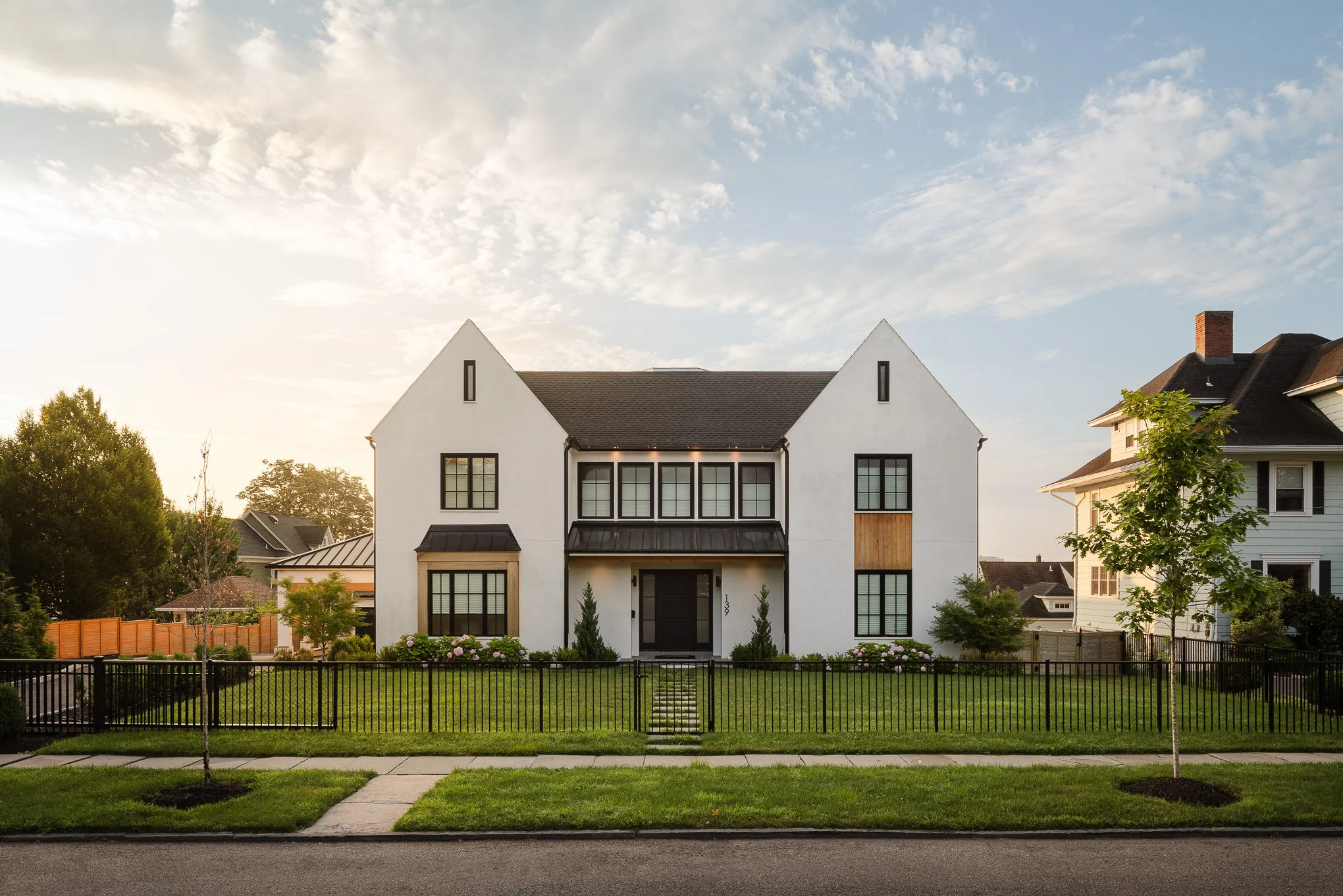
⸻
Why Architect-Led Design-Build Matters
Throughout the custom home design process, clarity and accountability are critical. An architect-led design-build approach centralizes responsibility, aligning design vision, technical coordination, and construction execution under one leadership structure.
For homeowners, this often results in:
Clearer communication and decision-making
Fewer conflicts between design intent and construction realities
Greater budget and schedule predictability
A more cohesive and enduring home
Custom homes are not commodities. They are complex systems shaped by hundreds of interconnected decisions. The architect’s role extends beyond drawings—to guiding those decisions with rigor, experience, and long-term perspective.
⸻
Understanding the Process Is the First Step
A well-executed custom home does not rely on improvisation. It is the result of a deliberate, structured process—one that balances creativity with discipline and vision with practicality.
For homeowners considering a custom residence in New Jersey, understanding the design process is the first step toward making informed, confident decisions. With the right team and a clear framework, the journey from first sketch to move-in can be as rewarding as the home itself.
⸻
Build With Clarity, Craft With Purpose
Every exceptional home begins with a clear foundation: vision aligned with reality.
At MANNINO, our integrated process transforms complexity into confidence — ensuring every detail, from structure to finish, reflects the architecture’s intent.
Ready to begin your Feasibility Study?
Contact MANNINO to start your journey toward a home worthy of its setting — crafted with integrity, precision, and permanence.
⸻
Photography: MANNINO Project Portfolio
Written by: Rosario S. Mannino, AIA, LEED AP
© 2025 MANNINO. All Rights Reserved.
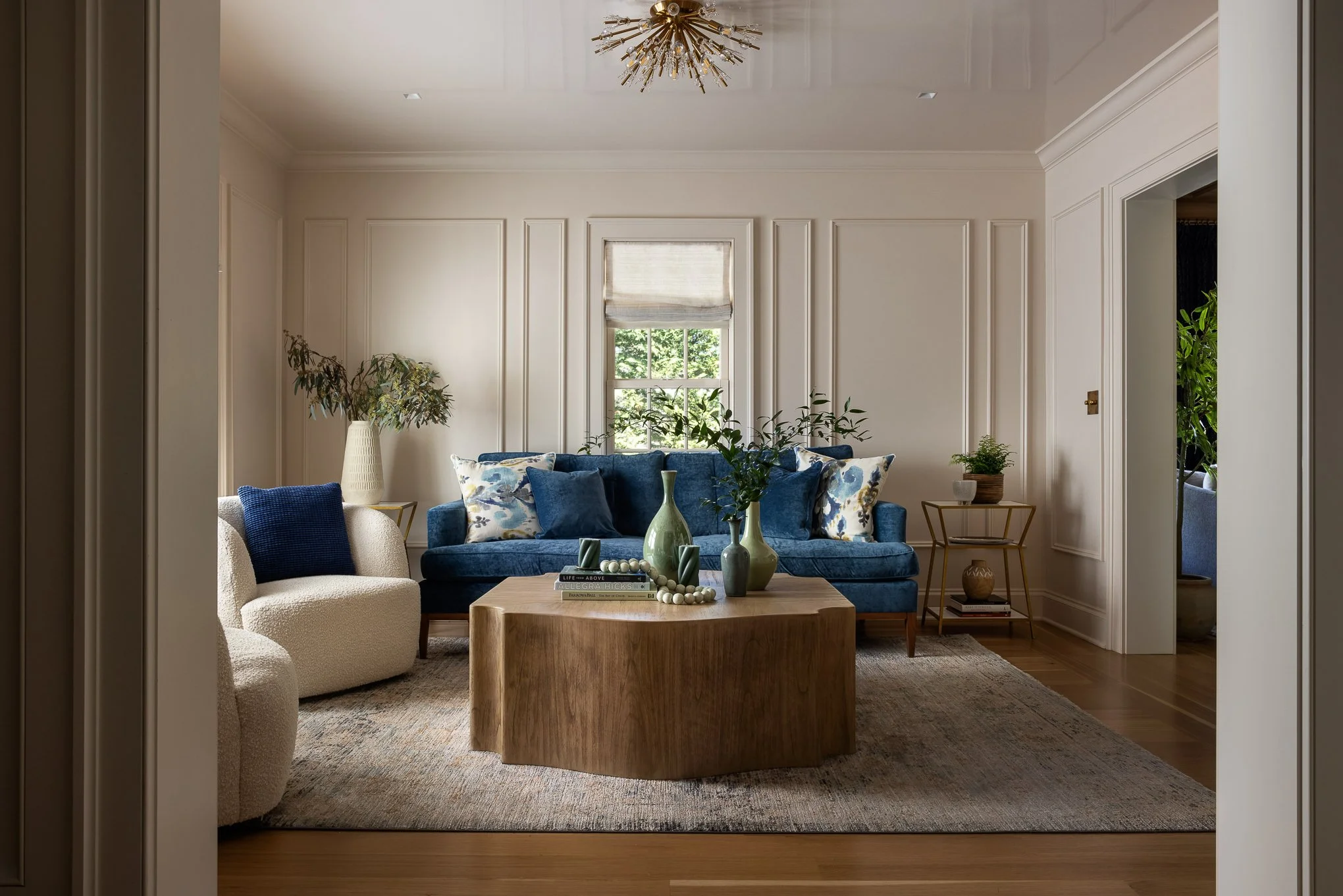
Renovating a Prewar Manhattan Apartment: Preserving Character While Rebuilding Luxury
Prewar Manhattan apartments possess a romance that newer buildings simply cannot replicate—the gracious proportions, the sculpted moldings, the patinated hardwood floors worn by generations. But transforming these storied spaces into contemporary homes requires an architect’s sensitivity: honoring the craftsmanship of the past while quietly integrating the comfort, performance, and luxury expected today. Here is how MANNINO approaches the delicate balance between preservation and reinvention.
By RS MANNINO – Architect-Led Design Build
The Enduring Allure of Prewar Manhattan Living
There is a particular magic to the prewar apartment. Step into a 1920s Park Avenue classic-six or a 1930s Art Deco residence in the West Village, and the architecture speaks immediately—high ceilings, thick plaster walls, hand-laid herringbone floors, and casings carved with a level of detail rarely seen in contemporary construction.
For many New Yorkers, these homes represent a link to the city’s architectural heritage. But they also represent an opportunity: the chance to reinterpret storied interiors through the lens of modern luxury.
Renovating a prewar apartment is not simply a construction exercise. It is an act of stewardship.
At MANNINO, we approach these projects with reverence for the original character—and a belief that thoughtful architecture can elevate the home far beyond its original intent.
“A prewar renovation succeeds when the soul of the home remains intact, even as every surface and system is renewed.”
⸻
Understanding the DNA of Prewar Architecture
No two prewar buildings are identical, yet certain architectural signatures reappear across the city’s finest co-ops and condo conversions. Before drawing a single line, we study the apartment’s inherent language—its proportions, rhythms, materials, and craftsmanship—so the design that follows feels both respectful and inevitable.
1. Proportion & Scale
Prewar rooms typically have ceiling heights ranging from 9 to 11 feet, often enhanced by tall windows and deep casings. These generous dimensions frame elegant interior architecture—and they guide decisions about millwork, paneling, lighting, and furniture layout.
2. Plasterwork & Moldings
Where many apartments today use thin drywall, prewar homes were built with thick plaster walls and expressive moldings. Rosettes, cornices, picture rails, and coved ceilings define these interiors. Restoring or reinterpreting this detail is central to preserving the home’s character.
3. Flooring Patterns
Hand-laid parquet or herringbone floors are common, often made from old-growth oak with a patina impossible to replicate. Clients frequently ask whether to restore or replace. Our typical approach: restore where possible, match where necessary, and introduce transitions that feel historically plausible.
4. Steel & Wood Windows
Original steel casement windows—even when replaced—often inspire our detailing, whether in new millwork, interior glazing, or lighting.
A prewar renovation begins with observation, not intervention.
⸻
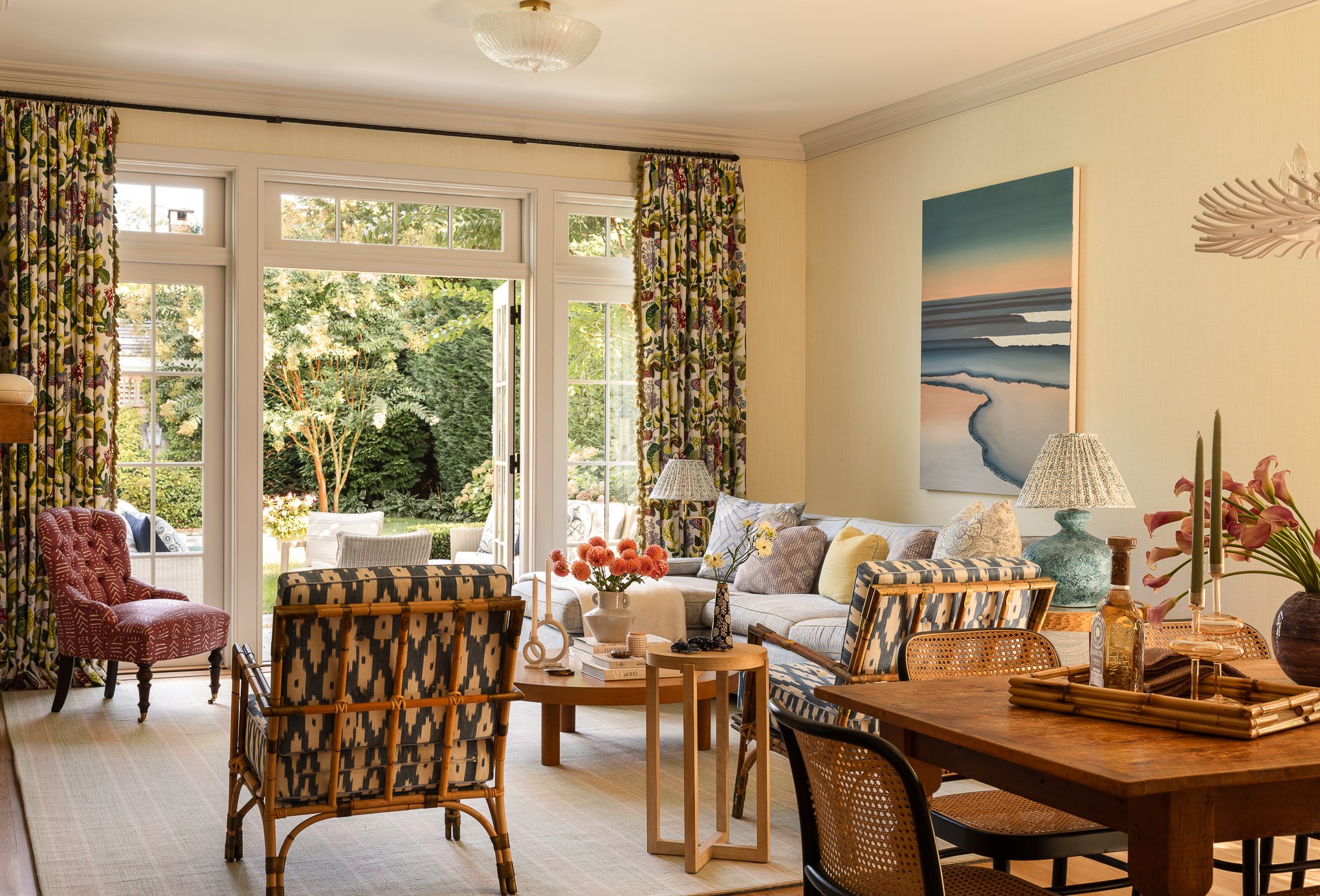
Respectful Reinvention: How Modern Living Fits Within Historic Bones
While the architectural shell may remain timeless, modern life places new demands on kitchens, bathrooms, storage, lighting, and technology. The question becomes: How do we integrate contemporary luxury without disrupting the apartment’s inherent character?
1. Reimagining the Kitchen as a Living Space
Many prewar layouts isolate the kitchen deep within the apartment—originally a service zone. Today’s families desire open, light-filled kitchens that serve as extensions of the living space.
Where structure and board rules allow, we explore:
Opening kitchen walls while preserving original moldings
Integrating custom millwork that references prewar paneling
Using sculptural stone and elevated hardware that complement rather than compete with historic detail
A beautifully redesigned kitchen becomes a bridge between eras.
2. Modern Bathroom Suites with Classic Underpinnings
Historic bathrooms often contain charming—but outdated—details: tiny tubs, aging plumbing, and impractical layouts. We re-envision these spaces with:
Heated stone floors
Marble slabs selected for veining that feels timeless
Classic wainscoting rendered in stone or millwork
High-performance fixtures designed with traditional silhouettes
The result is a sanctuary that embodies luxury without feeling anachronistic.
3. Integrating Technology Invisibly
Lighting control, home automation, radiant heat, and mechanical upgrades must be inserted with precision. In prewar work, we strive for invisible integration:
Recessed lighting treated sparingly, using millwork or cove lighting instead
Concealed AV storage integrated into paneling
Mechanical routing planned to avoid interrupting historic beams
You feel the calmness and comfort of modern technology—but never see the mechanics behind it.
“The architecture should feel as if it has always been there—even when the infrastructure is entirely new.”
⸻
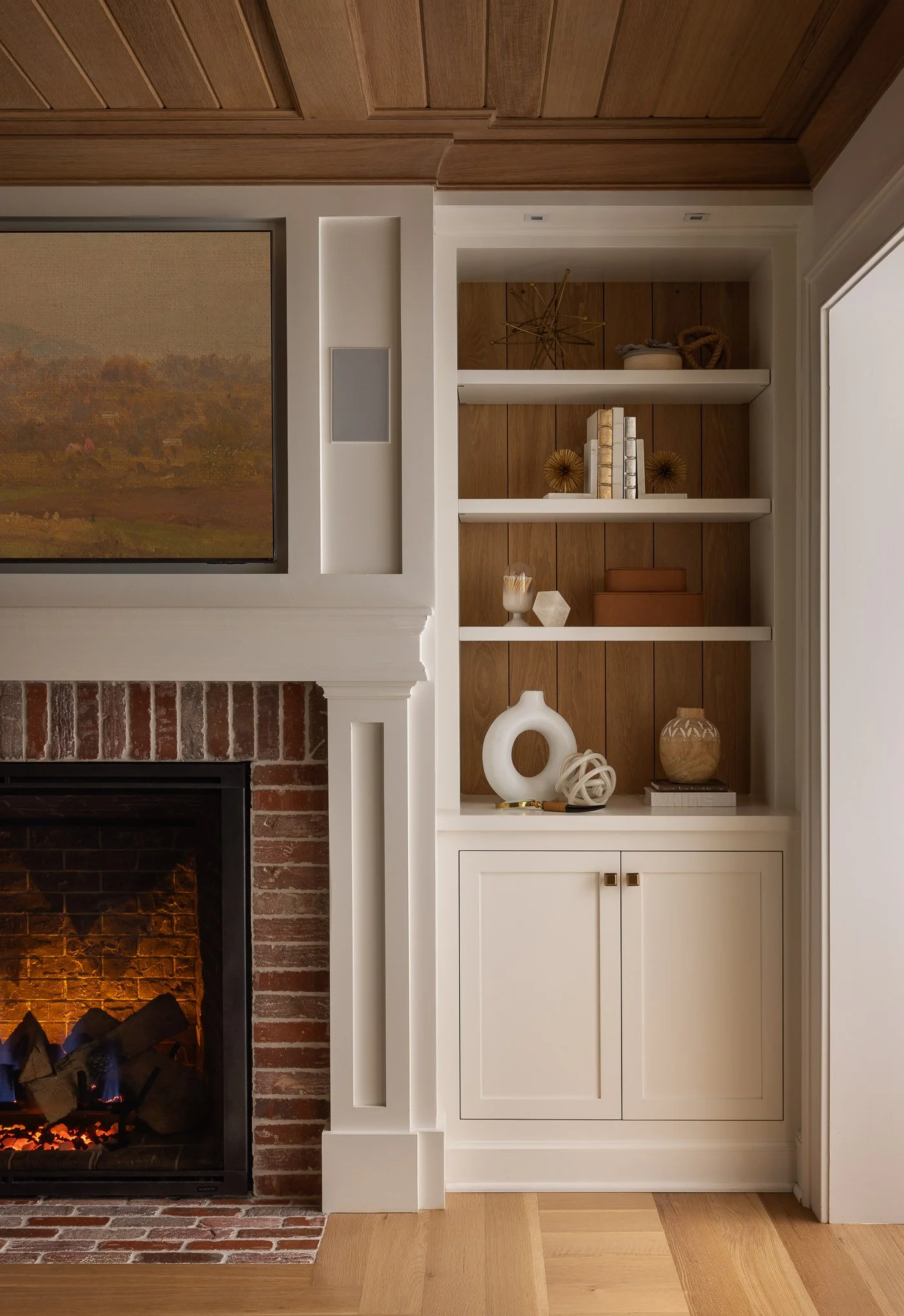
Preservation Through Craft: Why Millwork Matters
Craftsmanship is the soul of a prewar apartment, and nowhere is this more evident than in the millwork.
At MANNINO, our millwork team plays an integral role in restoring and elevating these interiors. The level of customization required is far beyond typical cabinetry—it is architectural millwork, built as part of the home’s language.
Our millwork approach includes:
Hand-matched veneers for bookcases, libraries, and wall paneling
Custom knife profiles to replicate or reinterpret original moldings
Solid wood door construction with period-appropriate rails and stiles
Built-in storage designed to appear original to the apartment
When done well, new millwork “disappears”—it feels like it has always belonged. This is the essence of respectful renovation.
⸻
Correcting the Flaws of Time Without Erasing the Past
Prewar apartments often come with complications: sloping floors, sagging ceilings, outdated electrical systems, and plumbing stacks constrained by building rules. Addressing these challenges requires both technical expertise and aesthetic sensitivity.
Common structural and systems improvements include:
Leveling floors while preserving historic patterns
Reinforcing sagging joists without compromising ceiling height
Updating 80-year-old electrical for today’s load requirements
Soundproofing between units using contemporary acoustic assemblies
Replacing aging plumbing risers where allowed
Our guiding principle: correct the flaws, preserve the fabric.
The result is a home that feels both beautifully aged and impeccably modern.
⸻
Reconfiguring the Layout for Modern Life
One of the most transformative aspects of prewar renovation is the reorganization of space. Original layouts often include small staff rooms, long corridors, compartmentalized kitchens, and separated formal rooms.
Today’s luxury clients seek:
Larger primary suites
Open or semi-open kitchens
Expanded living rooms
Home offices or studies
Better flow for families and entertaining
The art lies in reconfiguration without disruption.
For example:
Removing a non-structural wall between the kitchen and dining room but retaining a historic arch
Converting a staff room into a walk-in closet within a new primary suite
Opening a corridor by introducing millwork portals that echo the prewar casings
Every new gesture must converse with the old.
⸻
The Role of the Co-op or Condo Board: Preserving Building Integrity
Prewar buildings rely on strict alteration agreements to protect their historic structures. These guidelines can include limitations on:
Plumbing locations (no wet-over-dry)
Structural modifications
Noise mitigation
Work hours
Electrical load balancing
HVAC installations
Rather than seeing these restrictions as obstacles, we treat them as parameters that help shape a more thoughtful design. Much of our work involves:
Preparing board submission packets
Coordinating architecturals, MEP plans, and structural drawings
Working with building supers, engineers, and reviewers
Navigating DOB filings
A successful renovation respects both the home and the building that surrounds it.
⸻
Elevating a Classic: The MANNINO Philosophy
When renovating a prewar Manhattan apartment, the goal is not to recreate the past; it is to reinterpret it.
Our work draws from the craftsmanship and sophistication of early 20th-century architecture, but we combine it with the clarity, functionality, and serenity of contemporary design.
The result is a home where:
Historic detail enhances daily life
Modern luxury feels intuitive and understated
Every room carries a sense of permanence and intention
The apartment’s legacy continues into the next century
“A prewar home should feel both deeply rooted and beautifully renewed—a living dialogue between eras.”
⸻
Conclusion: Creating Homes That Honor the Past and Shape the Future
Renovating a prewar Manhattan apartment is a rare privilege. These homes offer a level of architectural integrity nearly impossible to replicate today. But they also require a level of stewardship—of craft, of proportion, of history.
At MANNINO, we approach each project as both architects and builders, ensuring every detail is orchestrated with precision from concept through construction. We preserve the essence of the apartment while rebuilding the luxury within it.
For clients who value both heritage and innovation, prewar renovations offer the possibility of a home that is timeless, personal, and exquisitely crafted.
⸻
Build With Clarity, Craft With Purpose
Every exceptional home begins with a clear foundation: vision aligned with reality.
At MANNINO, our integrated process transforms complexity into confidence — ensuring every detail, from structure to finish, reflects the architecture’s intent.
Ready to begin your Feasibility Study?
Contact MANNINO to start your journey toward a home worthy of its setting — crafted with integrity, precision, and permanence.
⸻
Photography: MANNINO Project Portfolio
Written by: Rosario S. Mannino, AIA, LEED AP
© 2025 MANNINO. All Rights Reserved.
Historic Elegance, Modern Performance: Reimagining Prewar Apartments in the Upper East Side and West Village
Prewar apartments in the Upper East Side and West Village offer timeless architecture, but modern living requires thoughtful updates. This guide explores how MANNINO blends historic elegance with contemporary performance through improved layouts, custom millwork, integrated systems, and authentic materials—resulting in homes that honor their past while functioning beautifully for today.
By RS MANNINO – Architect-Led Design Build
For more than a century, New York’s prewar apartment buildings have shaped the architectural identity of the Upper East Side and the West Village. These homes—defined by generous ceiling heights, solid plaster walls, finely carved moldings, and beautifully proportioned rooms—carry an inherent sense of permanence. To live in one of these apartments is to experience a quiet dialogue with history.
Yet as timeless as these spaces are, they were built for a different era. Prewar apartments rarely accommodate the conveniences, mechanical systems, or spatial expectations of contemporary living. Modern families desire openness, functional kitchens, private primary suites, integrated technology, and refined comfort—all without erasing the patina and character that make these homes so cherished.
At MANNINO, we view prewar renovations as acts of stewardship. Our aim is to preserve the architectural essence of these homes while elevating them to a level of performance, efficiency, and beauty that aligns with 21st-century lifestyles. Renovating a prewar apartment is not merely about modernization; it is about extending the life of an architectural legacy while ensuring it serves its owners for generations to come.
⸻
The Enduring Appeal of Prewar Architecture
Prewar apartments have a gravitas that new construction rarely replicates. Their appeal begins with craft—materials and methods chosen at a time when durability and artistry defined residential building.
Architectural Qualities That Set Prewar Homes Apart
Proportion: Rooms organized by classical geometry, promoting balance and calm.
Materiality: Plaster, oak, solid wood, brass—substantial and honest.
Sound and Structure: Masonry partitions and concrete slabs that create a quieter, more solid environment.
Detail: Picture rails, archways, coved ceilings, original hardware, and beautifully detailed casings.
These attributes anchor the architectural character of the apartment. They become the framework upon which thoughtful renovations are built.
⸻
Reworking the Layout: Respecting the Past While Improving Function
Prewar plans were conceived around formal entertaining and servant circulation. Today, homeowners prioritize openness, light, efficiency, and flexibility. The goal is not to homogenize the apartment, but to reconsider its purpose while preserving its hierarchy.
Transforming the Kitchen
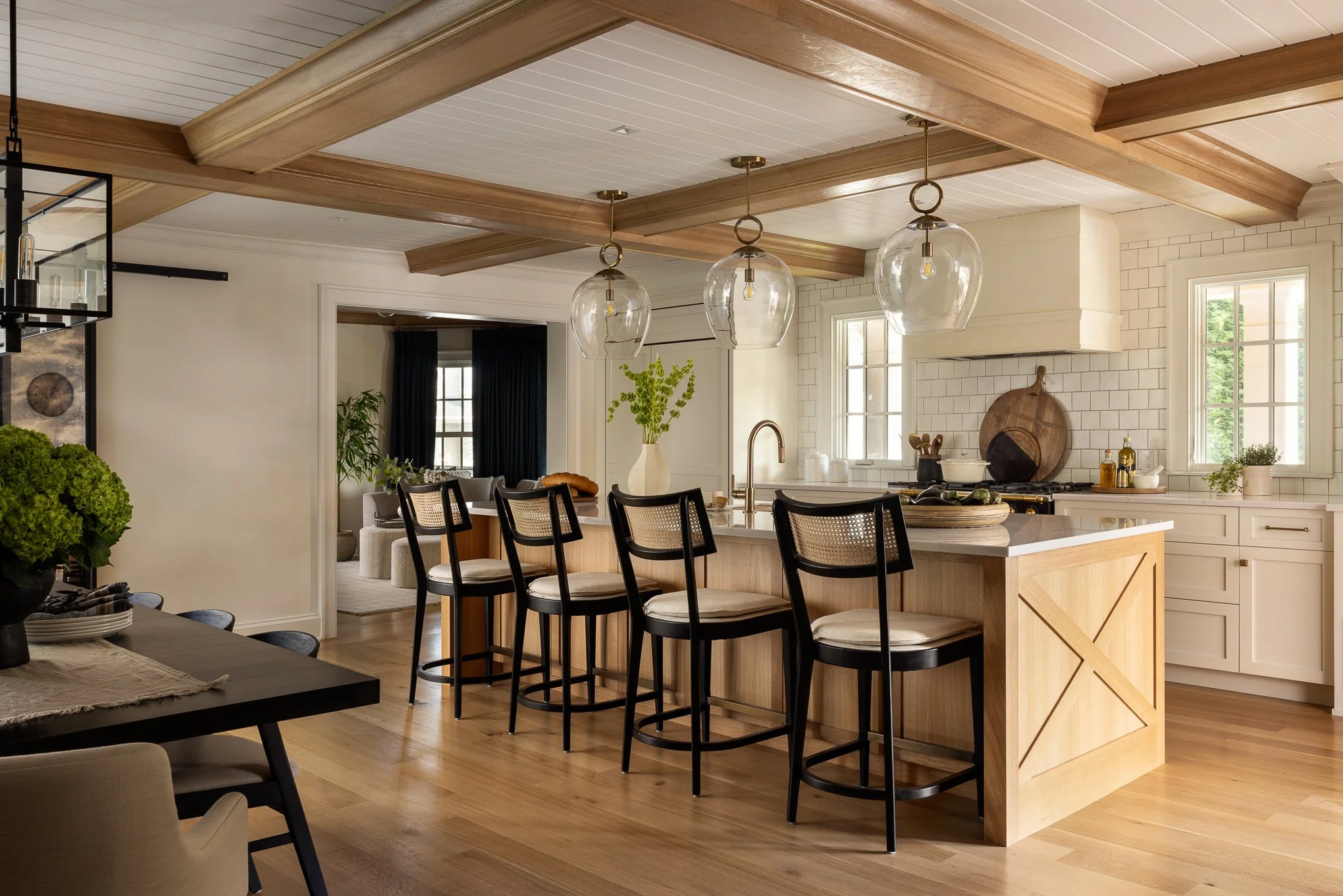
The prewar kitchen was typically compact and isolated. Modern renovations often involve:
Creating visual or physical connections between the kitchen and dining room.
Borrowing light to make the kitchen feel more ambitious.
Introducing a breakfast room or pantry that reinforces the original architectural rhythm.
Instead of erasing walls entirely, we use molded portals, cased openings, or millwork thresholds—subtle transitions that allow spaces to flow but not blend indiscriminately.
Creating a Proper Primary Suite
Many prewar bedrooms lack ensuite baths or storage. A thoughtful redesign might involve:
Combining adjacent bedrooms
Relocating closets to improve circulation
Designing ensuite baths that feel like contemporary sanctuaries while respecting classical proportion
Reclaiming Forgotten Corners
Staff rooms, oversized hallways, and underutilized utility spaces often hold the greatest design opportunities:
Home offices
Reading nooks
Laundry rooms
Wine storage
Secondary pantries
Every square foot should feel intentional and architecturally aligned.
Millwork as a Unifying Architectural Language
Millwork is where prewar renovations often find their soul. It has the power to unify old and new, restore missing details, and create a sense of cohesiveness.
Restoring Original Profiles
Many prewar apartments have seen decades of renovations that diluted or distorted original details. Reproducing:
Casing profiles
Baseboards
Picture rails
Crown moldings
Paneling
…allows the home to regain its architectural identity.
Modern Millwork, Quietly Integrated
Prewar apartments can achieve new levels of functionality when millwork is used with intention:
Built-in living room storage
Paneled appliance walls
Custom radiator enclosures
Library walls in walnut or oak
Murphy beds designed as architectural elements
Millwork should feel as though it could have always existed in the home—timeless, restrained, and proportionally correct.
⸻
Introducing Modern Systems Without Visual Disruption
The greatest technical challenge of prewar renovation is integrating modern mechanical systems. These buildings were never designed for central air, high-capacity lighting, or modern plumbing.
HVAC Integration
Successful HVAC design requires:
Slim-profile ductwork
Minimal, proportionally sensitive soffits
Concealed returns integrated into millwork
Thoughtful coordination with building limitations
We design systems that disappear visually, preserving ceiling heights and architectural purity.
Lighting
Prewar apartments benefit from layered lighting:
Picture lighting for art
Cove lighting to soften ceilings
Recessed fixtures placed thoughtfully, never in grids
Task lighting integrated into millwork
This enhances the architecture rather than flattening it.
Acoustics and Waterproofing
These upgrades, though invisible, drastically improve quality of life:
Acoustic underlayments
Floating floors
Bathroom waterproofing systems
Sound-isolating wall assemblies
These solutions bring prewar buildings up to modern standards of comfort without compromising their aesthetic integrity.
⸻
Materiality: A Dialogue Between Past and Present
Material selection is central to maintaining architectural authenticity.
Stone
Timeless stones—marbles, limestones, soapstones—honor classical sensibilities while offering durability.
Wood
We frequently use:
Restored or new herringbone floors
Quartersawn oak
Hand-selected walnut paneling
Plaster
Plaster brings depth, texture, and a handmade quality unmatched by drywall.
Metal
Unlacquered brass or steel-framed glass partitions introduce quiet contemporary moments without overwhelming the historic language of the apartment.
Materiality should feel both grounded and serene—an elevated palette that supports the architecture rather than competing with it.
⸻
Technology: Seamless and Invisible
Prewar apartments can embrace modern convenience while maintaining historical discretion.
Examples of Thoughtful Integration
WiFi access points hidden within millwork
Motorized shades recessed into ceiling pockets
Invisible speakers behind plaster
Televisions concealed in millwork or behind artwork
Centralized AV systems housed out of view
Technology should never announce itself; it should simply work elegantly in the background.
⸻
Why Architect-Led Design-Build Matters in Prewar Renovations
Prewar buildings come with layers of complexity—structural, regulatory, historical, and logistical. Architect-led design-build ensures continuity and accountability throughout the entire process.
Advantages of This Approach
Full control of design intent
Thorough coordination between architecture, millwork, and construction
Detailed management of co-op and landmark requirements
Predictable timelines and fewer surprises
Complete protection of architectural integrity
Design-build is not merely a project delivery method; it is a stewardship model that ensures every decision supports the long-term value of the home.
⸻
A Home That Honors Its History While Living for Today
A prewar apartment carries stories—architectural, cultural, and personal. Renovating these homes is a privilege and a responsibility. When approached with thoughtfulness, restraint, and technical mastery, these spaces become something rare: homes that are unmistakably historic, yet fully aligned with the demands of modern life.
The result is not a contradiction but a harmony—historic elegance shaped to meet modern performance, ready to be lived in, cherished, and passed on.
⸻
Build With Clarity, Craft With Purpose
Every exceptional home begins with a clear foundation: vision aligned with reality.
At MANNINO, our integrated process transforms complexity into confidence — ensuring every detail, from structure to finish, reflects the architecture’s intent.
Ready to begin your Feasibility Study?
Contact MANNINO to start your journey toward a home worthy of its setting — crafted with integrity, precision, and permanence.
⸻
Photography: MANNINO Project Portfolio
Written by: Rosario S. Mannino, AIA, LEED AP
© 2025 MANNINO. All Rights Reserved.
The Art of the Manhattan Gut Renovation: What It Really Takes to Transform a Prewar Apartment
Prewar apartments carry a timeless elegance—but transforming them for modern living requires expertise, sensitivity, and a deep understanding of New York’s architectural fabric. This guide explores the full process of a Manhattan gut renovation, from navigating co-op boards to integrating millwork, materials, infrastructure, and design into one cohesive vision.
By RS MANNINO – Architect-Led Design Build
There is an undeniable romance to the prewar apartment. The quiet weight of plaster walls, the gracious hierarchy of rooms, the crisp shadow lines of original casings, and the craftsmanship embedded in the smallest details—these spaces carry an elegance that has shaped the architectural vocabulary of New York for more than a century. Yet, beneath their charm lies an infrastructure built for a very different era.
Today’s families desire light, comfort, technology, and flowing spaces, and the process of transforming a prewar apartment into a modern luxury residence is nothing short of an architectural art form.
At MANNINO, we approach each prewar renovation as a dialogue between past and present—one that requires meticulous planning, deep technical expertise, and an integrated architect-led design-build team capable of controlling every detail from concept to millwork installation.
This guide explores what truly goes into a Manhattan gut renovation—and why a holistic, detail-driven approach is essential to achieving an exceptional outcome.
⸻
1. Understanding the Structure: Prewar Bones and Hidden Realities
One of the defining qualities of prewar apartments is their construction. Thick masonry walls, concrete slab floors, and structural partitions create a sense of permanence and acoustical stability unmatched in modern buildings. But these elements also present constraints—and opportunities—when redesigning a space.
Load-Bearing Walls vs. Partitions
Not every wall can move. Many prewar buildings rely on structural demising walls or internal shear walls that cannot be altered without engineering and building approval.
Chase Walls, Wet Stacks & Risers
Every building has its own logic—one that must be understood before drawing a single line. Plumbing stacks, steam risers, and electrical conduits often run behind plaster walls. These dictate where kitchens and bathrooms can relocate and which ceilings can be opened.
As-Built Reality vs. Original Plans
Prewar apartments often hold layers of previous renovations. A laser scan and exploratory demolition are essential early steps to uncover hidden conditions before committing to new layouts.
⸻
2. Co-ops, Boards, and the Architectural Review Process
A Manhattan renovation is never just about design—it is about governance. Every building, from the Upper East Side’s classic sixes—prewar apartments with a formal layout of two bedrooms, a dining room, living room, kitchen, and staff room—to the West Village’s loft conversions, has its own rules, approval process, and cultural expectations.
The Architect’s Role in Board Approvals
A seasoned architect anticipates board concerns—acoustics, waterproofing, structural changes, and neighbor impact—and presents drawings strategically to keep approvals predictable.
Working Within Building Rules
Many co-ops regulate:
Bathroom relocations
Gas vs. electric appliances
AC installation
Workday hours
Elevator use for materials
Knowing where flexibility exists is essential to a feasible design.
Landmark Review When Applicable
Changes visible from the exterior (windows, terraces, rooftop equipment) require LPC review. Handled properly, the process strengthens the architectural integrity of the project.
⸻
3. Designing for Modern Living: Light, Flow, and Function
A gut renovation allows prewar proportions to be reinterpreted for contemporary life. This does not mean erasing history—it means editing with intention.
Opening Rooms Without Losing Character
Where possible, load-bearing partitions can be replaced with steel supports to improve flow. But restraint matters; the beauty of prewar homes lies in their subtle procession of spaces.
Modern Kitchens with Traditional Bones
Today’s kitchens serve as both functional workspaces and architectural features:
Custom millwork
Paneled appliances
Large stone islands
Professional ranges
Integrated lighting and storage
Ventilation solutions in older buildings require creativity and discretion.
Bathrooms as Private Sanctuaries
Heated floors, curbless showers, steam systems, and integrated vanities must be coordinated with existing building infrastructure.
Managing Ceiling Heights
Routing HVAC, sprinklers, and lighting within prewar joist layouts requires careful planning to preserve generous ceiling heights.
⸻
4. The Quiet Infrastructure: What You Never See But Always Feel
A gut renovation rebuilds the invisible systems of the home—systems that define comfort and longevity.
Electrical Upgrades
New wiring, panels, and dedicated appliance circuits ensure safety and performance.
Acoustic Control
Silence is a form of luxury in Manhattan. We integrate:
Sound-attenuating wall assemblies
Acoustic underlayment
Insulated plumbing lines
Strategic partition design
HVAC & Comfort Systems
Climate control may include:
High-efficiency heat pumps
Concealed mini-split systems
Linear diffusers
Multi-zone thermostats
Humidity control
These require collaboration with building engineering teams.
⸻
5. Millwork as Architecture: The Soul of a Renovated Home
Millwork is where architecture becomes tactile. It gives a home its character through proportion, detail, and craftsmanship.
At MANNINO, our integrated millwork division ensures that every cabinet, panel, and built-in element is part of the architectural narrative from day one.
Signature Millwork Moments
Paneled entry foyers
Dressing suites
Oak or walnut libraries
Fluted niches
Stone-topped sideboards
Hidden doors within wall paneling
Millwork is not decoration—it is architecture expressed through craft.
⸻
6. Materiality: Curating a Palette That Honors the Past
Prewar buildings were built with materials meant to last. A thoughtful renovation continues that lineage.
Stone, Wood, and Metalwork
We curate:
Natural stone slabs
European oak or walnut flooring
Plaster or limewash walls
Bronze or unlacquered brass hardware
Lighting as Architecture
Layered lighting creates depth and warmth:
Cove lighting
Recessed fixtures
Sconces
Sculptural pendants
Lighting should enhance, not compete with, historic proportions.
⸻
7. Construction Logistics: The Realities of New York City Work
Even the most beautiful design requires discipline in execution.
Elevator Protection & Access
Materials must be transported through elevators and stairwells with precision and coordination.
Noise & Dust Control
Strict rules govern work hours, noise, and dust mitigation. Professionalism is not optional.
DOB Permits & Inspections
Even interior work requires careful permitting, inspection coordination, and compliance.
⸻
8. Timeline & Expectations: The Reality of a Manhattan Gut Renovation
Clarity is essential from the beginning.
Typical Duration
Pre-Design: 4–8 weeks
Schematic Design: 6–10 weeks
Design Development: 10–14 weeks
Construction Documents & Approvals: 12–20 weeks
Construction: 8–14 months
An integrated architecture + construction team shortens timelines by eliminating handoffs.
⸻
9. Why Architect-Led Design-Build Produces the Best Results
Architect-led design-build creates a unified process with one team responsible for the entire project.
The Advantages
Single point of accountability
Seamless coordination
Millwork integrated from day one
Fewer change orders
Protection of design intent
One team, one standard
For homeowners, the ultimate luxury is simplicity—and a team that manages every detail.
⸻
Conclusion: The Manhattan Home as a Work of Art
A prewar gut renovation is more than a construction project—it is a rare opportunity to create a home that marries architectural history with contemporary life. When executed with rigor, respect, and craftsmanship, the result is a residence that stands not just as a place to live, but as an heirloom.
At MANNINO, we believe that every Manhattan renovation should honor the city’s architectural lineage while elevating daily living. The journey begins long before construction—and culminates in a home crafted for generations.
⸻
Build With Clarity, Craft With Purpose
Every exceptional home begins with a clear foundation: vision aligned with reality.
At MANNINO, our integrated process transforms complexity into confidence — ensuring every detail, from structure to finish, reflects the architecture’s intent.
Ready to begin your Feasibility Study?
Contact MANNINO to start your journey toward a home worthy of its setting — crafted with integrity, precision, and permanence.
⸻
Photography: MANNINO Project Portfolio
Written by: Rosario S. Mannino, AIA, LEED AP
© 2025 MANNINO. All Rights Reserved.
How to Plan a Thoughtful New York City Townhouse Renovation
Renovating a New York City townhouse is both an art and a logistical challenge. This guide outlines how to plan a thoughtful renovation—from zoning and structure to craftsmanship and light—so your home honors its history while meeting modern life.
By RS MANNINO – Architect-Led Design Build
Renovating a New York City townhouse is one of the most rewarding architectural journeys a homeowner can undertake. Whether it’s a brownstone in Park Slope, a limestone façade on the Upper East Side, or a narrow Federal home tucked into the Village, these buildings hold a tangible sense of the city’s history and character.
Bringing one into the present—while preserving what makes it special—requires more than imagination. It calls for sensitivity to proportion and light, a respect for craft, and a practical understanding of New York’s intricate codes, logistics, and permitting landscape.
This guide outlines the key considerations that shape a well-planned townhouse renovation—one that respects the past while creating a home designed for the way you live today.
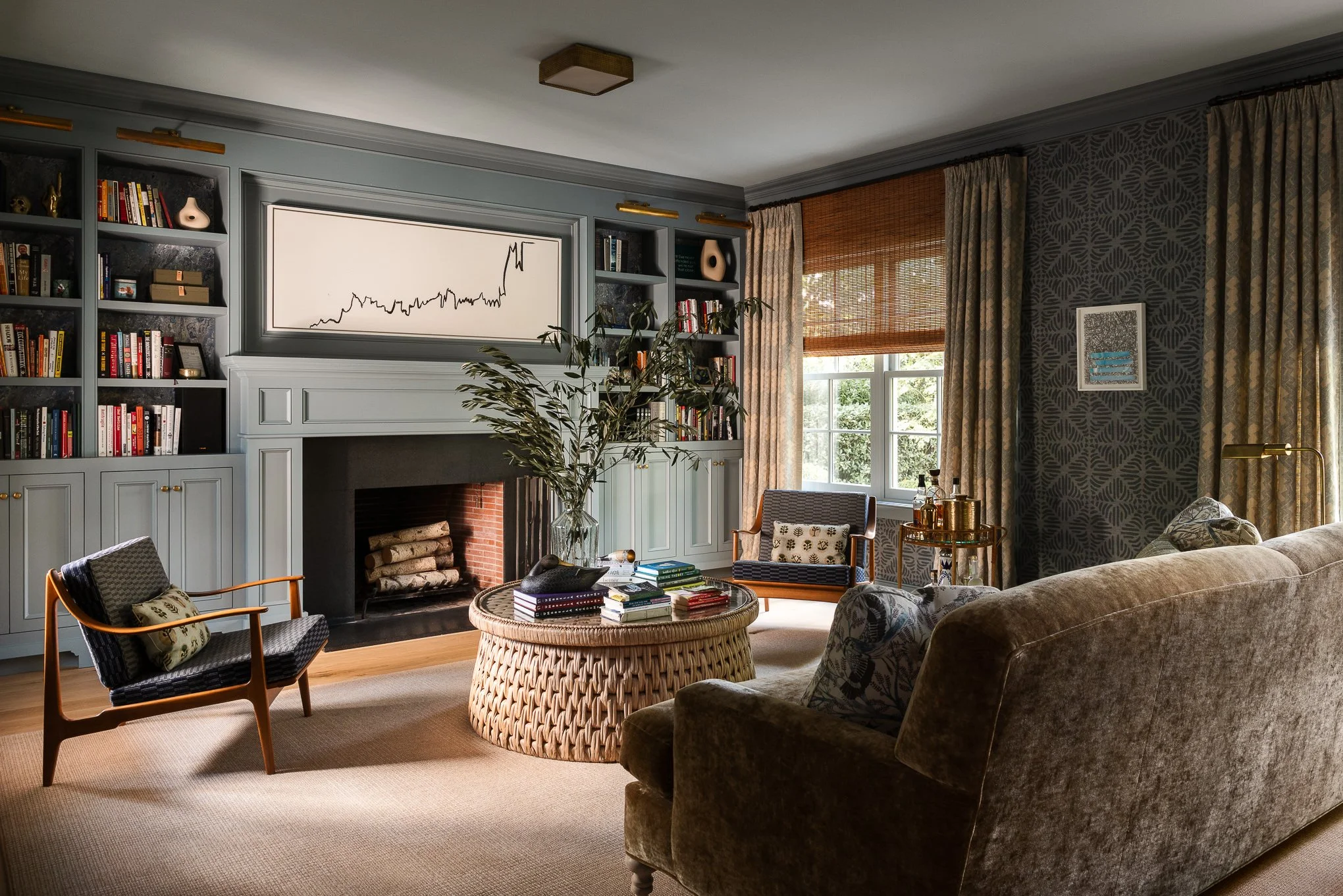
⸻
1. Begin with Clarity and Realistic Expectations
Every successful renovation begins with clear intent. Define how you want to live in the home: open spaces for family life, restored detail for historical charm, or contemporary simplicity within an old shell.
Establishing a realistic budget early helps direct design decisions. In New York City, high-quality townhouse renovations typically range from $600 to $1,200 per square foot, depending on the level of finish and structural complexity.
⸻
2. Understand Your Building’s Context
Townhouses rarely exist in isolation. Many are within Landmarks Preservation Commission (LPC) districts or fall under restrictive zoning envelopes. Even minor exterior changes—windows, railings, or a rear yard addition—often require approval.
Before design begins, your architect should confirm zoning, egress, and landmark requirements to ensure the project’s feasibility and compliance.
⸻
3. Document Existing Conditions Thoroughly
No two townhouses are the same. Hidden conditions—settled foundations, corroded steel, uneven framing—often reveal themselves only once work begins. A detailed survey and structural evaluation reduce uncertainty and allow for accurate cost forecasting.
Logistics matter too. Narrow streets, limited storage, and tight access points all influence how materials are delivered and waste is removed. Understanding these constraints early saves time and frustration later.
⸻
4. Integrate Architecture, Interiors, and Building Systems
Great townhouse renovations feel seamless because architecture, interiors, and engineering are considered together. Aligning these disciplines early allows mechanical, electrical, and plumbing systems to be integrated discreetly within the architecture rather than imposed upon it.
Details such as custom millwork, stair profiles, and built-ins define the experience of the home— marrying form and function through craftsmanship.
⸻
5. Reimagine Vertical Flow and Light
The narrow footprint and stacked floors of a townhouse can feel enclosed if not planned thoughtfully. Reworking the stair core, enlarging openings, and introducing skylights or light wells can dramatically change how light moves through the house.
A well-proportioned stair and carefully aligned openings often bring more impact than square footage additions.
⸻
6. Anticipate the Timeline and Process
Permitting in New York City is a marathon, not a sprint. Between the Department of Buildings (DOB), the Landmarks Preservation Commission (LPC), and occasionally the Community Board, the design and approval process can span well over a year before construction even begins.
Expect:
Design and permitting: 12–15 months
Construction: 12–18 months
Post-completion fine-tuning and closeout: 1–2 months
These timelines reflect the rhythm of working within historic neighborhoods, dense urban conditions, and multi-agency oversight. The most successful townhouse projects are those that embrace this pace—treating it as part of the craft rather than a delay—allowing for careful detailing, thorough coordination, and a smoother build once work begins.
⸻
7. Build for Longevity, Not Trend
The finest townhouses endure because their design decisions are made with permanence in mind. Use authentic materials, respect the home’s proportions, and select finishes that will age gracefully.
Every element—from masonry restoration to custom cabinetry—should reflect an investment in craft. When the architecture, construction, and millwork are guided by one cohesive vision, the result feels inevitable rather than imposed.
⸻
Build With Clarity, Craft With Purpose
Every exceptional home begins with a clear foundation: vision aligned with reality.
At MANNINO, our integrated process transforms complexity into confidence — ensuring every detail, from structure to finish, reflects the architecture’s intent.
Ready to begin your Feasibility Study?
Contact MANNINO to start your journey toward a home worthy of its setting — crafted with integrity, precision, and permanence.
⸻
Photography: MANNINO Project Portfolio
Written by: Rosario S. Mannino, AIA, LEED AP
© 2025 MANNINO. All Rights Reserved.
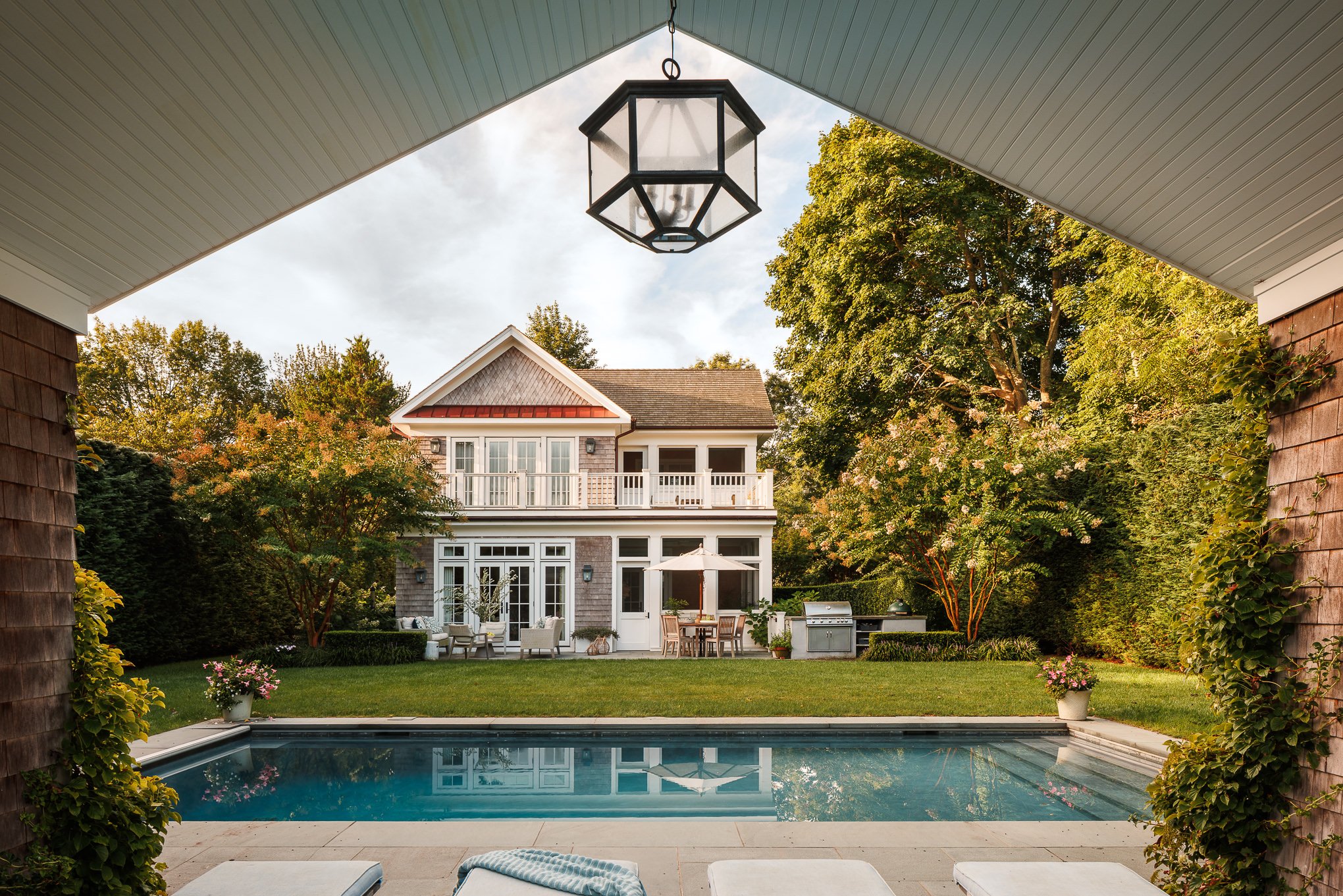
How Much Does It Actually Cost to Build a Custom Home in Greater New York (2025 Edition)
Building a custom home in Greater New York is an art form — balancing architectural vision, craftsmanship, and cost. Learn what shapes pricing and why a Feasibility Study is the smartest first step toward building with certainty.
By MANNINO – Architecture | Construction | Millwork
Building a custom home in the Greater New York area — from Manhattan and Westchester to the Hamptons and Northern New Jersey — is a deeply personal and rewarding process. Yet for many families, one question comes first: What does it truly cost to build a custom home?
The answer depends not only on square footage but on architecture, craftsmanship, and context — the level of design ambition, the complexity of the site, and the materials that bring your vision to life.
At MANNINO, we bring clarity to that process. As an architect-led design-build firm, we integrate architecture, construction, and millwork under one roof to give clients complete transparency from the first sketch to final move-in.
This guide explains what drives custom home costs in Greater New York, what to expect during preconstruction, and why our Feasibility Study is the essential first step to building with confidence.
⸻
Key Takeaways
Expect to invest between $600–$1,000 per square foot for a finely crafted, architect-designed home in the Greater New York region. Waterfront, historic, or complex urban sites can exceed $1,200 per square foot.
The main cost drivers are architectural complexity, level of finish, and site conditions — not simply size.
A Feasibility Study aligns vision, budget, and regulations early, helping you design intentionally and avoid costly surprises later.
For estates and ground-up builds in New Jersey’s Gold Coast and suburban enclaves, pricing trends follow a similar range, with regional adjustments for site and permitti
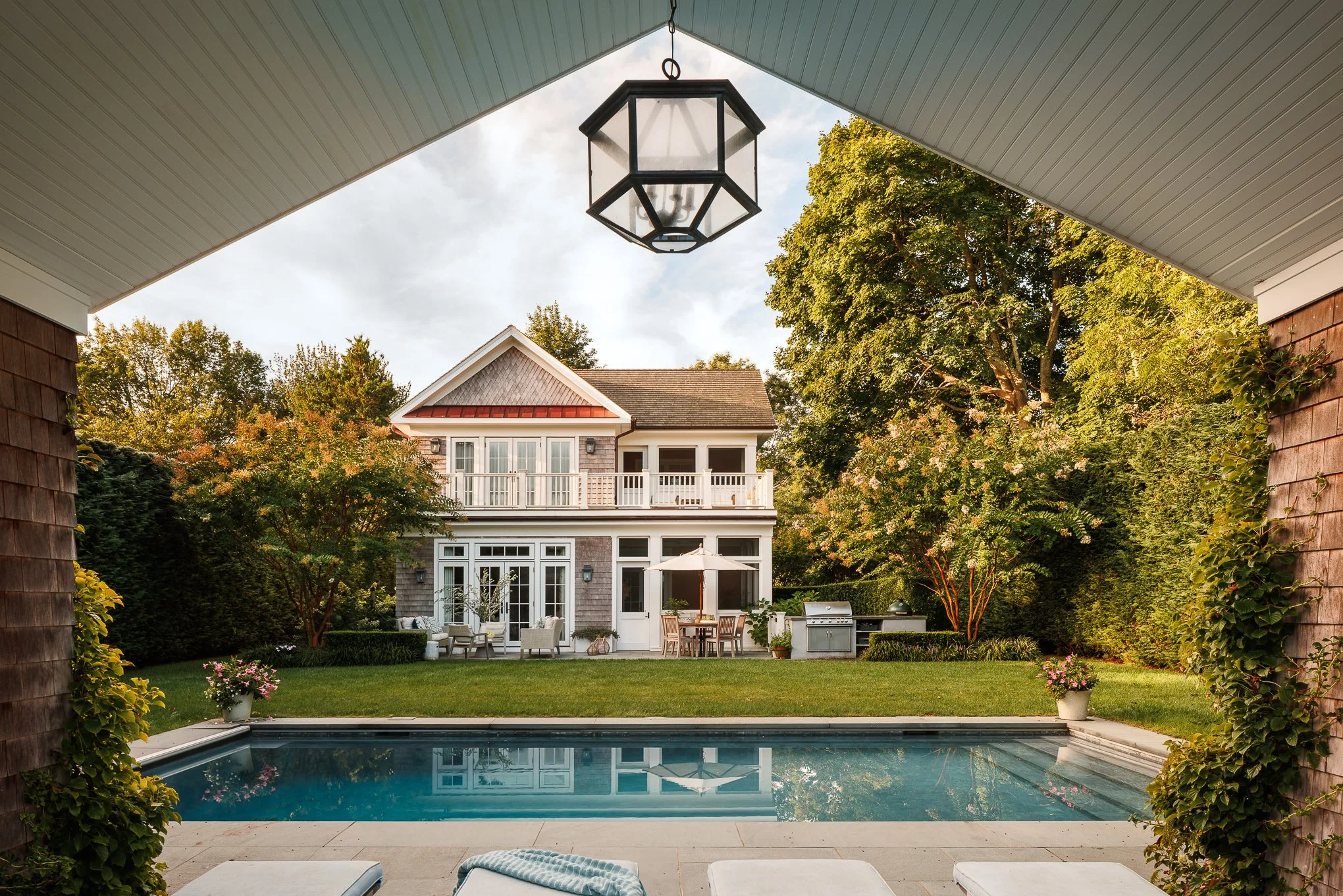
⸻
Understanding the True Cost of a Custom Home
In the luxury markets of New York City, the Hamptons, and surrounding areas, custom home construction typically ranges from $600 to $1,000+ per square foot, excluding land acquisition.
These figures vary dramatically depending on:
Architectural design and detailing
Structural and site complexity
Custom millwork and finishes
Sustainability goals and mechanical systems
At MANNINO, we help clients look beyond cost per square foot and focus instead on value per square foot — how design decisions translate into long-term beauty, functionality, and investment quality.
⸻
Top Factors That Influence Construction Costs
1. Architectural Design & Complexity
Distinctive architecture — curved staircases, stone façades, or expansive glazing — introduces engineering intricacies that elevate both beauty and cost. Our integrated design-build structure ensures these complexities are coordinated seamlessly across disciplines.
2. Finishes & Fixtures
Luxury finishes often define the soul of a home. Custom millwork, artisan tile, fine metals, and bespoke lighting transform a residence into an heirloom property. Each selection impacts lead time, coordination, and final cost.
3. Site Conditions
Urban infill lots, coastal dunes, and wooded slopes each present different challenges. Early site analysis helps uncover foundation requirements, drainage, and access constraints before design begins.
4. Mechanical Systems & Envelope
Investing in superior insulation, HVAC, and waterproofing protects your home’s longevity and comfort. These systems are not visible — but they’re essential to performance and efficiency.
5. Scale & Proportion
More space isn’t always better. Right-sizing — designing a home proportionate to its setting and lifestyle — often leads to a more elegant and cost-efficient result.
⸻
The Role of the Feasibility Study
A Feasibility Study is the most intelligent way to begin a custom home journey.
It answers three essential questions:
Can we build it? Should we build it? And what will it truly cost?
Our feasibility process combines architectural precision with construction and millwork insight — providing a holistic understanding of your project before you commit to full design development.
What’s Included in MANNINO’s Feasibility Study
Vision & Goals Consultation – Defining your architectural intent, aesthetic direction, and investment priorities.
Site Analysis & Risk Assessment – Evaluating topography, access, drainage, and existing conditions.
Program Development – Outlining room functions, spatial adjacencies, and square footage targets.
Zoning & Regulatory Review – Confirming setbacks, height limits, and FAR requirements to avoid redesigns later.
Preliminary Budget & Timeline – A data-driven cost range and project duration forecast based on current market trends.
Development Scenarios – Alternate pathways illustrating how design or scope adjustments influence cost and schedule.
The result is a comprehensive roadmap — balancing aspiration with reality — so design, construction, and budget move forward in harmony.
⸻
How a Feasibility Study Protects Your Investment
Most cost overruns originate from assumptions made too early. A proper feasibility phase prevents that by giving you:
Accurate early budgets for lending or financial planning
Code and zoning clarity before investing in design
Timeline awareness for permits and construction sequencing
Strategic design options that preserve intent while managing cost
In essence, you’re not paying for another report — you’re buying certainty.
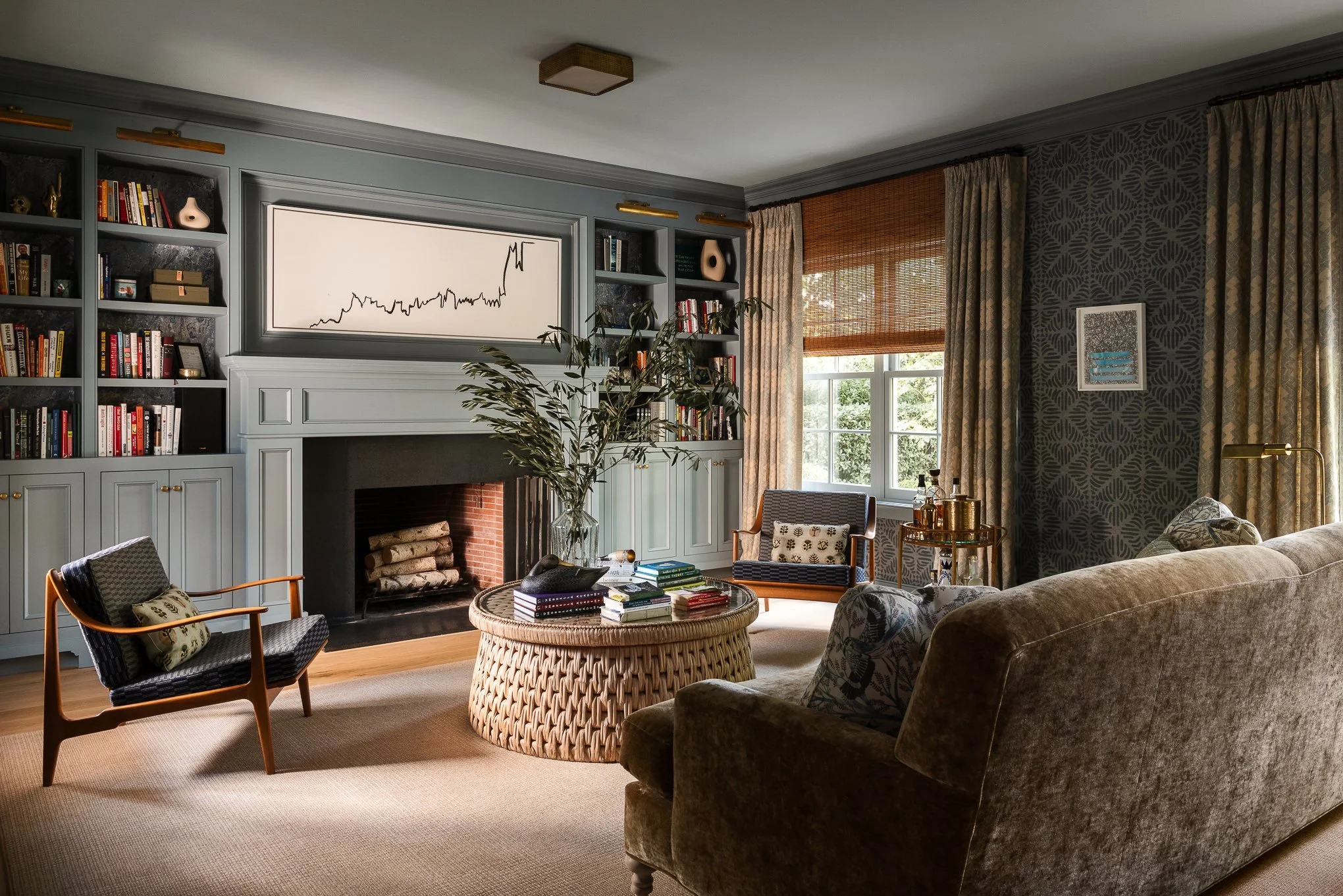
⸻
Typical Custom Home Costs in Greater New York
| Category | Estimated Range (2025) |
|---|---|
| Architectural & Interior Design | 10–15% of Construction Cost |
| Site Preparation & Utilities | $100–$250 / SF |
| Structural & Core Construction | $450–$650 / SF |
| Interior Finishes & Millwork | $150–$350 / SF |
| Landscape, Pool, or Outbuildings | Variable |
| Furnishings & Art Curation | Separate budget recommended |
These figures reflect high-end, architect-led construction in Manhattan, the Hamptons, Westchester, and Northern New Jersey.
⸻
When to Begin Planning
Custom homes of this caliber typically span 24–36 months from feasibility to completion. Beginning early — ideally six to twelve months before anticipated construction — allows time for zoning reviews, design refinement, and procurement of long-lead materials.
⸻
Build With Clarity, Craft With Purpose
Every exceptional home begins with a clear foundation: vision aligned with reality.
At MANNINO, our integrated process transforms complexity into confidence — ensuring every detail, from structure to finish, reflects the architecture’s intent.
Ready to begin your Feasibility Study?
Contact MANNINO to start your journey toward a home worthy of its setting — crafted with integrity, precision, and permanence.
⸻
Photography: MANNINO Project Portfolio
Written by: Rosario S. Mannino, AIA, LEED AP
© 2025 MANNINO. All Rights Reserved.
Low-Carbon Luxury: The New Standard in High-End Homebuilding (2025 Edition)
Luxury and sustainability are no longer separate ideas. Discover how MANNINO is defining a new era of Low-Carbon Luxury—where timeless design meets responsible innovation through materials like low-carbon concrete, mass timber, and high-efficiency electrification.
Luxury has long been synonymous with craftsmanship, comfort, and permanence. But in 2025, permanence means something new. It means designing and building homes that endure not only in form and style—but in environmental integrity. The next generation of high-end homeowners expects their residence to reflect their values as much as their taste. “Sustainable luxury” is no longer a contradiction; it’s the new mark of refinement.
At MANNINO, we call this movement Low-Carbon Luxury—a philosophy that unites advanced building science with timeless architectural design. It’s not about chasing certifications or following trends. It’s about crafting homes that feel as good as they look, that perform quietly and efficiently behind the walls, and that stand as legacies of both beauty and responsibility.
⸻
The luxury home market has evolved beyond token gestures toward sustainability. Solar panels and high-efficiency appliances are now table stakes. What discerning homeowners seek is holistic integration—materials and systems that lower carbon impact without compromising aesthetics, craftsmanship, or comfort.
Low-carbon design begins long before construction starts. Every decision—from the foundation mix to the finish palette—carries a carbon story.
At MANNINO, our process now evaluates materials through both performance and provenance:
• How far did it travel?
• How was it made?
• Can it be reclaimed or repurposed?
• Does it contribute to a healthy indoor environment?
This mindset allows luxury to return to its roots: things made to last, with intention, by human hands.
⸻
Concrete is the backbone of construction—and historically, one of its biggest carbon offenders. Traditional Portland cement production accounts for nearly 8% of global CO₂ emissions.
In 2025, we’ve embraced new formulations like Portland-Limestone Cement (PLC) and LC3 (Limestone Calcined Clay Cement). These next-generation blends reduce embodied carbon by 30–40% while delivering equal or greater strength and durability.
On our projects, specifying PLC or LC3 concrete is now standard practice. When clients walk their foundation pour, they’re witnessing one of the most impactful sustainability decisions of the entire build—one that requires no sacrifice in beauty or performance.
⸻
There’s a reason architects have returned to wood—not as nostalgia, but as innovation.
Mass timber technology, allowed under expanded U.S. building codes, now enables larger spans and richer architectural expression with a dramatically smaller carbon footprint than steel or concrete.
Even in custom residential projects, engineered wood beams, laminated columns, and FSC-certified lumber are transforming both structure and style.
We’ve always valued the tactile warmth of wood at MANNINO—from custom millwork to exposed structure—but we now source it with a purpose. Our millwork team works exclusively with domestic hardwoods from sustainably managed forests, using precise digital fabrication to minimize waste. Walnut, white oak, and ash—all locally milled and finished in-house—bring character that’s measured not just in grain, but in integrity.
The art of building quietly efficient homes lies in what the eye doesn’t see: insulation, mechanical zoning, and balanced ventilation.
All-electric systems are now the gold standard in both performance and comfort. Modern heat pumps can handle even Northeastern winters with silent, zoned precision. Coupled with radiant floor systems, ERV ventilation, and triple-pane fenestration, they create a whisper-quiet environment that maintains consistent temperature and air quality throughout the home.
More importantly, these systems are architecturally invisible. Today, sustainability can live behind plaster walls, beneath reclaimed floors, and above coffered ceilings—seamlessly.
⸻
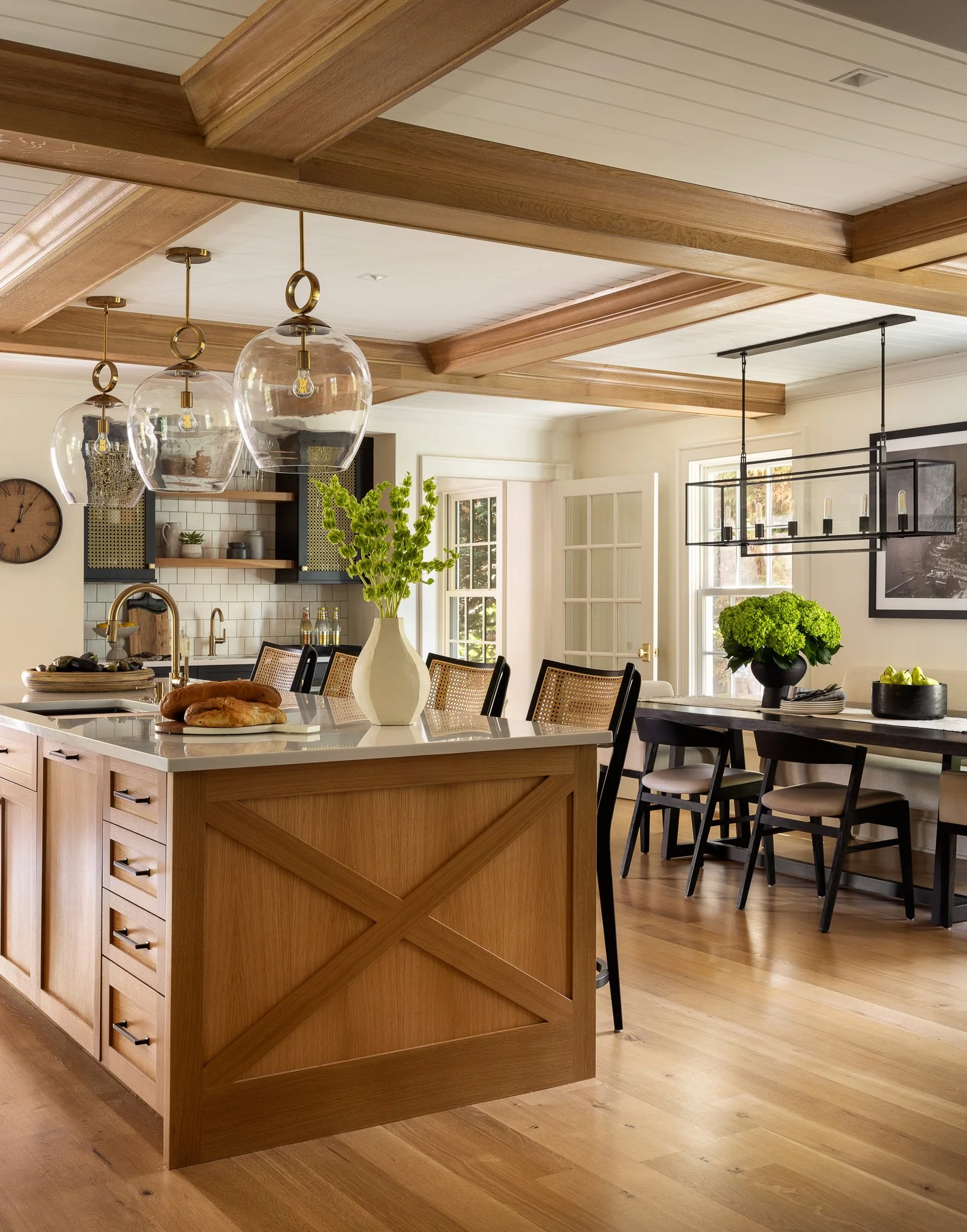
If the kitchen is the heart of the home, it’s also where tradition meets innovation. The best chefs in the world now cook on induction—not just for sustainability, but for control, safety, and precision.
Induction ranges from La Cornue, Wolf, and Gaggenau bring power and poise without gas lines, carbon monoxide, or wasted heat. Clients who once resisted electrification now celebrate it as an upgrade, not a concession.
Our design teams integrate induction and ventilation strategies early in the process, ensuring performance harmony with cabinetry, lighting, and millwork detailing. It’s this marriage of technology and tactility that defines low-carbon luxury.
⸻
One of the most transformative shifts in 2025 is the Matter smart-home protocol—a unified language that finally allows Apple, Google, Amazon, and others to work seamlessly together.
For homeowners, this means frictionless control of lighting, shading, climate, and security systems. For builders, it means long-term reliability and reduced service calls.
At MANNINO, we’ve established Matter-first specifications for lighting, thermostats, and shading controls, allowing every smart-home ecosystem to feel intuitive, not intrusive.
Technology should enhance serenity, not disrupt it.
⸻
Luxury is tactile. But material indulgence can coexist with restraint when sourced responsibly.
We’ve seen an extraordinary evolution in surface materials:
• Lime plaster and natural clay paints regulate humidity while providing luminous texture.
• Recycled stone composites mimic traditional marble with a fraction of the carbon footprint.
• Natural fiber textiles—linen, wool, hemp—create comfort that breathes.
• VOC-free finishes and adhesives protect indoor air and reduce chemical load.
Even furnishings are being reconsidered. The new luxury client values heritage craftsmanship—fewer, better pieces, often made locally. The narrative of a hand-crafted dining table or bespoke built-in now carries the same prestige once reserved for imported stone.
⸻
Sustainability is only part of the story. The modern estate must also stand resilient—against storms, outages, and time itself.
Our recent homes integrate backup power, battery storage, and storm-resistant envelope detailing as standard. Paired with air filtration, acoustic insulation, and biophilic daylighting, these measures create homes that nourish health as much as they preserve energy.
The result is peace of mind: a sense that the home is not just a place of retreat, but of quiet strength.
⸻
An often-overlooked benefit of low-carbon design is financial. The Inflation Reduction Act and state programs provide generous incentives through 2032 for high-efficiency equipment, envelope upgrades, and solar-plus-storage systems.
Our team helps clients capture these credits early in design—aligning system choices with available rebates and optimizing long-term returns. Low-carbon luxury isn’t just ethical—it’s economically intelligent.
⸻
When we talk about building for generations, it’s no longer a romantic notion. It’s a responsibility. The homes we design today will outlive us—and the environmental choices we make will define their worth for decades to come.
Low-Carbon Luxury is about creating that inheritance—an architectural language rooted in elegance, efficiency, and empathy for the world around us.
At MANNINO, we believe true luxury is not excess—it’s intention. Every beam, every joint, every texture should serve both the human spirit and the environment that sustains it.
Because the greatest luxury of all is knowing your home will stand beautifully, responsibly, and resiliently—for generations yet to come.
Photography: MANNINO Project Portfolio
Written by: Rosario S. Mannino, AIA, LEED AP
© 2025 MANNINO. All Rights Reserved.

The New Language of American Luxury Homes: 2025 Trends Shaping High-End Residential Architecture
From the rolling hills of California wine country to the coastal enclaves of the Hamptons, high-end residential architecture in the United States is in the midst of a quiet revolution. Today’s luxury homes are less about ostentation and more about enduring beauty, wellness, and environmental responsibility—designed to be lived in, cherished, and passed down.
“The American high-end home is no longer about making the biggest visual statement—it’s about making the most enduring one.”
Walk through any newly completed luxury residence in the United States today, and you’ll notice something different. The glittering excesses of past decades have given way to a more measured form of opulence—spaces designed to nourish mind and body, built to withstand the decades, and crafted with a tactile richness that defies fashion.
This evolution is not accidental. It is the product of shifting homeowner priorities, advances in building technology, and a heightened awareness of the environment in which these homes stand. Below are the defining trends influencing the architecture of America’s most distinguished residences in 2025.
⸻
1. Wellness-First Planning
Wellness is now an architectural baseline. Spa suites—complete with saunas, cold plunge pools, infrared therapy rooms, and adjacent massage spaces—are appearing as standard features in new luxury homes. Air and water purification systems are specified with the same inevitability as high-end appliances, and mechanical systems are designed to optimize humidity, ventilation, and thermal comfort.
The wellness agenda extends into the subtler aspects of design:
Natural daylight mapping to position morning spaces for sunrise and evening rooms for sunset.
Acoustic zoning to reduce noise migration between public and private areas.
Biophilic elements—green walls, indoor planters, and framed views to nature—woven into the floor plan.
Throughout #StoneManor, the walnut was finished to highlight its natural tone—allowing the expressive grain and subtle color variation to shine.
⸻
2. Sustainability Without Compromise
Sustainability has moved from a moral choice to an expectation. Today’s high-end clients want homes that perform like high-end machines: quiet, efficient, and low in carbon emissions, without broadcasting their “green” credentials.
We see:
Net-zero or low-carbon envelopes with deep insulation and high-performance glazing.
Induction kitchens replacing gas for precision cooking and cleaner air.
Water-smart landscapes with native plantings and subterranean irrigation.
These measures are built into the DNA of the home, invisible to the eye but powerful in performance.
⸻
3. Indoor–Outdoor Living That Works Year-Round
Indoor–outdoor living is no longer seasonal. The goal now is to make exterior spaces comfortable in every climate.
Design responses include:
Deep roof overhangs and operable shading systems.
Pocketing glass walls that disappear entirely into concealed pockets.
Conditioned loggias with radiant heating and discreet drop-down screens.
The landscape becomes an extension of the architecture—not a backdrop, but a room without walls.
⸻
4. Technology That Disappears
Luxury homes no longer flaunt technology; they hide it. Full-home automation—lighting, climate, security, entertainment—is expected, but concealed.
Screens vanish into millwork. Security cameras hide within light fixtures. The home responds to the owner’s habits seamlessly, creating comfort without the sensation of operating a machine.
⸻
5. Programming for Real Life
Floor plans now solve for real life, not just real estate.
Common requests include:
Dual offices for public and private work.
Zoom-ready studios with perfect acoustics.
Multigenerational suites with private entries.
Discreet staff quarters integrated into the plan.
Every space receives the same level of design attention, whether it’s for guests, work, or family.
⸻
6. Crafted Materiality Over Showy Forms
The most luxurious homes today are defined by what you feel, not what you see from the street.
Expect:
Dark, rich woods like walnut and ebonized oak.
Handmade tile and artisanal plaster in kitchens and baths.
Thicker stone profiles for hearths, counters, and thresholds.
“Luxury in 2025 is measured in the weight of a bronze door handle, not the height of a gable.”
⸻
7. Security and Resilience by Design
Resilience is now part of the design conversation from day one.
Features often include:
Safe rooms in primary suites.
Standby power systems for days of off-grid living.
Fire- and storm-resistant assemblies in roofing, siding, and glazing.
These features are invisible but invaluable.
⸻
8. Amenity Compounds at Home
On larger estates, the home itself becomes a private retreat.
Amenities now include:
Pickleball or padel courts
Car galleries with museum lighting
Climate-controlled art walls
Theater-grade screening rooms
Rather than appendages, these are integral to the home’s design language.
⸻
A Quiet but Defining Shift
What unites these trends is not a style but a sensibility. Wellness, sustainability, crafted materiality, and discretion are the new pillars of American luxury home design. These are homes intended to outlast their owners—structures whose beauty and performance will be as relevant in fifty years as they are today.
In an era of rapid change, that sense of permanence might just be the ultimate luxury.
The Complete Guide to Building a Custom Home in New Jersey (2025 Edition)
Building a custom home in New Jersey is a rewarding but complex journey. Our 2025 guide breaks down the process—from land acquisition and design to permitting, construction, and move-in—offering expert insights to help you build with confidence and clarity.
The Complete Guide to Building a Custom Home in New Jersey (2025 Edition)
Building a custom home is about more than bricks and beams—it’s about creating a legacy, one that reflects your lifestyle, values, and vision for the future. At RS Mannino, we design and build homes across New Jersey that are tailored to each client’s needs, from traditional estate homes in Harding Township to coastal retreats along the Jersey Shore. This guide walks you through everything you need to know in 2025 to build a custom home in New Jersey with clarity and confidence.
⸻
1. Choosing the Right Location
The first step is understanding where you want to build—and what’s feasible.
Top towns for luxury custom homes:
Harding Township, Saddle River, Bernardsville, Colts Neck, Rumson, Short Hills, AlpineLot considerations:
– Minimum lot size and setbacks
– Septic vs. sewer
– Tree removal and grading restrictions
– Proximity to amenities, NYC, and schools
Tip: Engage your architect before purchasing land. We regularly walk lots with clients before purchase to assess feasibility and cost impacts.
2. Setting a Realistic Budget
Most luxury homes in NJ fall between $400–$800 per square foot, depending on materials, complexity, and site conditions.
Typical breakdown:
– Construction costs: ~70%
– Design & engineering: ~10–15%
– Site development (utilities, septic, grading): ~5–10%
– Furnishings, landscape, contingency: ~10–15%
At RS Mannino, we help clients understand the full project cost—including soft costs and potential pitfalls—so nothing is left to chance.
3. Designing Your Legacy
The design phase is your opportunity to shape every detail—from spatial layout to millwork profiles.
Architecture and interior design integration
Key design milestones:
– Pre-Design Feasibility
– Schematic Design
– Design Development
– Construction Documents
– Interior Architecture & Millwork Detailing
Full-service design ensures every detail, down to the cabinetry and finish transitions, is part of a cohesive architectural vision.
4. Permits, Zoning, and Regulatory Approvals
Each town in New Jersey has its own zoning code, but common challenges include:
Floor Area Ratio (FAR) limits
Height restrictions
Tree protection ordinances
Historic district reviews (e.g., Montclair)
NJDEP approvals (for wetlands or coastal zones)
Soil testing (for septic design)
We manage all zoning analysis and permit submissions in-house to streamline approvals and avoid costly delays.
5. Hiring the Right Builder (or Going Design-Build)
Traditional architect–builder relationships can create gaps in accountability. That’s why many families now choose design-build.
Benefits of architect-led design-build with RS Mannino:
– One point of contact from start to finish
– Seamless design coordination during construction
– Early budgeting aligned with design vision
– Transparent cost management and scheduling
Our construction team works hand-in-hand with our architects and designers throughout every phase.
6. Understanding the Timeline (From Design to Move-In)
On average, a full custom home in NJ takes 18–30 months, depending on approvals, site conditions, and design complexity.
PhaseTimeframeFeasibility + Site Analysis1 monthDesign + Permitting6–9 monthsConstruction12–18 monthsInterior FurnishingsOverlaps with final build phase
We’ll tailor the timeline to your specific needs and lifestyle goals—and keep you informed every step of the way.
7. Crafting the Interiors: More Than Just Decor
In high-end custom homes, interior architecture matters as much as exterior form.
Integrated millwork and cabinetry
Material palettes curated for timelessness
Luxury lighting design
Custom stone, metal, and woodwork
Full furnishings & styling (optional)
Our interiors team and millwork shop create heirloom-quality pieces that are designed, detailed, and built in-house.
8. Final Inspections, Handover & Move-In
Your home isn’t complete until it passes local inspection and feels truly “finished.” We walk through every inch—twice.
Final punchlist walk-through
CO (Certificate of Occupancy) coordination
Post-occupancy care and warranty
Optional seasonal maintenance services
We stay in touch long after move-in to support your home’s long-term performance.
9. Why Clients Choose RS Mannino
Our clients come to us because they want a process that’s thoughtful, beautifully orchestrated, and worthy of their investment.
Architect-led design-build
Legacy-quality detailing
Transparent budgeting and communication
In-house interiors and millwork
Experience with complex permitting and estate homes
“Timeless homes for modern families, built with intention.”
⸻
Conclusion
A custom home is one of the most meaningful investments you can make. At RS Mannino, we’re here to help you navigate every step with clarity, artistry, and care. Whether you’re just starting your search for land or ready to begin design, we’d love to help bring your vision to life.
Ready to Begin?

The Architect as Builder: Why Design-Build Leads to Better Homes
In the world of custom homebuilding, the design-build model is gaining traction—but not all design-builds are created equal. At RS Mannino, we take it a step further. As architects who also build, we offer a uniquely integrated approach where vision, craftsmanship, and execution speak the same language from day one.
A Better Way to Build
For decades, custom homebuilding followed a fragmented model: hire an architect, then a builder, then hope they collaborate well. Too often, that approach leads to design compromises, budget overruns, and confusion over who’s responsible when something goes wrong.
Design-build solves that—at least in theory. But not all design-build firms are the same.
At RS Mannino, we offer a refined version of the model: architect-led design-build. That means your home isn’t just designed beautifully—it’s built beautifully, by the same team who conceived it.
⸻
What Is Architect-Led Design-Build?
In many design-build firms, architects play a minor role after schematic design. At RS Mannino, the architect is the through line—from initial sketches to the final walkthrough.
We don’t “hand off” your project. We lead it, ensuring that your home’s design vision is protected throughout construction.
⸻
Benefits of Architect-Led Design-Build
1. Design Integrity Is Preserved
Every detail matters—proportions, finishes, material transitions. With the architect at the helm, design doesn’t get diluted or reinterpreted in the field.
2. Fewer Surprises, Smoother Process
We align design and construction early on. This means more accurate budgets, more constructible drawings, and fewer delays due to miscommunication.
3. One Point of Accountability
You’re not managing competing teams. We take full ownership of the outcome—and we stand behind it.
4. Better Craftsmanship, Inside and Out
From framing to millwork, our construction and design teams speak the same language. The result is craftsmanship that feels seamless, not pieced together.
⸻
Elevating the Model for Legacy Homes
While design-build is often used to cut costs, we use it to elevate standards. Our clients aren’t seeking shortcuts—they’re seeking enduring quality.
By bringing architecture, construction, and millwork under one roof, we ensure your home is:
Cohesive in vision
Efficient in execution
Exceptional in detail
Whether it’s a historic estate revival or a new ground-up residence, we tailor every project to feel timeless and deeply personal.
⸻
Your Vision, Fully Realized
Building a home is a significant investment—financially, emotionally, and creatively. The best outcomes happen when vision and execution are unified from the start.
At RS Mannino, we offer more than design and construction. We offer leadership, clarity, and a commitment to excellence that endures long after the final nail is placed.
⸻
Let’s Build Something Enduring
Considering a custom home build? We invite you to discover how architect-led design-build can bring your vision to life—with less stress and more intention.
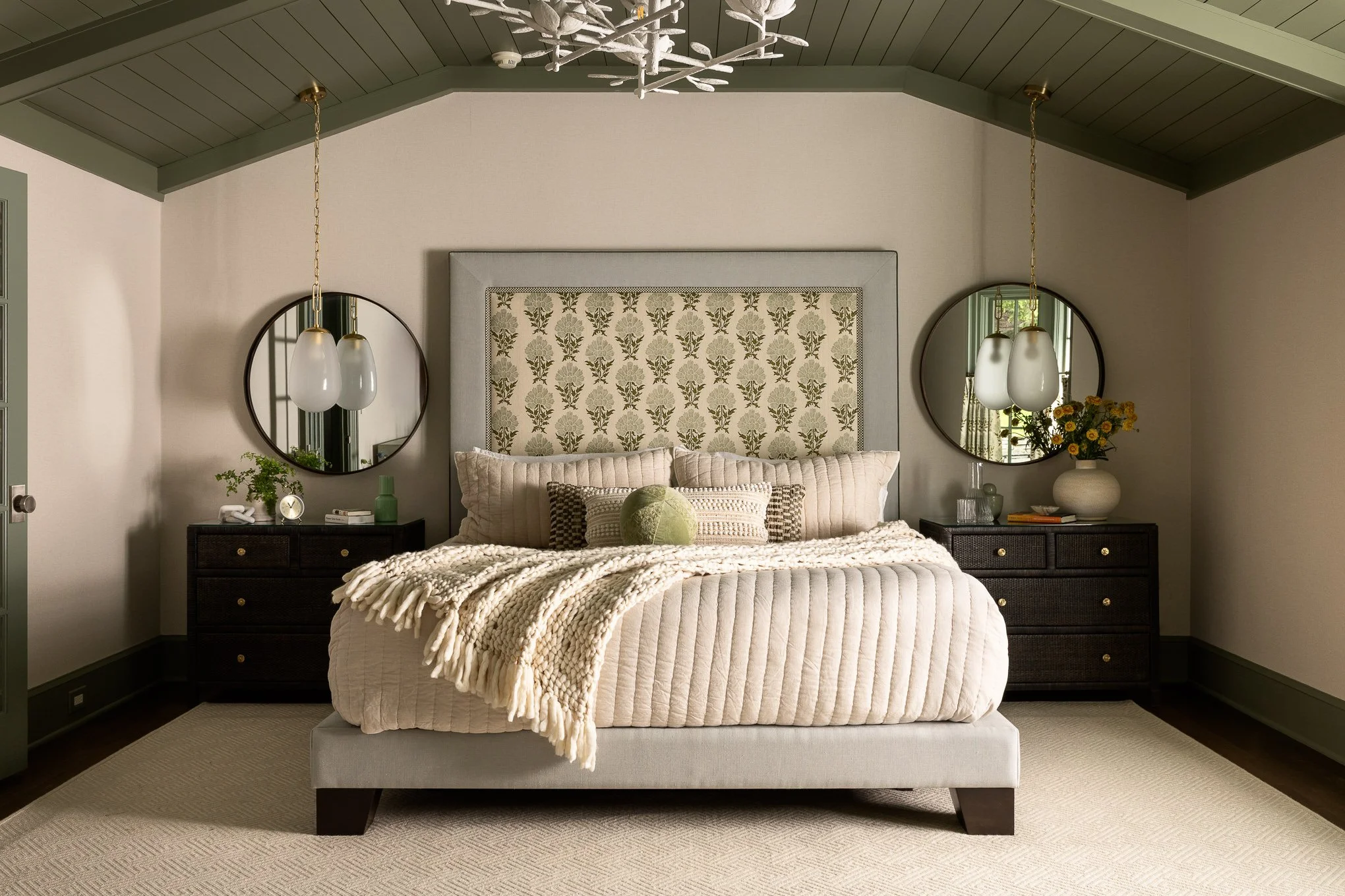
From Flat to Vaulted: The Transformational Power of Ceiling Design
At RS Mannino, we believe ceilings are more than a finish—they’re a quiet expression of proportion, scale, and intention. This blog explores how vaulted ceilings can completely transform a space, with a spotlight on our #UnderTheGabledGreen project.
A Forgotten Canvas Overhead
In residential architecture, ceilings are too often treated as an afterthought. Yet historically, they were anything but invisible. From coffered ceilings in Renaissance villas to timber-framed cathedrals, the upper plane of a room was once a showcase of artistry, structure, and intent.
Today, while many modern homes default to flat ceilings, the opportunity to elevate—literally and figuratively—remains as powerful as ever.
⸻
Why Ceiling Design Matters
A ceiling does more than define a room’s vertical boundary. It affects:
Proportion – A vaulted ceiling can restore balance to a wide or large room that feels compressed.
Light – Raising the ceiling often increases window height or allows for clerestory windows, dramatically enhancing natural light.
Acoustics – Varying ceiling geometry can soften echoes or amplify sound, depending on materials.
Emotion – Spaces with greater volume often feel calmer, more open, and more refined.
In essence, ceiling design influences how a room feels just as much as how it functions.
Case Study: #UnderTheGabledGreen
When we began the full renovation of the primary suite at #UnderTheGabledGreen, one feature stood out as a design opportunity: the ceiling.
Originally flat and visually disconnected from the generous square footage of the bedroom, the ceiling made the room feel awkwardly compressed. We saw a chance to honor the architecture by working upward.
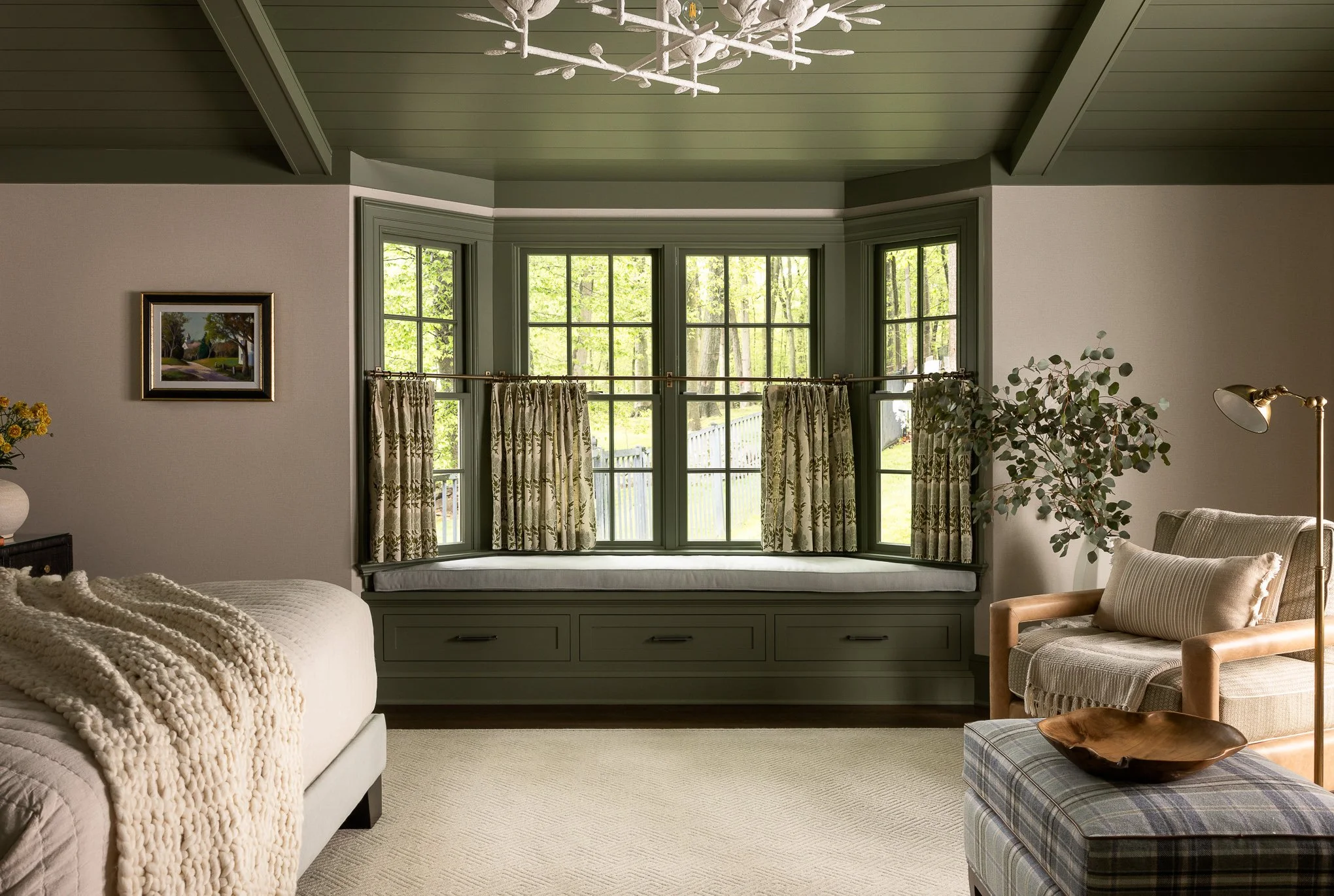
By utilizing the dead space in the attic cavity, we created a cathedral ceiling punctuated by exposed faux beams and v-groove paneling. The result is not just taller—it’s textured, inviting, and historically grounded.
This architectural move shifted the tone of the entire space. What was once merely a bedroom now feels like a sanctuary.
Architectural Vocabulary: Vaulted vs. Cathedral vs. Coffered
Understanding the distinctions is key to intentional design:
Vaulted Ceiling: Any ceiling that angles upward beyond the flat plane. It can be symmetrical (like a barrel vault) or asymmetrical (shed style).
Cathedral Ceiling: A symmetrical vaulted ceiling that follows the pitch of the roof, typically with a ridge line in the center.
Coffered Ceiling: A series of sunken panels—often square or octagonal—typically used in formal spaces like libraries or dining rooms.
Each of these ceiling types can be tailored to the architectural language of the home—from minimalist to classical, rustic to contemporary.
Material Matters
What you see overhead isn’t just about geometry—it’s about materiality.
Natural wood adds warmth, especially in beams, planking, or paneling.
Painted v-groove offers a fresh but traditional feel.
Plaster detailing or limewash finishes bring Old World softness and patina.
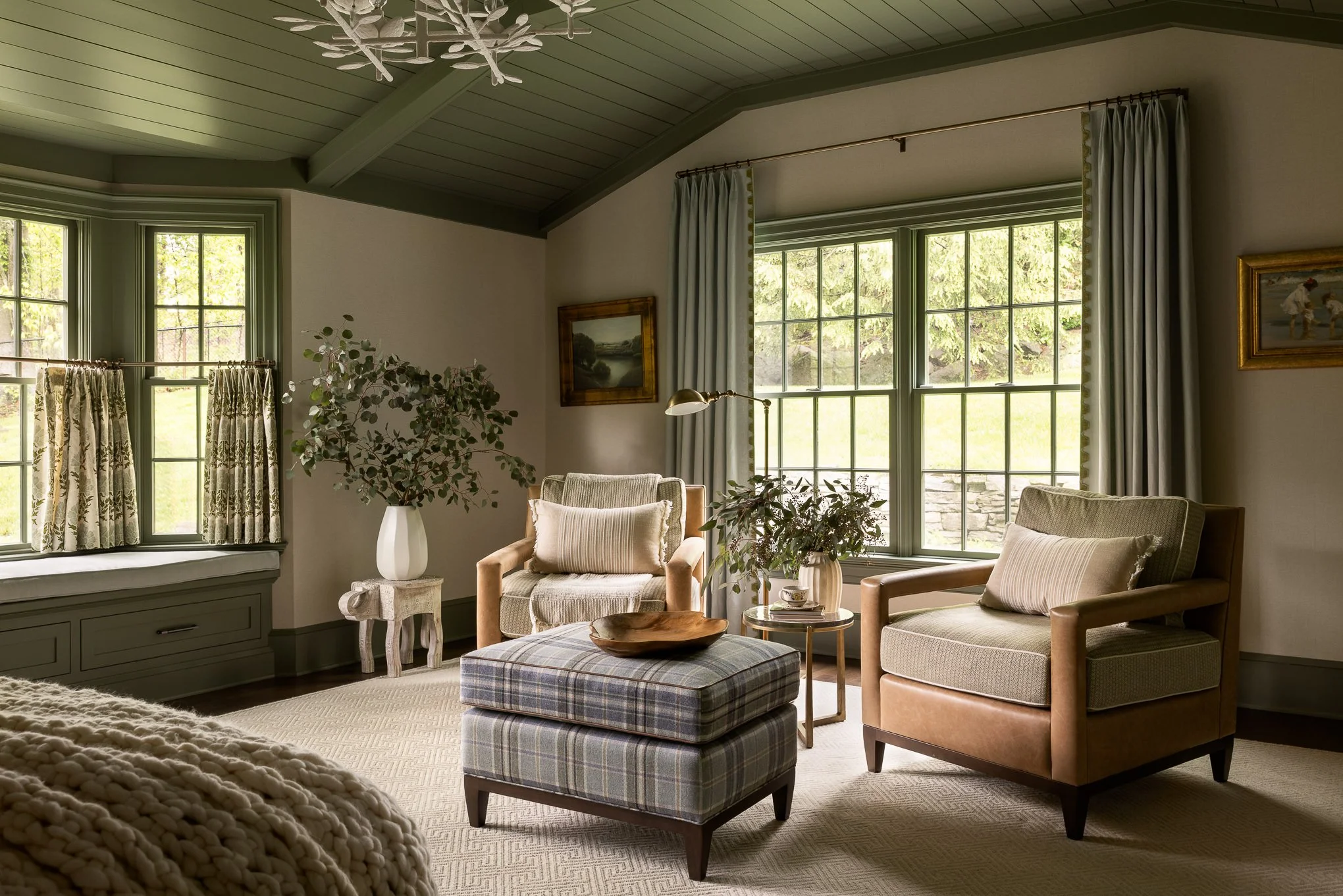
At RS Mannino, we often use ceiling material choices to connect adjacent rooms, signal transitions, or create a subtle visual rhythm throughout the home.
A Design Opportunity Worth Taking
Ceiling design may not appear on most client wishlists, but it is often the move that elevates a room from good to great. For those building or renovating their forever home, it’s a place worth investing thought and craft.
Done well, a vaulted ceiling adds not just height—but soul.
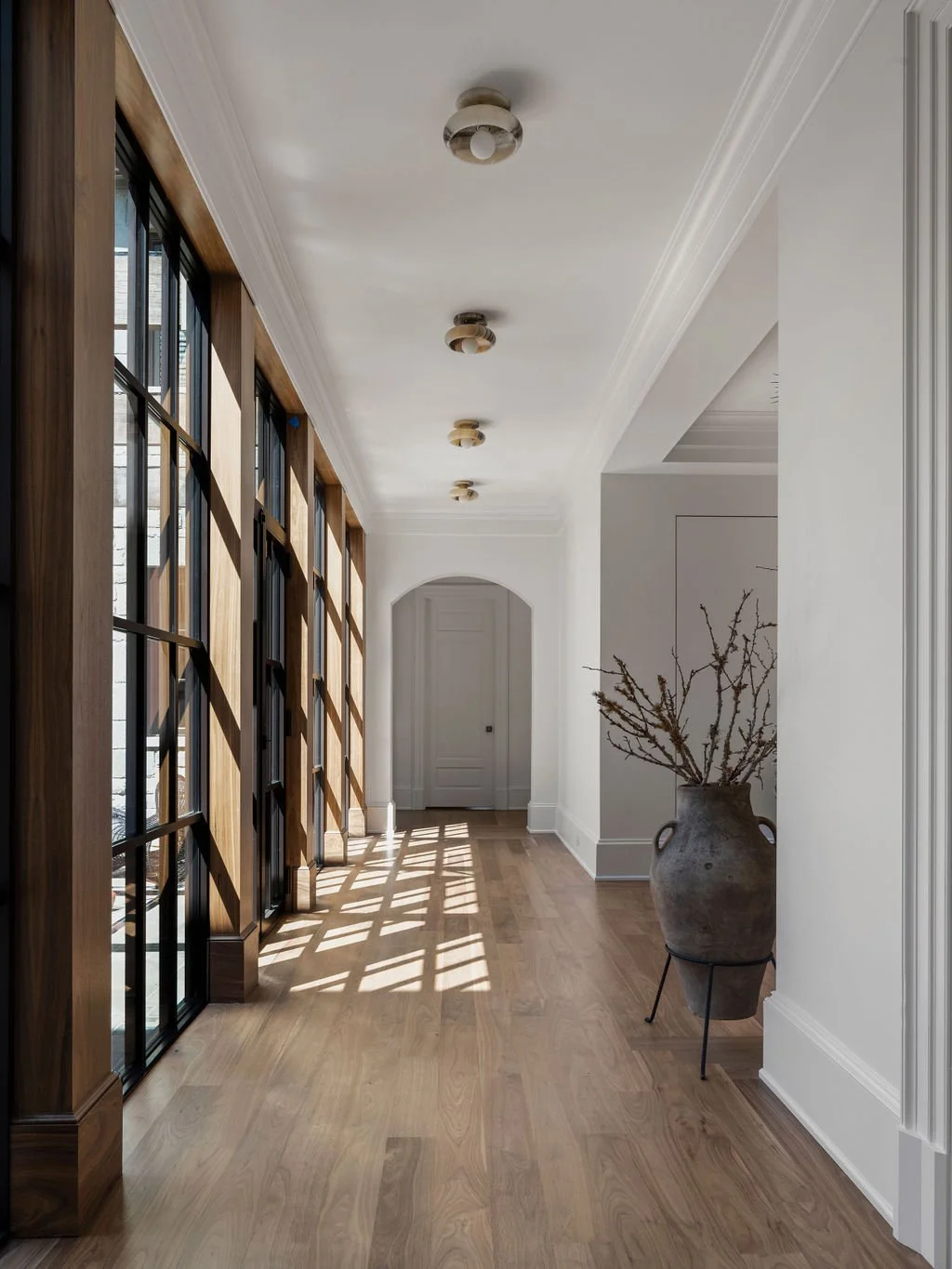
The Case for Walnut: Why Richer Woods Are Replacing White Oak in Luxury Interiors
White oak has shaped the visual language of contemporary interiors for more than a decade. But a quiet shift is underway. Designers and architects are rediscovering the depth, warmth, and legacy of darker woods—particularly walnut. At RS Mannino, we embraced this evolution in our #StoneManor project, where walnut floors, millwork, and ceilings brought elegance and gravity to every room, culminating in a showstopping space we call the Jewel Box.
A Century of Wood Tone Trends
White oak has long held a place of reverence in American architecture. Its durability, neutral tone, and tight grain made it a favorite for craftsmen of the Arts & Crafts era, mid-century modernists, and today’s minimalist designers alike. It surged to popularity in the 2010s, where its blonde tones helped define the “modern farmhouse” and Scandinavian-inspired interiors. Paired with white walls and light furnishings, white oak offered serenity, lightness, and a sense of openness.
But design is cyclical.
Historically, luxury interiors favored richer tones—mahogany libraries, walnut wainscoting, paneled salons in European estates. These darker woods conveyed permanence and patina. And while white oak remains timeless in its own right, a new generation of homeowners is yearning for warmth, contrast, and a return to craftsmanship rooted in tradition.
⸻
The Walnut Revival
Among the woods making a resurgence, walnut stands apart. Native to North America, black walnut has long been prized for its strength, luster, and depth. It was once a status symbol—used in fine furniture, gunstocks, and cabinetry throughout the 18th and 19th centuries. Its natural color ranges from honey to deep chocolate, with a refined grain that adds movement without chaos.
Unlike white oak, which reflects light, walnut absorbs and softens it. The result is a richer, more intimate atmosphere—one that feels grounded rather than ethereal.
⸻
#StoneManor: A Modern Classic in Walnut
In our #StoneManor project, walnut became both backdrop and protagonist. We used it extensively across flooring, trim, ceilings, and built-ins to create a sense of material continuity. The result was a home that felt collected, not staged—where each room told its own story, yet belonged to a unified narrative.
⸻
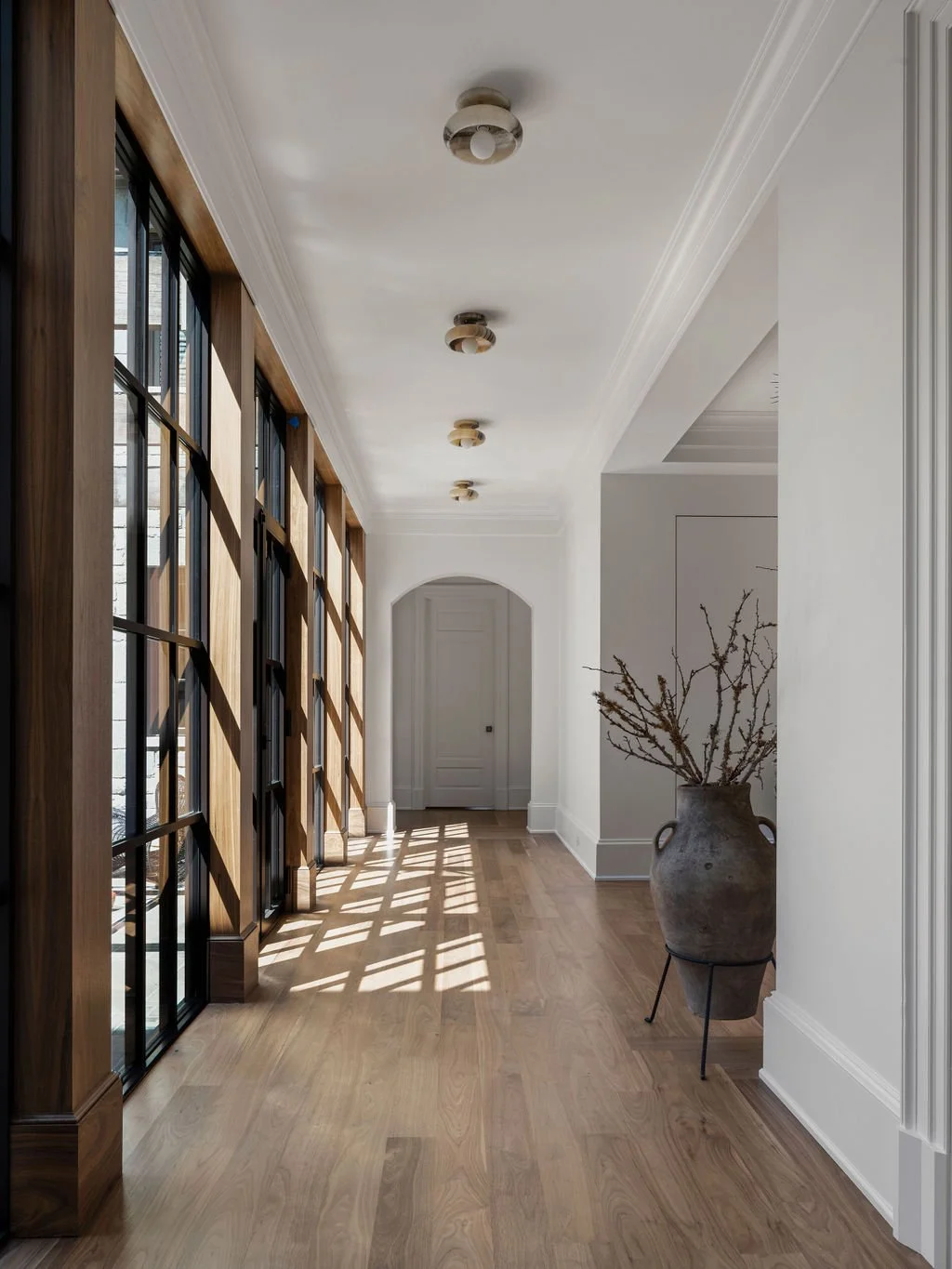
The entry hall introduces the warmth of natural walnut floors—setting the tone for material richness that unfolds throughout the home.
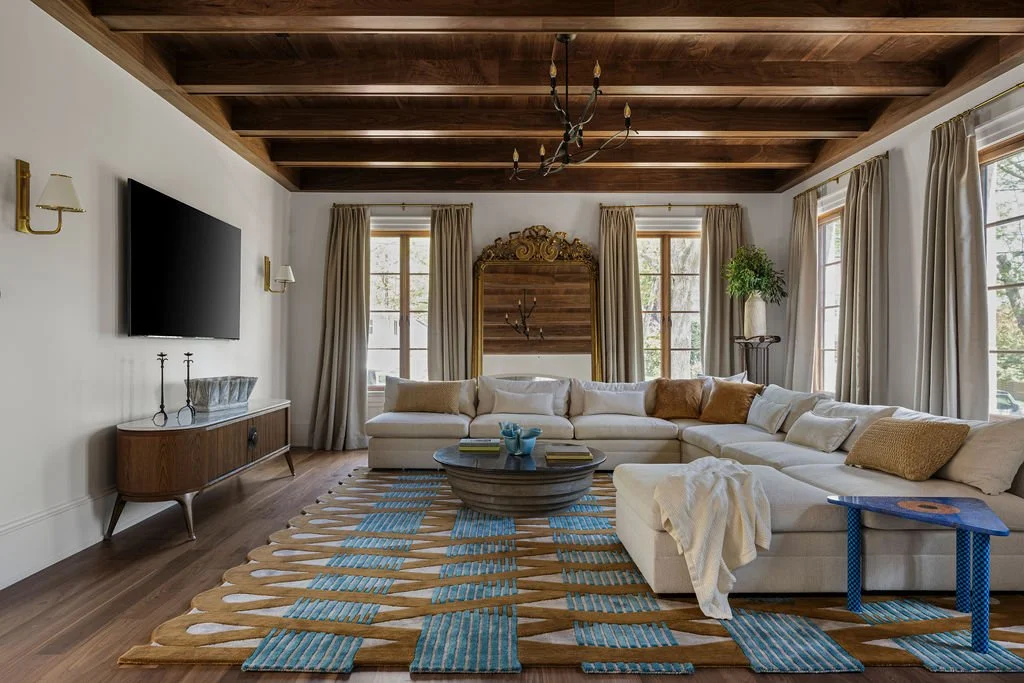
The family room features a walnut coffered ceiling and matching window casings. It offers architectural rhythm while balancing the volume of the space with warmth and intimacy.
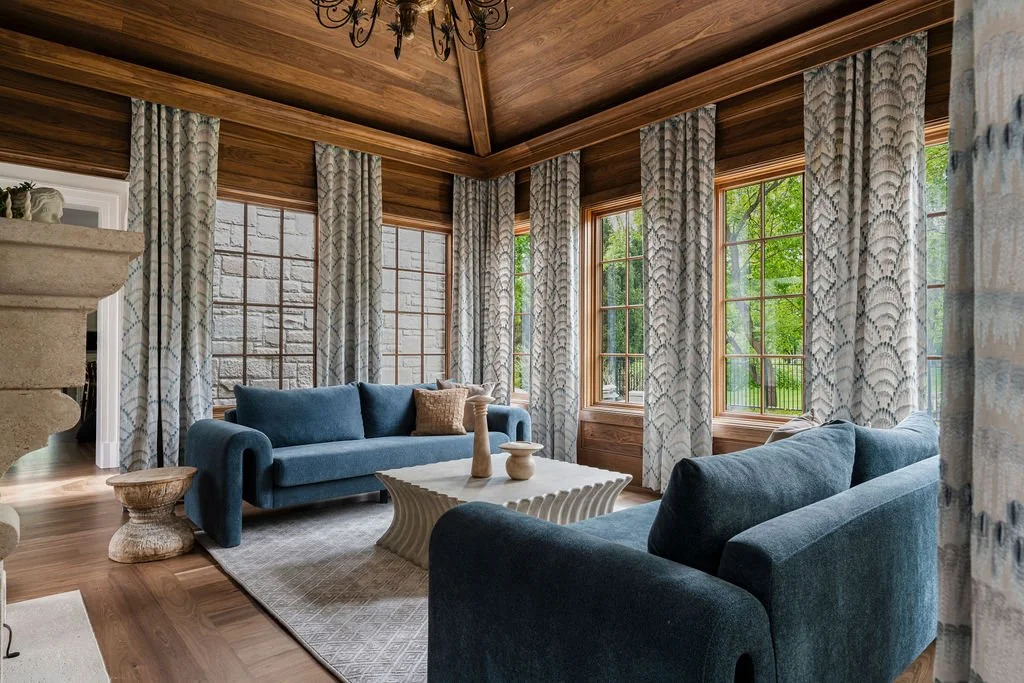
The Jewel Box—a vaulted room clad entirely in walnut millwork. Its cathedral ceiling, natural light, and plush textures create a luxurious retreat.
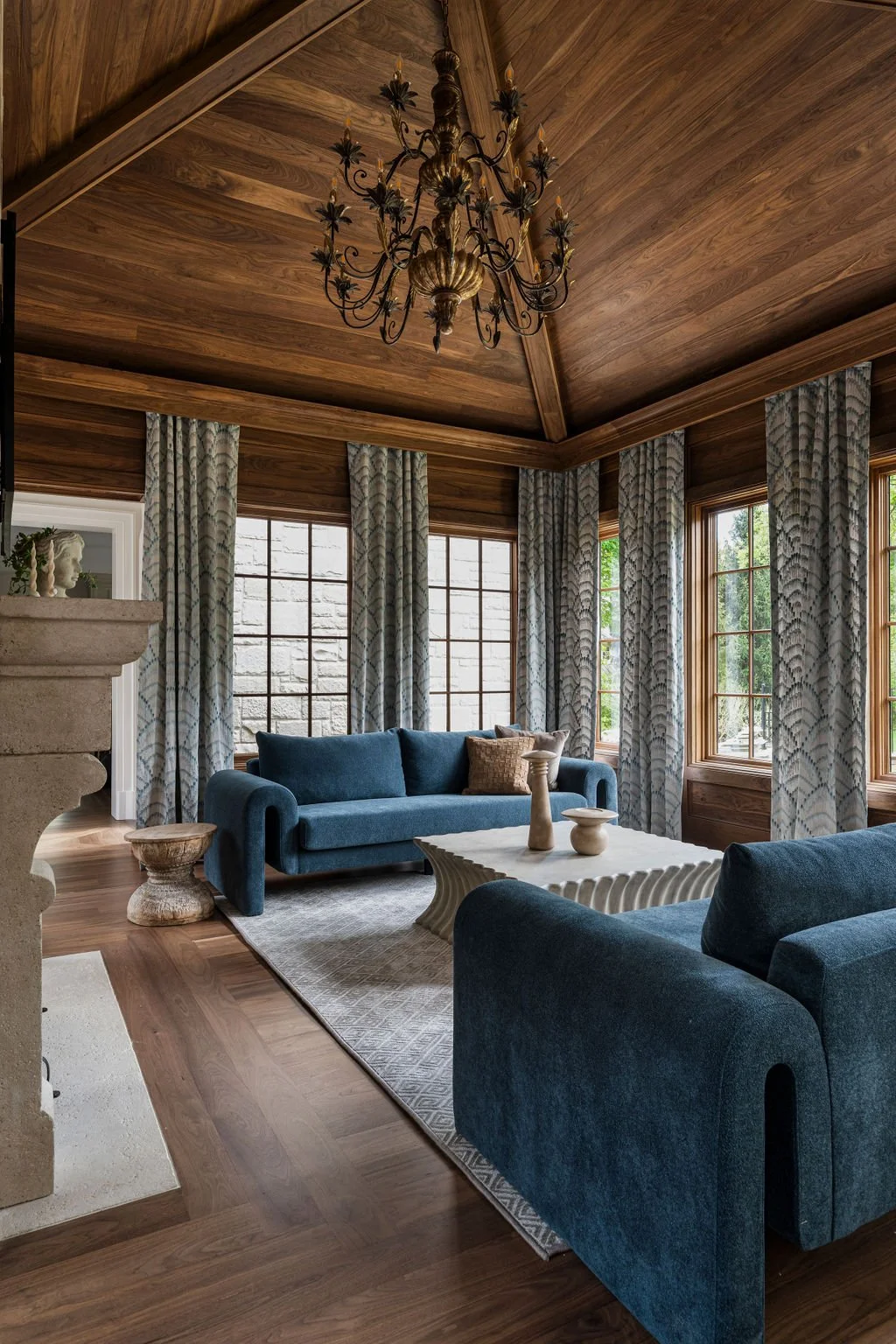
Another view of the Jewel Box, where every surface is wrapped in walnut, creating a unified and immersive architectural experience.
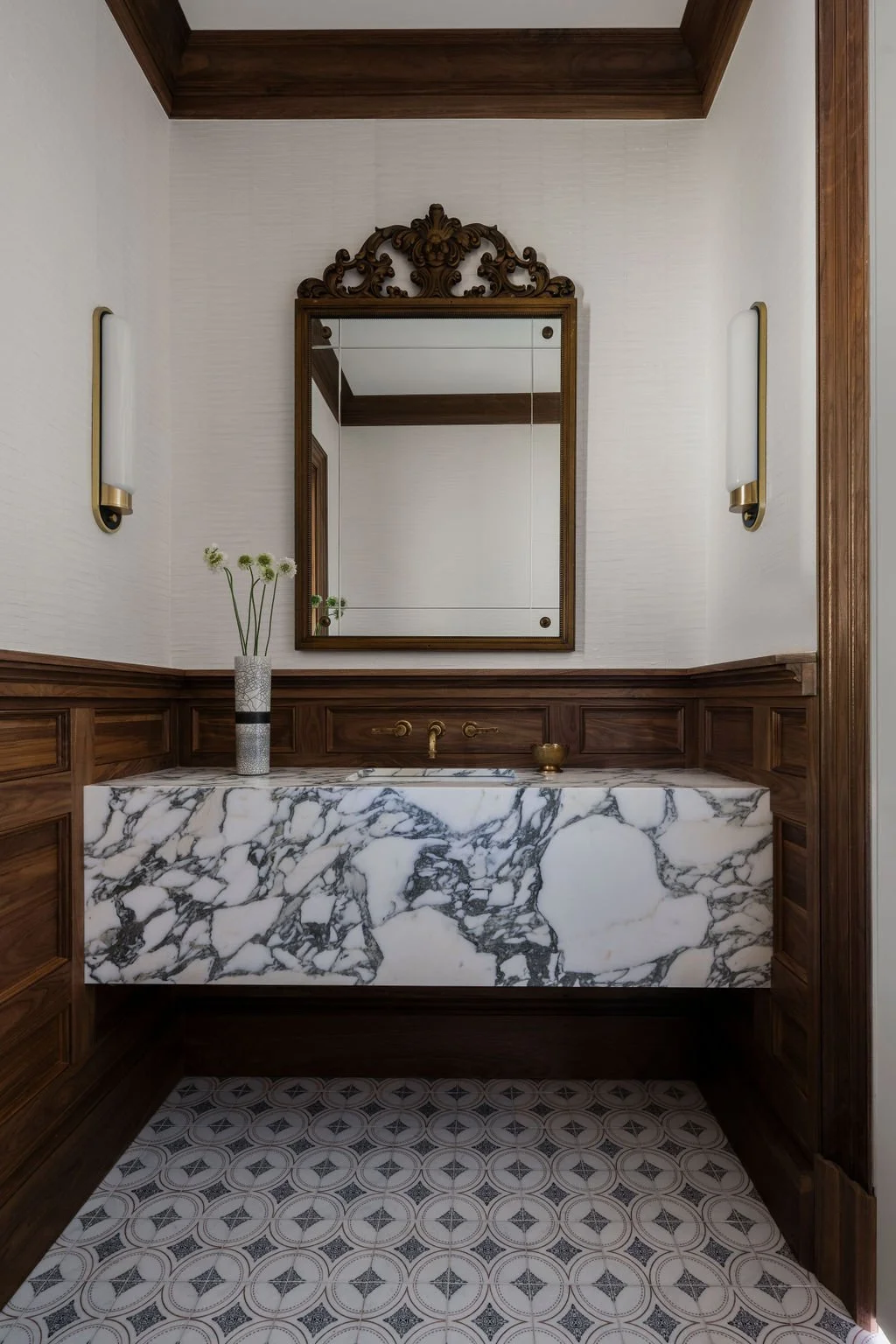
In the powder room, a sculptural Calacatta Viola sink contrasts with rich walnut wainscoting and brass fixtures. It’s a jewel-like vignette.
Throughout #StoneManor, the walnut was finished to highlight its natural tone—allowing the expressive grain and subtle color variation to shine.
⸻
Why Choose Walnut?
For those considering a departure from white oak, walnut offers a series of compelling benefits:
• Visual Depth: Walnut brings quiet drama to interiors, especially when paired with natural light, plaster walls, or honed stone.
• Aging Gracefully: Over time, walnut develops a rich patina—aging not into disrepair, but into distinction.
• Pairing Power: Its tonal versatility allows it to harmonize with both cool and warm palettes—brass, limestone, velvet, glass, and more.
⸻
Other Rich Wood Alternatives
Walnut isn’t the only option for those seeking warmth and weight:
• Smoked or fumed oak offers darker tones with visible grain.
• Sapele or mahogany introduce subtle red or amber undertones.
• Ebonized oak delivers a crisp, architectural edge in contemporary spaces.
The key is selecting a wood that not only suits the architecture but resonates emotionally—because the best homes aren’t just seen, they’re felt.
⸻
A Return to Substance
The shift from white oak to walnut isn’t simply about color—it reflects a broader change in the way we define luxury. Today’s most discerning clients want more than trends. They want homes that feel storied, rooted, and deeply personal. Materials like walnut connect us to craft, to history, and to the enduring beauty of the natural world.
At RS Mannino, we believe materiality is a language—and walnut speaks with quiet confidence.
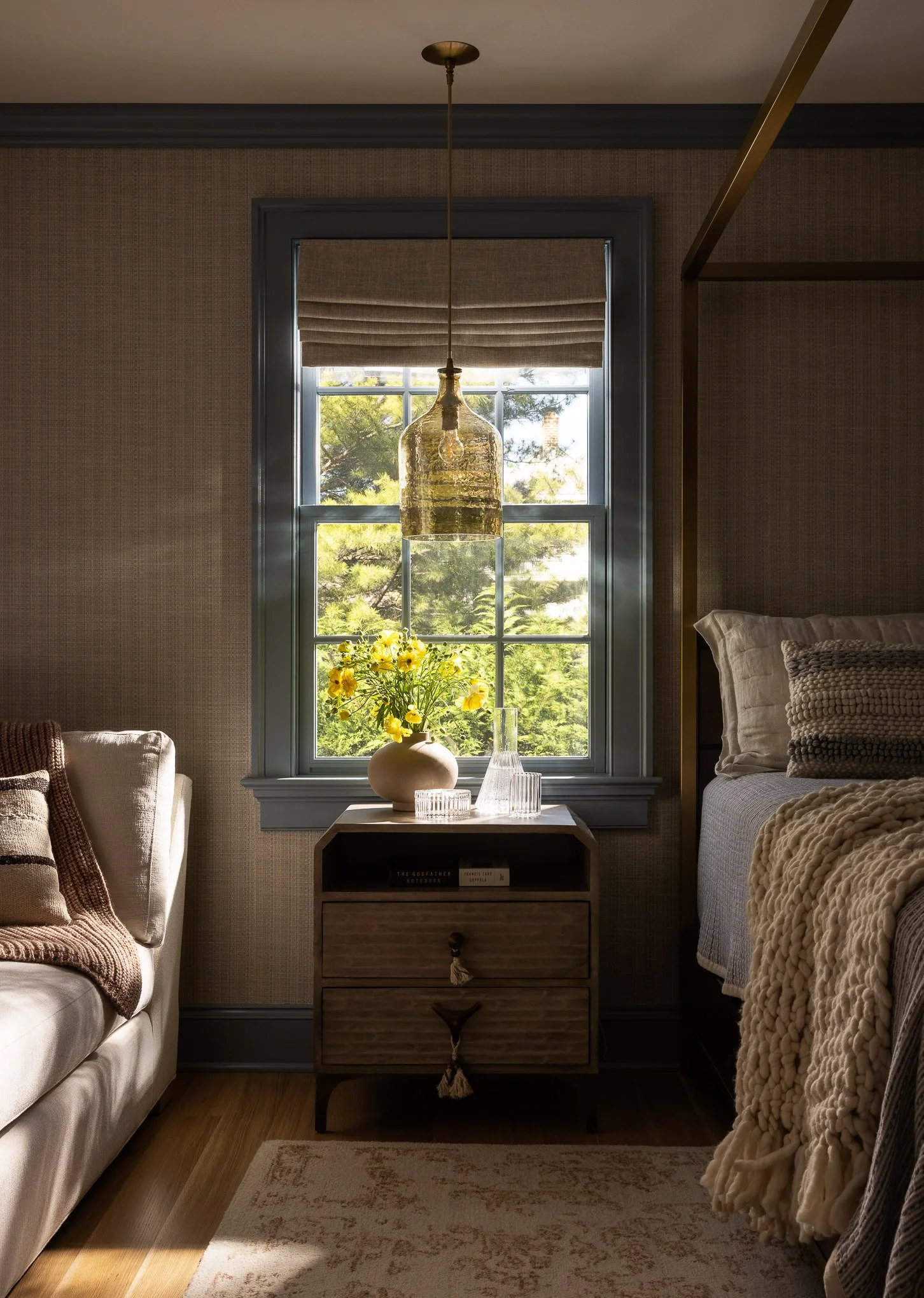
Beyond Drywall: Elevating Interiors with Texture and Luxury
Drywall has long been the default in residential construction, but in high-end design, flat surfaces feel uninspired. This article explores how materials like wallpaper, millwork, artisanal plaster, limewash, and fluted detailing can add depth, character, and architectural elegance to your home. Thoughtfully layered textures transform walls from background elements into focal points—imbuing spaces with warmth, shadow play, and timeless luxury.
The Drywall Dilemma: Why Flat Walls Fall Short
Most conventional homes are essentially boxes of drywall—flat walls and ceilings painted in safe shades of white or beige. While serviceable, this default backdrop often feels uninspiring. You end up in a box of flat surfaces with no depth, texture, or unique shadow lines. In ultra-luxury design, such blank canvases are simply stale.
High-end interiors demand more than plain painted drywall; they crave surfaces that engage the senses. From walls swathed in sumptuous wallcoverings to artisanal plasters that catch the light, the goal is to transform static walls into dynamic design features. Below, we explore a palette of elevated materials and techniques that bring life (and luxury) to interior surfaces—turning bland walls into bespoke experiences.
Wallpaper & Wallcoverings: From Flat to Fabulous
Wallpaper has made a dramatic comeback in high-end interiors, far beyond the simple printed papers of the past. Today’s wallcoverings deliver not just color and pattern, but also touchable texture that instantly enriches a room.
Options include:
Grasscloth: Woven from natural fibers like jute or sisal, these papers bring warmth and subtle sheen.
Silk: Handwoven silk wallcoverings reflect light softly and impart undeniable elegance.
Velvet or suede: Flocked textures add sensuality and depth.
Cork, metallics, and mica: Introduce shimmer and dimension to accent walls.
Hand-painted murals: From de Gournay or Fromental, these transform entire rooms into art installations.
Textured wallpapers don’t just decorate; they elevate. Whether you're creating a moody study, a jewel box powder room, or a serene bedroom, a carefully chosen wallcovering can serve as both backdrop and centerpiece.
Wood Cladding & Millwork: Architectural Warmth and Depth
Nothing conveys warmth and bespoke craftsmanship in an interior quite like wood paneling and millwork. From sleek modern slats to traditional raised panels, wood cladding introduces natural grain, pattern, and shadow that enrich a space.
Some elegant applications include:
Fluted wood paneling: Vertical grooves create architectural rhythm and shadow play.
Board-and-batten or shiplap: Classic details reimagined in fine hardwoods.
Chevron or herringbone patterns: Add movement and a sense of artistry.
Painted millwork: Glossy finishes on raised panels evoke timeless European sophistication.
Used as wainscoting, on ceilings, or full wall treatments, wood paneling transitions a room from ordinary to remarkable.
Artisanal Plaster Finishes: Old-World Texture Reborn
If walls are the canvas, plaster is the painter’s brushstroke. In luxury interiors, hand-applied plaster finishes provide tactile richness and visual nuance that flat drywall can never achieve.
Venetian plaster: A mix of lime and marble dust applied in translucent layers and burnished to a gentle sheen. It reflects light like polished stone.
Diamond plaster: A smoother, more matte version of Venetian plaster with velvety softness—ideal for subtle sophistication.
Clay and lime plasters: Earthy, breathable, and naturally pigmented for a softer, matte finish with tonal variation.
The beauty of these finishes lies in their imperfections: gentle trowel marks, tonal shifts, and subtle depth that changes throughout the day. They offer not only texture but also soul.
Lime Wash: Chalky Patina with Historic Charm
Limewash paint offers a centuries-old alternative to modern paint. Made from slaked lime and natural pigments, it dries to a matte, chalky finish that adds character to any surface.
What makes limewash so special?
Visible brush strokes and tonal variation.
Organic movement and depth.
Breathable and eco-friendly properties.
A soft patina that evolves over time.
In a dining room, a moody taupe limewash can feel like the walls of a Tuscan villa. In a bedroom, pale neutral tones bring serenity and quiet texture.
Leather & Upholstered Walls: Softness Meets Opulence
When true luxury is the goal, leather panels and upholstered wall treatments offer unmatched tactile and visual indulgence.
Full-grain leather: Adds richness and tailored elegance to studies or lounges.
Silk or velvet upholstery: Creates softness and acoustic warmth in bedrooms or media rooms.
Suede or nubuck panels: Offer a refined, matte texture perfect for contemporary interiors.
These materials don’t just absorb sound—they soften a room’s mood and make it feel unmistakably bespoke.
Stone & Tile Features: Nature’s Texture and Craftsmanship
For architectural depth and durability, consider stone and artisanal tile walls. Whether rustic or refined, these surfaces bring the texture of the earth indoors.
Elegant uses include:
Fluted limestone or honed travertine walls for organic minimalism.
Backlit onyx slabs as dramatic focal points.
Moroccan zellige tile in jewel-toned glazes with handcrafted imperfections.
Geometric 3D tile panels for modern rhythm and light play.
Used in entryways, powder rooms, or living room feature walls, these materials make a sculptural statement that no drywall can match.
The Power of Texture in Refined Design
In high-end residential architecture, walls are never an afterthought. They are an opportunity to showcase craftsmanship, heritage, and materiality. Texture is what turns a space from simply beautiful to deeply felt. It catches the light, muffles the sound, softens the air, and creates a sense of place.
For the discerning homeowner, trading flat drywall for richly layered alternatives is a declaration of taste—and a step toward living in an environment that inspires and delights with every surface.
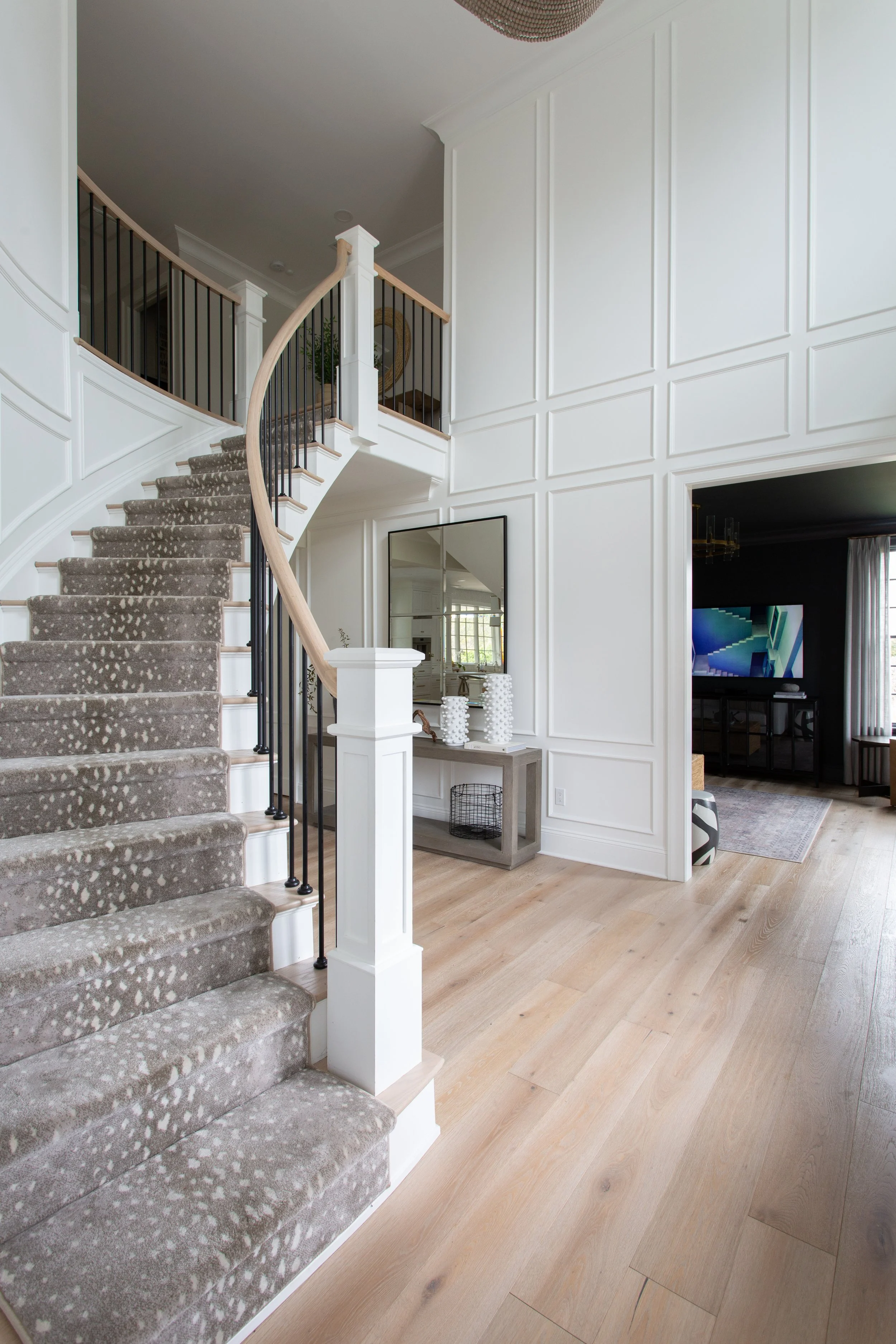
Who Does What? Clarifying Roles in a Custom Residential Project
High-end residential projects involve a network of professionals—architects, interior designers, engineers, and more. This article explores how responsibilities are typically divided across disciplines, how these roles have evolved, and why establishing clarity early on leads to better design, smoother execution, and more thoughtful homes.
Who Does What? Clarifying Roles in a Custom Residential Project
Designing and building a high-end home is both an artistic and technical endeavor. Architects, interior designers, landscape architects, engineers, and clients all bring vital contributions—but the lines between these roles aren’t always clear. Without well-defined responsibilities, projects risk inefficiency, miscommunication, or costly rework.
In this article, we’ll explore how roles are typically distributed across a residential design project, what tasks tend to fall into grey areas, and why clearly defining responsibilities upfront benefits both the design process and the finished home.
The History of Role Division in Residential Design
Historically, the architect was responsible for the totality of the home: its structure, finishes, furnishings, and even the silverware. In the late 19th and early 20th centuries, architecture firms like McKim, Mead & White or Greene & Greene were known for designing not only the homes, but also their interiors, lighting fixtures, and furniture.
As the profession became more specialized in the modern era, responsibilities began to splinter. Today, most projects are composed of independent contributors hired under separate contracts. That division of labor offers flexibility—but also demands coordination.
In the absence of clarity, the question “Who’s doing what?” becomes a recurring theme.
Where Problems Typically Arise
Many of the most problematic coordination issues happen in areas of overlap—especially those that require both aesthetic and technical expertise. Consider the following examples:
The interior designer selects sconces that are incompatible with the architect’s reflected ceiling plan.
The architect designs built-in shelving, but the cabinetmaker receives different specs from the interior designer.
The client hires a landscape designer after plans are filed, but the new grading conflicts with the approved civil drawings.
Each issue might seem small in isolation, but together they create friction, drive up costs, and delay project milestones.
The Role of a Responsibility Matrix
To minimize ambiguity, experienced project teams often use a Responsibility Matrix—a structured document that breaks down every major task by phase and assigns clear leadership and support roles.
It’s more than just a spreadsheet. It’s a tool for communication.
A sample breakdown might look like this:
Architect: zoning analysis, exterior form, window and door layouts, millwork design, ceiling detailing, construction documents.
Interior Designer: finish selections, furniture planning, lighting selection, decorative hardware, and artwork coordination.
Landscape Architect: grading, drainage, plant selection, hardscape layout, outdoor furnishings.
Engineers (civil, structural, MEP): technical systems, structural integrity, code compliance, energy modeling.
Client: strategic direction, aesthetic feedback, final approvals, and furnishings budget setting.
Each role is not only defined—it is intentionally coordinated.
Millwork, Trim, and the Grey Areas of Responsibility
Architectural millwork is a classic example of overlapping domains. Who owns the baseboard profile? Who draws the kitchen cabinetry? Who chooses the stain?
In many projects:
The architect leads built-in design and architectural trims (paneling, crown, door casings).
The interior designer selects finishes, hardware, and complementary soft goods.
The cabinetmaker translates concepts into shop drawings and handles fabrication.
But when no one takes the lead on integration, these details are easily missed—or worse, executed without intent.
For firms that fabricate millwork in-house, such as those with dedicated cabinetry shops, this process becomes much more controlled. Design, detailing, finishing, and installation are aligned under a single workflow.
Furnishings—Where Design Often Loses Momentum
Furnishings are frequently underestimated in the timeline and complexity of a residential build. Yet they represent some of the most emotionally significant elements of a home. They’re also the final layer of spatial design.
Furnishings should be considered part of the design process as early as Design Development, with a few key milestones:
Furniture layouts to inform electrical and lighting plans
Preliminary budgets for procurement
Selections and revisions based on scale and palette
Final placement drawings to guide delivery and staging
Outdoor furnishings—especially for terraces, pool decks, and garden rooms—follow the same logic and should be coordinated with landscape design and lighting.
Treating furnishings as an afterthought often leads to compromised scale, delayed installations, or awkward transitions between built-in and movable elements.
How the Matrix Improves the Client Experience
While the responsibility matrix is an internal coordination tool, it also helps clients make decisions more confidently.
It allows them to see:
Who is accountable for what
What deliverables to expect from each consultant
Where to direct questions as the project evolves
It also reduces the likelihood of the client becoming the accidental “project manager”—a role they’re rarely equipped or interested to play.
In well-run projects, the client’s role is strategic: guiding the vision, approving key milestones, and trusting the team to deliver.
Integrated Design as a Modern Return to Tradition
There’s a renewed interest in returning to a more integrated model of practice—where the same team oversees both architecture and interiors (and sometimes landscape and construction).
This model reflects the way legacy architects once worked—holistically, and with a single guiding vision.
Integrated design isn’t about doing everything in-house. It’s about eliminating silos. Whether the disciplines are under the same roof or simply working under unified leadership, the goal is consistency in form, detail, material, and proportion.
Firms that operate in this way typically produce homes that feel more cohesive, intentional, and timeless—regardless of style.
Final Thoughts
“Who does what?” is a deceptively simple question that cuts to the core of project management and design quality. It’s not just about delegating tasks—it’s about aligning vision, clarifying accountability, and ensuring that every inch of the home is addressed with care.
A responsibility matrix won’t solve every problem. But it is one of the most effective tools for keeping teams aligned, expectations realistic, and outcomes elevated.
For clients embarking on a high-end custom home, asking this question early—and often—can mean the difference between a home that feels assembled and one that feels authored.
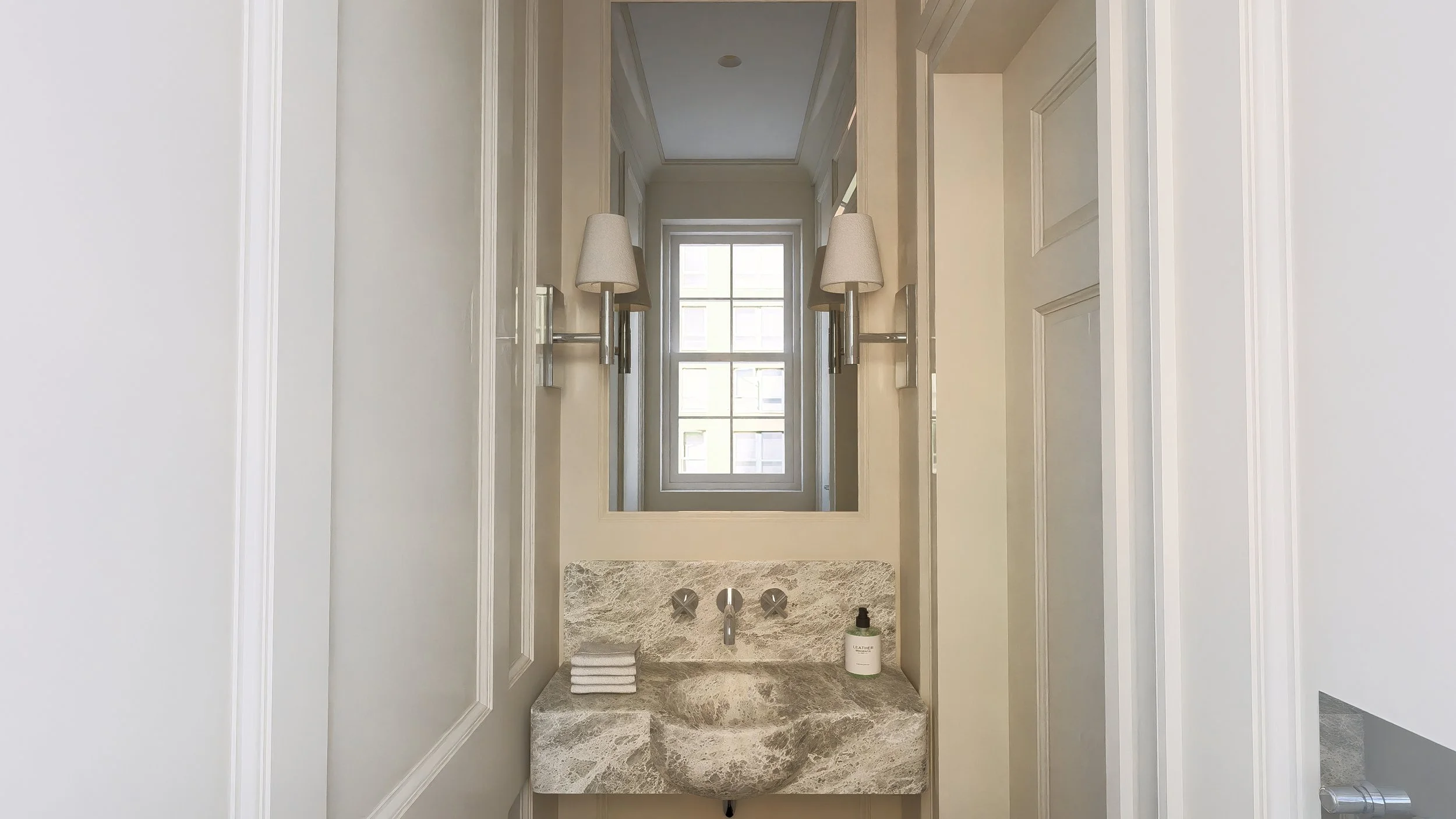
The Hidden Complexity of Renovating a Manhattan Luxury Apartment
Renovating a luxury apartment in Manhattan is anything but straightforward. From restrictive alteration agreements to seasonal construction blackouts, the process demands far more than design—it requires foresight, precision, and deep knowledge of how buildings operate in NYC.
Renovating a high-end apartment in New York City involves more than great taste and a talented design team—it requires navigating one of the most tightly regulated and logistically complex real estate environments in the world.
For Manhattan homeowners, particularly those living in full-service co-ops or prewar condominiums, the renovation process can be filled with hidden layers of approvals, seasonal restrictions, and logistical challenges that dramatically impact timelines and execution.
At RS Mannino, we bring clarity, control, and craftsmanship to every project. Here’s what sets Manhattan renovations apart—and how we make them seamless.
1. Alteration Agreements: Where Every Project Begins
Virtually every building in Manhattan requires owners to sign a formal Alteration Agreement before any work begins. This document governs the scope of construction, work hours, insurance requirements, contractor qualifications, and specific protocols related to plumbing, electrical, and structural changes.
These agreements are not standardized—they vary by building and can be dozens of pages long. Some include:
• Mandatory asbestos and lead paint testing
• Soundproofing and waterproofing requirements
• Water shutoff request procedures
• Pre- and post-construction inspections
• Required insurance limits and security deposits
We review these documents early and align the project scope and design with the building’s requirements before issuing drawings. Our proactive coordination with property managers helps streamline the approval process and prevent delays later on.
2. Holiday Moratoriums: The Overlooked Schedule Killer
Many luxury buildings in Manhattan enforce holiday moratoriums, pausing all construction work between Thanksgiving and New Year’s Day. Others block work during religious holidays, summer weekends, or school breaks when residents are more likely to be in residence.
Missing a milestone just before one of these blackout periods can push your project’s completion by weeks—or even months.
We factor seasonal restrictions into our schedules from the outset, building buffer time into the project calendar and sequencing trades to avoid unnecessary downtime.
3. Third-Party Design Review: Another Layer of Approval
Most buildings also require your architect’s drawings to be reviewed by a third-party design professional—an architect or engineer retained by the building to review your renovation plans for code compliance and infrastructure impact.
This process is separate from Department of Buildings (DOB) approval, and reviewers often request revisions related to:
• Plumbing stack tie-ins
• Ventilation and mechanical changes
• Load-bearing wall conditions
• Waterproofing and sound attenuation details
We prepare drawings that anticipate these requirements, minimizing back-and-forth and reducing review time. Once ready, we submit directly to the building’s property manager, who oversees the approval process with the board and third-party consultants.
4. Department of Buildings (DOB): Permits, Inspections, and Sign-Offs
Beyond building-level approvals, most renovations require DOB permits, even for interior-only work. Filing through DOB NOW often includes:
• Alteration Type II permits
• Energy Code compliance
• Asbestos reports (ACP-5)
• Plumbing and electrical permits
• Site safety requirements
We handle every aspect of DOB filings, from expediting and consultant coordination to final sign-off. Our team includes experienced architects and expeditors who understand how to move projects through DOB quickly and accurately.
5. Vertical Logistics: Planning for Tight Constraints
Unlike suburban construction sites, Manhattan apartments have no laydown space, narrow freight elevator windows, and strict rules for material delivery and noise.
Everything must be scheduled with precision—from demolition and debris removal to millwork deliveries and water shutoffs. Failure to follow building rules can lead to penalties or job shutdowns.
Our team coordinates with the building’s super and management to pre-schedule all trades and deliveries, ensuring the work proceeds without incident.
6. Building Politics and Neighbor Relations
While you may never meet your building’s board members, their preferences still shape your renovation. In co-op buildings especially, there’s a strong desire to maintain a cohesive design standard and minimize disruption.
Boards may reject applications they deem too invasive, too loud, or too unconventional. Meanwhile, neighbor complaints can trigger rule changes or work stoppages.
Our team prepares thorough, code-compliant drawings and detailed documentation that reflect the professionalism and care these boards expect—making the approval process smoother and less contentious.
7. Craftsmanship That Honors the Building
Whether renovating a Fifth Avenue prewar or a modern Central Park penthouse, finish quality must rise to the standard of the address.
At RS Mannino, our in-house cabinetry and millwork division enables us to deliver bespoke finishes, seamless installations, and unmatched control over quality and schedule. From intricate paneling to integrated lighting and hardware, every detail is executed to perfection.
8. A Seamless, Full-Service Experience
Renovating a Manhattan apartment often means juggling designers, engineers, expeditors, trades, deliveries, permits, and building approvals—all while trying to maintain your daily life.
With RS Mannino, you gain one team handling it all: architecture, permitting, construction, millwork, and project management under one roof. Our design-build approach ensures every detail is coordinated, communicated, and executed flawlessly.
Let’s Build Your Next Chapter
We know what it takes to renovate in Manhattan—and how to do it without the usual friction. If you’re ready to reimagine your apartment with clarity, confidence, and artistry, we’re here to help.
Let’s start a conversation.
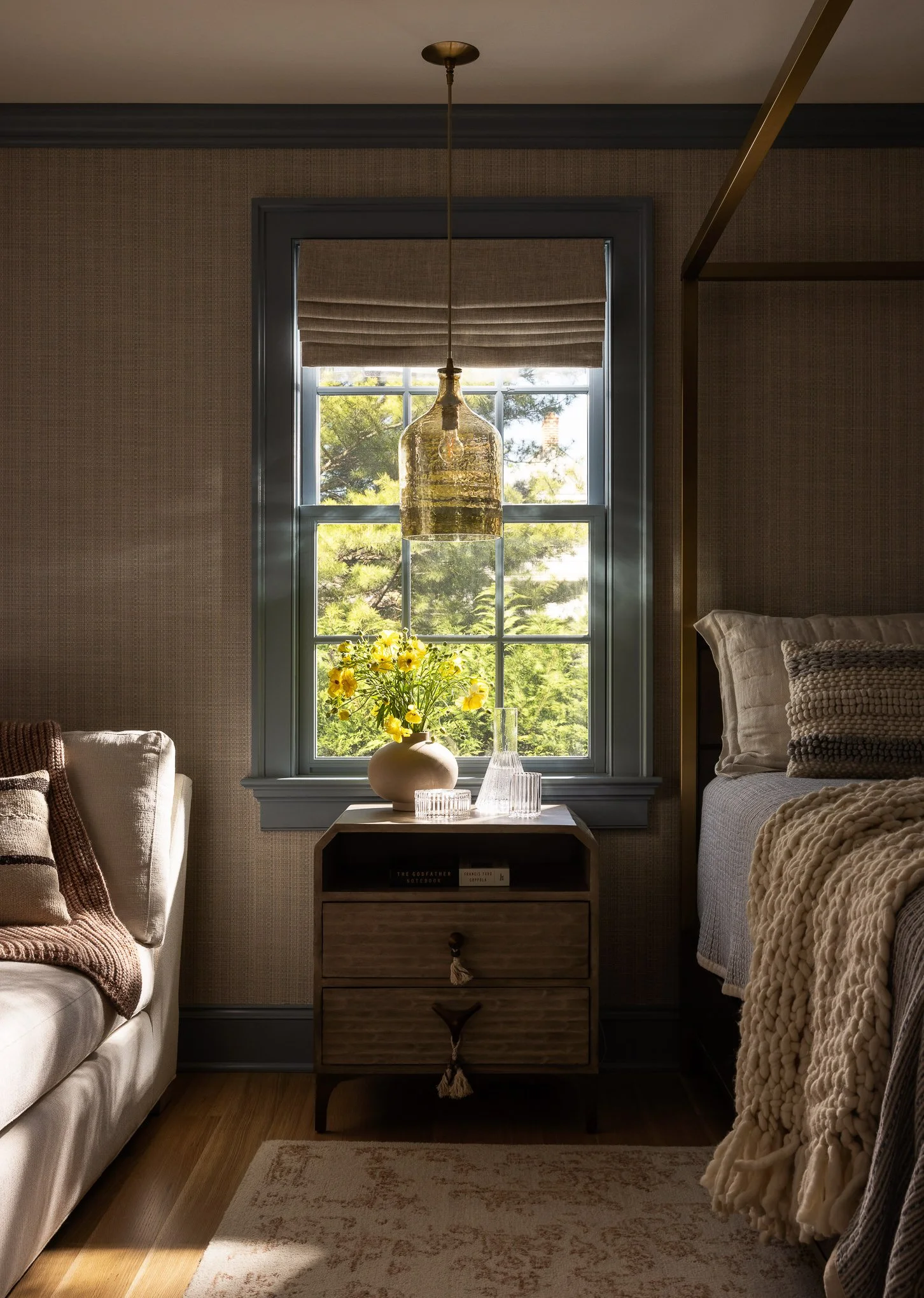
Budgeting for Your Custom Home or Renovation: The True Cost of a Successful Project
Learn how to properly budget for a custom home or renovation by understanding not just construction costs, but the full picture—including design fees, consultant costs, and furnishings.
The Hidden Truth About Homebuilding Budgets
If you’re considering building a custom home or undertaking a significant renovation, one of the most important steps you’ll take is creating a budget. Yet, for many homeowners, budgets are often limited to the most obvious line item: construction costs.
In reality, a successful custom home or renovation involves more than just bricks and mortar. At RS Mannino, we guide our clients to develop a comprehensive project budget that reflects the true cost of achieving a legacy-level home — beautifully designed, skillfully built, and fully furnished.
What Does a Complete Project Budget Include?
We encourage every client to plan for these four essential categories:
1. Construction Costs
This is the hard cost of building—labor, materials, sitework, utilities, and everything physically installed on your property. While this is the largest part of the budget, it’s only one piece of the puzzle.
2. Design Fees
Custom homes and bespoke renovations require tailored architectural and interior design. Design fees typically range from 8% to 16% of construction costs, depending on project size and complexity. Full-service design includes architectural drawings, interior selections, millwork design, and construction coordination.
3. Consultant Fees
Your project will likely require additional professionals such as:
Geotechnical/ Civil Engineer
MEP (Mechanical, Electrical, Plumbing) Engineer
Landscape Architect
Consultants typically add 4%–8% to the project budget. These experts ensure the project is code-compliant, structurally sound, functional and carry the design through to the site.
4. Furnishings, Art, and Decor
Often overlooked, but critical to the final result. Custom homes demand furnishings that match the scale, style, and quality of the architecture. A typical furnishings budget may range from 10% to 25% of construction costs, depending on how comprehensive the interior furnishing is.
Why Clients Get It Wrong
Many clients begin the design process without a full understanding of these categories. They may set aside $2 million for construction but forget to account for:
$150K+ for design services
$100K+ in consultant fees
$300K+ for interior furnishings
This can lead to tough decisions late in the process — compromises on design, finishes, or furnishings that could have been avoided with a complete budget upfront.
How RS Mannino Helps You Budget Smarter
As a full-service design-build firm, RS Mannino provides clients with:
Early and transparent budget guidance
Complete project cost planning
Coordination of all design and consultant services
Assistance with furnishings and interior packages
Our goal is not just to build you a house—but to deliver a beautifully designed, fully coordinated home that reflects your vision and lifestyle, with no surprises along the way.
Ready to Plan Your Project the Right Way?
Book a Discovery Consultation with us, and we’ll help you align your vision, priorities, and budget for a smooth and successful project.

Being an Architect vs. Being a Design-Builder
"Being an Architect is like writing a recipe but never getting to cook it. Being a design-builder is writing the recipe and cooking in the kitchen." At RS Mannino, we believe that great design shouldn’t stop at the drawing board. As a design-build firm, we oversee the entire process—ensuring that the vision we create is the one you experience. Learn why this approach results in better homes, smoother processes, and unparalleled craftsmanship.
Being an Architect is like writing a recipe but not being able to cook it. Being a design-builder is writing the recipe and cooking in the kitchen.
This statement resonates with me deeply because it highlights the key difference between traditional architecture and design-build—a difference that profoundly impacts the outcome of a project.
As an architect-only, you create the blueprint, the vision, and the "recipe" for a beautiful home. But you hand it off to someone else—the builder—to bring that vision to life. The challenge? What looks good on paper doesn’t always translate seamlessly in the field. Materials behave differently, conditions change, and interpretations vary.
As a design-builder, you don’t just write the recipe—you step into the kitchen. You oversee the execution, ensuring every ingredient (material, detail, craftsmanship) aligns with the original vision. You taste, refine, and adjust in real-time, guaranteeing that the end result is exactly as intended.
Why This Matters for Homeowners
For high-end custom homes, the design-build approach eliminates the common friction between architects and builders. Instead of finger-pointing, you get accountability. Instead of miscommunication, you get alignment. Instead of design compromises, you get seamless execution.
At RS Mannino, we don’t just design homes—we build them. We ensure that the details we envision are the details you get. Every decision, from concept to construction, is made with a deep understanding of both artistry and craftsmanship.
Want to experience a holistic approach to custom home design? Let’s talk.

Building a Luxury Custom Home in New Jersey: Navigating Regulations & Permits
Excerpt:
Building a custom home in one of New Jersey’s luxury home communities is an exciting opportunity to create a one-of-a-kind residence, but navigating the complex web of zoning laws, permit requirements, and community regulations can be overwhelming. Understanding key factors such as lot size restrictions, environmental considerations, and HOA guidelines is essential for a smooth process. At RS Mannino, we specialize in guiding homeowners through these intricacies, ensuring compliance while maintaining design excellence. Learn how to overcome common challenges and streamline your path to building a luxury home in New Jersey’s most prestigious communities.
Building a custom home in one of New Jersey’s luxury home communities offers an unparalleled opportunity to create a residence tailored to your vision. However, navigating the complex building regulations, zoning laws, and permit processes can be daunting. Understanding these requirements is essential to ensuring a smooth construction process and avoiding costly delays. At RS Mannino, we specialize in guiding clients through the intricacies of New Jersey’s luxury homebuilding landscape.
Understanding Zoning and Land Use Regulations
Zoning laws dictate what can be built on a given property, covering aspects such as lot size, building height, setbacks, and land use. In New Jersey’s upscale neighborhoods, zoning ordinances are often more stringent to maintain the character and exclusivity of the community.
Key considerations include:
Lot Size and Setbacks – Minimum lot sizes and required distances between structures and property lines vary by township. This ensures that homes maintain appropriate spacing for privacy, environmental impact, and neighborhood uniformity. Larger lots are common in luxury communities to accommodate grand-scale homes, outdoor amenities, and extensive landscaping.
Building Height Restrictions – Many high-end residential areas impose height limitations to preserve sightlines, maintain an aesthetic streetscape, and prevent overshadowing neighboring properties. Understanding these limits is crucial to achieving the right balance of scale and proportion in a custom home design.
Land Use and Historic Districts – Some neighborhoods have restrictions on demolitions, renovations, and new constructions to protect historic character. This may include guidelines on architectural styles, permitted materials, and limitations on structural modifications. Working with an architect familiar with these regulations ensures compliance while maintaining design integrity.
Environmental Regulations – Proximity to wetlands, flood zones, or coastal areas may require additional permits and environmental impact assessments. Site selection and early engagement with regulatory agencies help mitigate potential obstacles related to drainage, erosion control, and conservation efforts.
Permit Process for Custom Homes in New Jersey
Securing the proper permits is a critical step before breaking ground on a custom home. The permitting process generally includes:
Pre-Application Research – Reviewing zoning ordinances and environmental considerations with an architect or builder. This step ensures that the site’s existing conditions align with the intended design and helps avoid surprises later in the process.
Site Plan Approval – Many high-end communities require site plan reviews by local planning or zoning boards. These approvals evaluate elements such as driveway access, landscaping, exterior finishes, and overall massing to ensure harmony within the neighborhood.
Building Permits – Applications for structural, electrical, plumbing, and mechanical permits must be submitted and approved. Each permit must comply with state and local codes, and any deviations may require engineered solutions and additional reviews.
HOA and Community Approvals – Many luxury neighborhoods have homeowners’ associations (HOAs) with additional design and construction requirements. This may include specific architectural styles, required materials, and landscaping guidelines. Early engagement with the HOA streamlines the approval process and prevents costly redesigns.
Inspection Process – Various stages of construction require inspections to ensure compliance with safety and zoning regulations. Inspections often include foundation placement, framing, electrical work, and final occupancy approval. Working with a design-build team ensures that every phase of construction meets the highest standards of craftsmanship and regulatory compliance.
Overcoming Common Challenges in Luxury Home Construction
High-end neighborhoods often have unique regulatory challenges that can impact project timelines and budgets. Some common hurdles include:
Lengthy Approval Timelines – Permit approval in prestigious communities can take longer due to stricter regulations and community oversight. Engaging with experienced architects and expediters can help streamline this process and prevent unnecessary delays.
HOA Design Standards – Luxury communities often impose architectural and material restrictions to maintain aesthetic consistency. A deep understanding of these standards ensures that the proposed design aligns with the community’s vision while reflecting the homeowner’s personal style.
Historic Preservation Restrictions – Homes in designated historic districts must adhere to strict renovation and construction guidelines. This includes limitations on altering facades, window styles, and exterior finishes. Navigating these requirements requires expertise in historic restoration and adaptive reuse.
Variance Requirements – If a design does not conform to zoning regulations, a variance may be required, involving public hearings and additional approvals. Successfully obtaining a variance requires a compelling case demonstrating how the project benefits the community while respecting existing zoning principles.
Why Work with an Expert?
Navigating New Jersey’s building regulations requires extensive knowledge of local codes, permitting processes, and zoning laws. At RS Mannino, we provide:
Expert Zoning & Code Analysis – Ensuring your custom home design aligns with all regulatory requirements while maximizing design potential.
Seamless Permit Coordination – Handling all aspects of permit applications, approvals, and inspections to keep your project on track.
Community & HOA Liaison Services – Managing communication with neighborhood associations and local boards to navigate approval processes smoothly.
Luxury Home Expertise – Delivering high-end, architect-led design-build solutions tailored to the unique requirements of prestigious New Jersey communities.
Start Your Custom Home Journey with Confidence
Building a luxury custom home should be an exciting and fulfilling experience, not one bogged down by regulatory hurdles. By partnering with an experienced architect and builder who understands New Jersey’s high-end residential landscape, you can streamline the process and focus on bringing your dream home to life.
If you’re considering building a custom home in one of New Jersey’s prestigious neighborhoods, contact RS Mannino today to discuss your project and how we can navigate the regulatory process with ease.