From Flat to Vaulted: The Transformational Power of Ceiling Design
A Forgotten Canvas Overhead
In residential architecture, ceilings are too often treated as an afterthought. Yet historically, they were anything but invisible. From coffered ceilings in Renaissance villas to timber-framed cathedrals, the upper plane of a room was once a showcase of artistry, structure, and intent.
Today, while many modern homes default to flat ceilings, the opportunity to elevate—literally and figuratively—remains as powerful as ever.
⸻
Why Ceiling Design Matters
A ceiling does more than define a room’s vertical boundary. It affects:
Proportion – A vaulted ceiling can restore balance to a wide or large room that feels compressed.
Light – Raising the ceiling often increases window height or allows for clerestory windows, dramatically enhancing natural light.
Acoustics – Varying ceiling geometry can soften echoes or amplify sound, depending on materials.
Emotion – Spaces with greater volume often feel calmer, more open, and more refined.
In essence, ceiling design influences how a room feels just as much as how it functions.
Case Study: #UnderTheGabledGreen
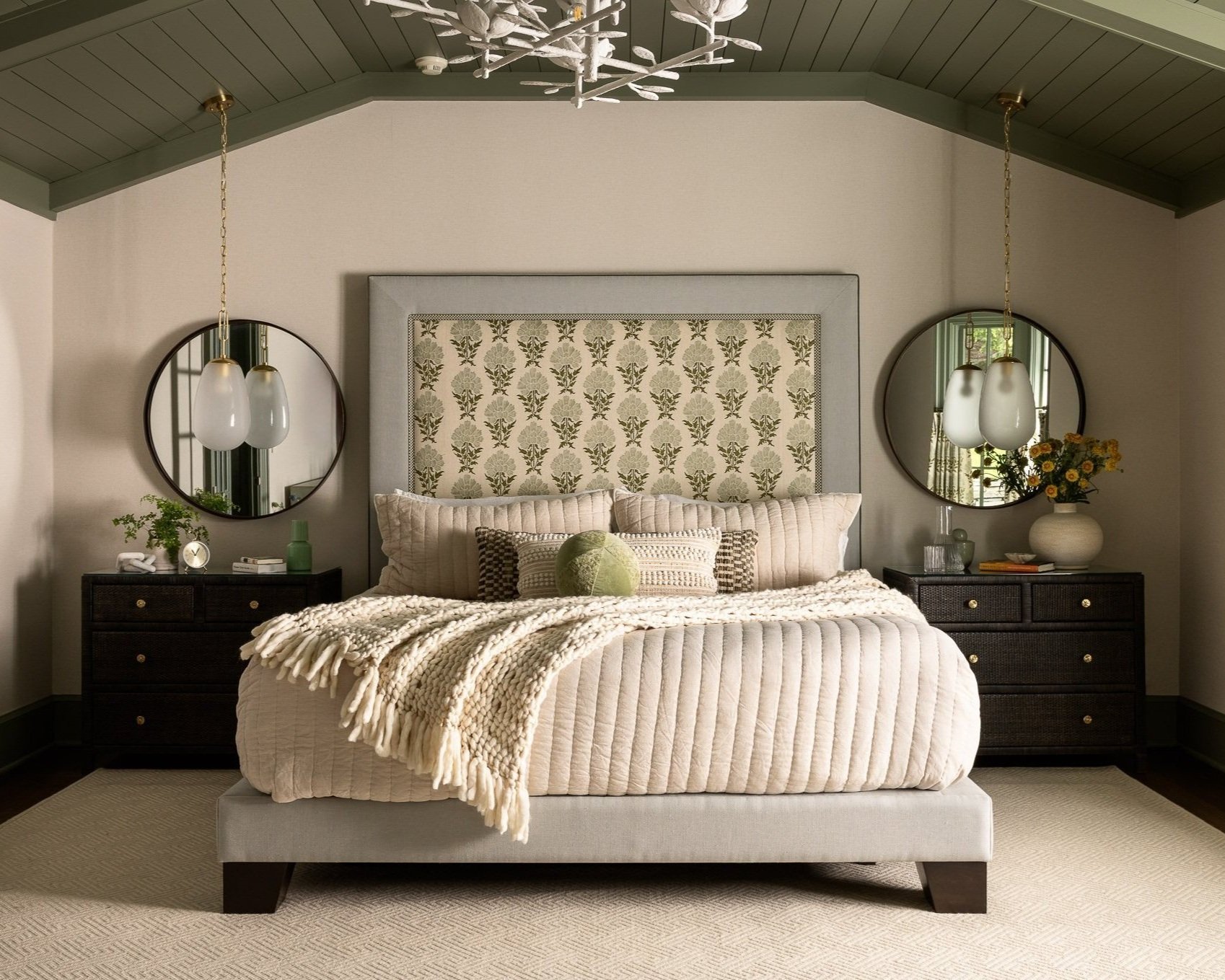
When we began the full renovation of the primary suite at #UnderTheGabledGreen, one feature stood out as a design opportunity: the ceiling.
Originally flat and visually disconnected from the generous square footage of the bedroom, the ceiling made the room feel awkwardly compressed. We saw a chance to honor the architecture by working upward.
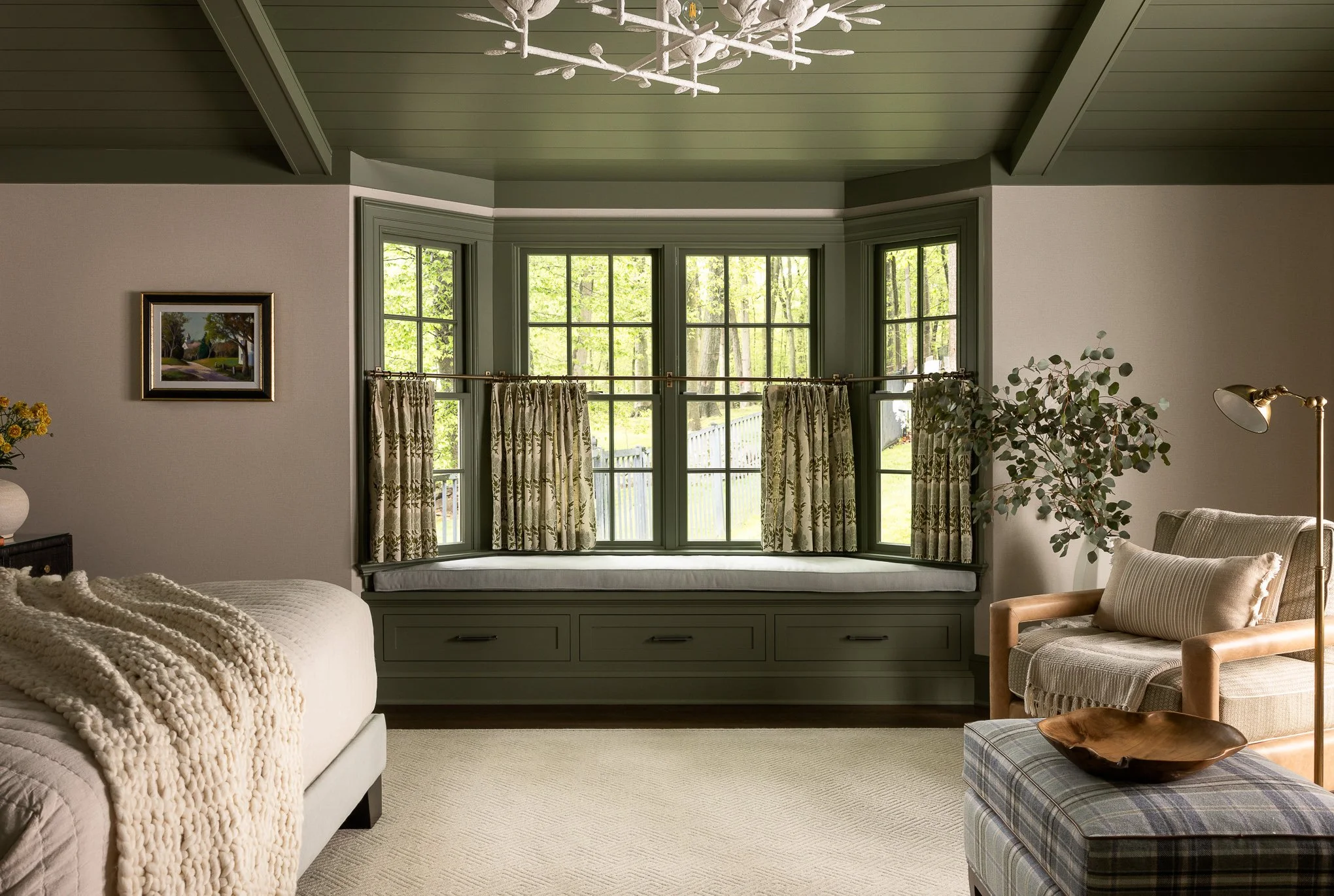
By utilizing the dead space in the attic cavity, we created a cathedral ceiling punctuated by exposed faux beams and v-groove paneling. The result is not just taller—it’s textured, inviting, and historically grounded.
This architectural move shifted the tone of the entire space. What was once merely a bedroom now feels like a sanctuary.
Architectural Vocabulary: Vaulted vs. Cathedral vs. Coffered
Understanding the distinctions is key to intentional design:
Vaulted Ceiling: Any ceiling that angles upward beyond the flat plane. It can be symmetrical (like a barrel vault) or asymmetrical (shed style).
Cathedral Ceiling: A symmetrical vaulted ceiling that follows the pitch of the roof, typically with a ridge line in the center.
Coffered Ceiling: A series of sunken panels—often square or octagonal—typically used in formal spaces like libraries or dining rooms.
Each of these ceiling types can be tailored to the architectural language of the home—from minimalist to classical, rustic to contemporary.
Material Matters
What you see overhead isn’t just about geometry—it’s about materiality.
Natural wood adds warmth, especially in beams, planking, or paneling.
Painted v-groove offers a fresh but traditional feel.
Plaster detailing or limewash finishes bring Old World softness and patina.
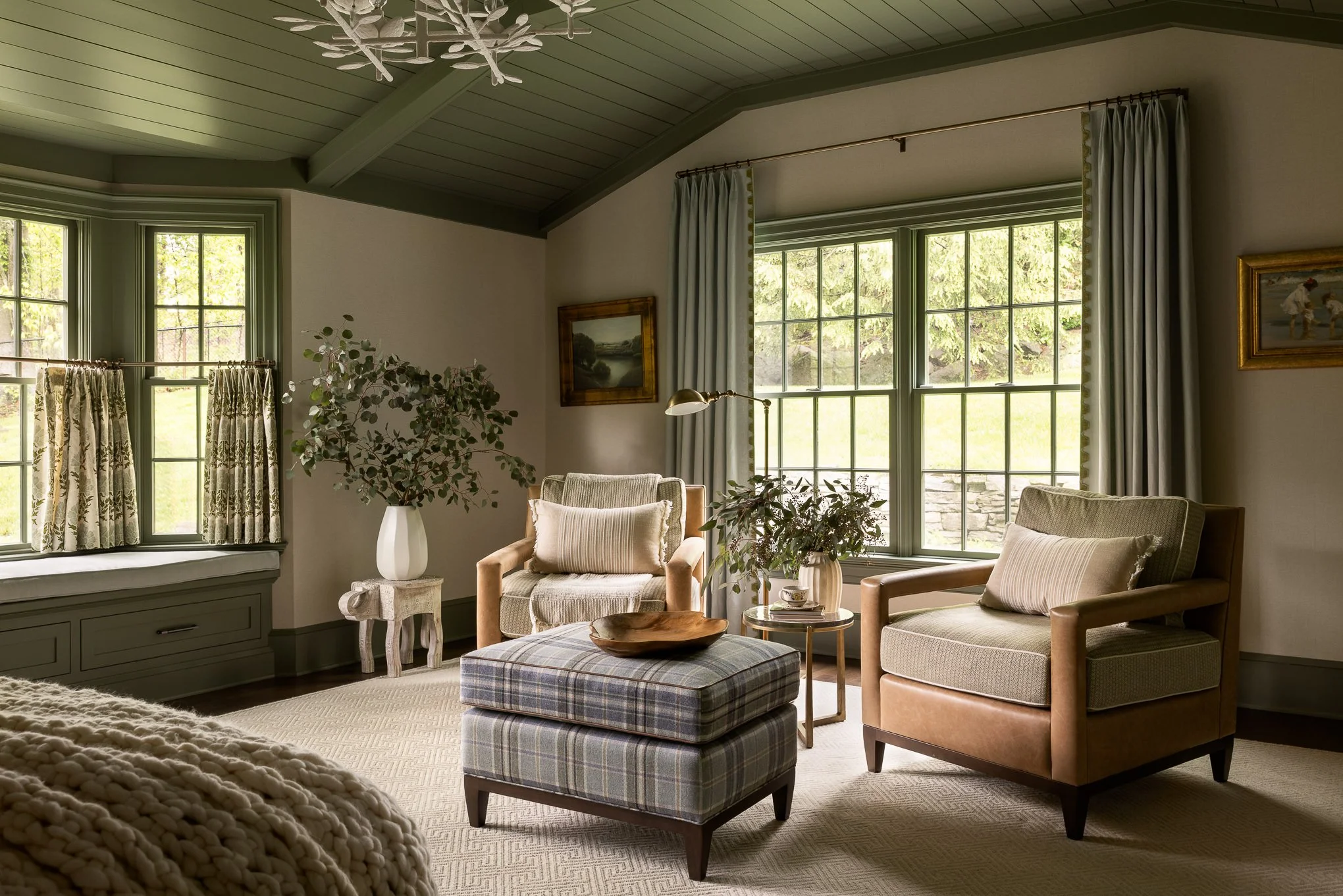
At RS Mannino, we often use ceiling material choices to connect adjacent rooms, signal transitions, or create a subtle visual rhythm throughout the home.
A Design Opportunity Worth Taking
Ceiling design may not appear on most client wishlists, but it is often the move that elevates a room from good to great. For those building or renovating their forever home, it’s a place worth investing thought and craft.
Done well, a vaulted ceiling adds not just height—but soul.