How to Plan a Thoughtful New York City Townhouse Renovation
By RS MANNINO – Architect-Led Design Build
Renovating a New York City townhouse is one of the most rewarding architectural journeys a homeowner can undertake. Whether it’s a brownstone in Park Slope, a limestone façade on the Upper East Side, or a narrow Federal home tucked into the Village, these buildings hold a tangible sense of the city’s history and character.
Bringing one into the present—while preserving what makes it special—requires more than imagination. It calls for sensitivity to proportion and light, a respect for craft, and a practical understanding of New York’s intricate codes, logistics, and permitting landscape.
This guide outlines the key considerations that shape a well-planned townhouse renovation—one that respects the past while creating a home designed for the way you live today.
⸻
1. Begin with Clarity and Realistic Expectations
Every successful renovation begins with clear intent. Define how you want to live in the home: open spaces for family life, restored detail for historical charm, or contemporary simplicity within an old shell.
Establishing a realistic budget early helps direct design decisions. In New York City, high-quality townhouse renovations typically range from $600 to $1,200 per square foot, depending on the level of finish and structural complexity.
⸻
2. Understand Your Building’s Context
Townhouses rarely exist in isolation. Many are within Landmarks Preservation Commission (LPC) districts or fall under restrictive zoning envelopes. Even minor exterior changes—windows, railings, or a rear yard addition—often require approval.
Before design begins, your architect should confirm zoning, egress, and landmark requirements to ensure the project’s feasibility and compliance.
⸻
3. Document Existing Conditions Thoroughly
No two townhouses are the same. Hidden conditions—settled foundations, corroded steel, uneven framing—often reveal themselves only once work begins. A detailed survey and structural evaluation reduce uncertainty and allow for accurate cost forecasting.
Logistics matter too. Narrow streets, limited storage, and tight access points all influence how materials are delivered and waste is removed. Understanding these constraints early saves time and frustration later.
⸻
4. Integrate Architecture, Interiors, and Building Systems
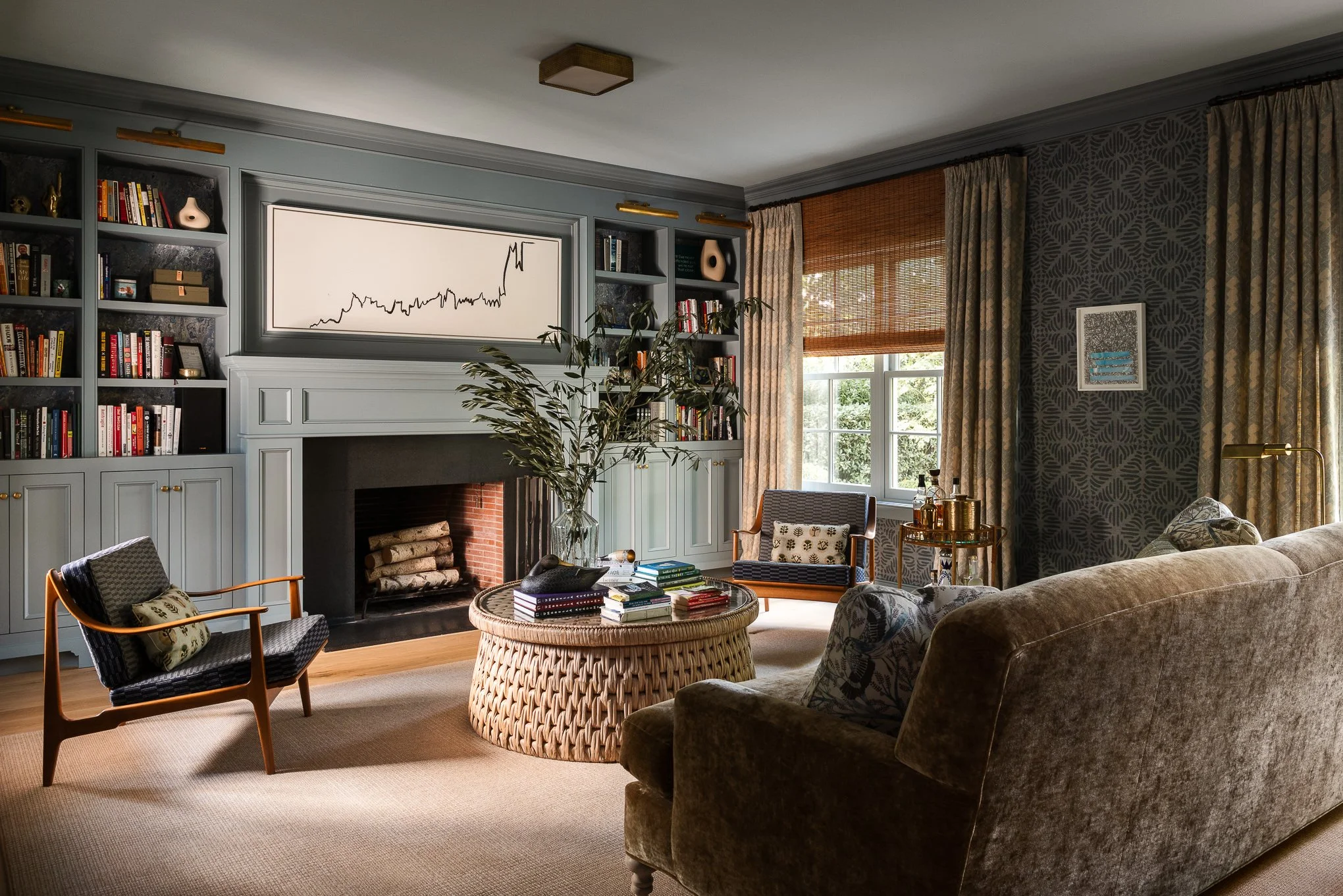
Great townhouse renovations feel seamless because architecture, interiors, and engineering are considered together. Aligning these disciplines early allows mechanical, electrical, and plumbing systems to be integrated discreetly within the architecture rather than imposed upon it.
Details such as custom millwork, stair profiles, and built-ins define the experience of the home— marrying form and function through craftsmanship.
⸻
5. Reimagine Vertical Flow and Light
The narrow footprint and stacked floors of a townhouse can feel enclosed if not planned thoughtfully. Reworking the stair core, enlarging openings, and introducing skylights or light wells can dramatically change how light moves through the house.
A well-proportioned stair and carefully aligned openings often bring more impact than square footage additions.
⸻
6. Anticipate the Timeline and Process
Permitting in New York City is a marathon, not a sprint. Between the Department of Buildings (DOB), the Landmarks Preservation Commission (LPC), and occasionally the Community Board, the design and approval process can span well over a year before construction even begins.
Expect:
Design and permitting: 12–15 months
Construction: 12–18 months
Post-completion fine-tuning and closeout: 1–2 months
These timelines reflect the rhythm of working within historic neighborhoods, dense urban conditions, and multi-agency oversight. The most successful townhouse projects are those that embrace this pace—treating it as part of the craft rather than a delay—allowing for careful detailing, thorough coordination, and a smoother build once work begins.
⸻
7. Build for Longevity, Not Trend
The finest townhouses endure because their design decisions are made with permanence in mind. Use authentic materials, respect the home’s proportions, and select finishes that will age gracefully.
Every element—from masonry restoration to custom cabinetry—should reflect an investment in craft. When the architecture, construction, and millwork are guided by one cohesive vision, the result feels inevitable rather than imposed.
⸻
Build With Clarity, Craft With Purpose
Every exceptional home begins with a clear foundation: vision aligned with reality.
At MANNINO, our integrated process transforms complexity into confidence — ensuring every detail, from structure to finish, reflects the architecture’s intent.
Ready to begin your Feasibility Study?
Contact MANNINO to start your journey toward a home worthy of its setting — crafted with integrity, precision, and permanence.
⸻
Photography: MANNINO Project Portfolio
Written by: Rosario S. Mannino, AIA, LEED AP
© 2025 MANNINO. All Rights Reserved.