Renovating a Prewar Manhattan Apartment: Preserving Character While Rebuilding Luxury
By RS MANNINO – Architect-Led Design Build
The Enduring Allure of Prewar Manhattan Living
There is a particular magic to the prewar apartment. Step into a 1920s Park Avenue classic-six or a 1930s Art Deco residence in the West Village, and the architecture speaks immediately—high ceilings, thick plaster walls, hand-laid herringbone floors, and casings carved with a level of detail rarely seen in contemporary construction.
For many New Yorkers, these homes represent a link to the city’s architectural heritage. But they also represent an opportunity: the chance to reinterpret storied interiors through the lens of modern luxury.
Renovating a prewar apartment is not simply a construction exercise. It is an act of stewardship.
At MANNINO, we approach these projects with reverence for the original character—and a belief that thoughtful architecture can elevate the home far beyond its original intent.
“A prewar renovation succeeds when the soul of the home remains intact, even as every surface and system is renewed.”
⸻
Understanding the DNA of Prewar Architecture
No two prewar buildings are identical, yet certain architectural signatures reappear across the city’s finest co-ops and condo conversions. Before drawing a single line, we study the apartment’s inherent language—its proportions, rhythms, materials, and craftsmanship—so the design that follows feels both respectful and inevitable.
1. Proportion & Scale
Prewar rooms typically have ceiling heights ranging from 9 to 11 feet, often enhanced by tall windows and deep casings. These generous dimensions frame elegant interior architecture—and they guide decisions about millwork, paneling, lighting, and furniture layout.
2. Plasterwork & Moldings
Where many apartments today use thin drywall, prewar homes were built with thick plaster walls and expressive moldings. Rosettes, cornices, picture rails, and coved ceilings define these interiors. Restoring or reinterpreting this detail is central to preserving the home’s character.
3. Flooring Patterns
Hand-laid parquet or herringbone floors are common, often made from old-growth oak with a patina impossible to replicate. Clients frequently ask whether to restore or replace. Our typical approach: restore where possible, match where necessary, and introduce transitions that feel historically plausible.
4. Steel & Wood Windows
Original steel casement windows—even when replaced—often inspire our detailing, whether in new millwork, interior glazing, or lighting.
A prewar renovation begins with observation, not intervention.
⸻
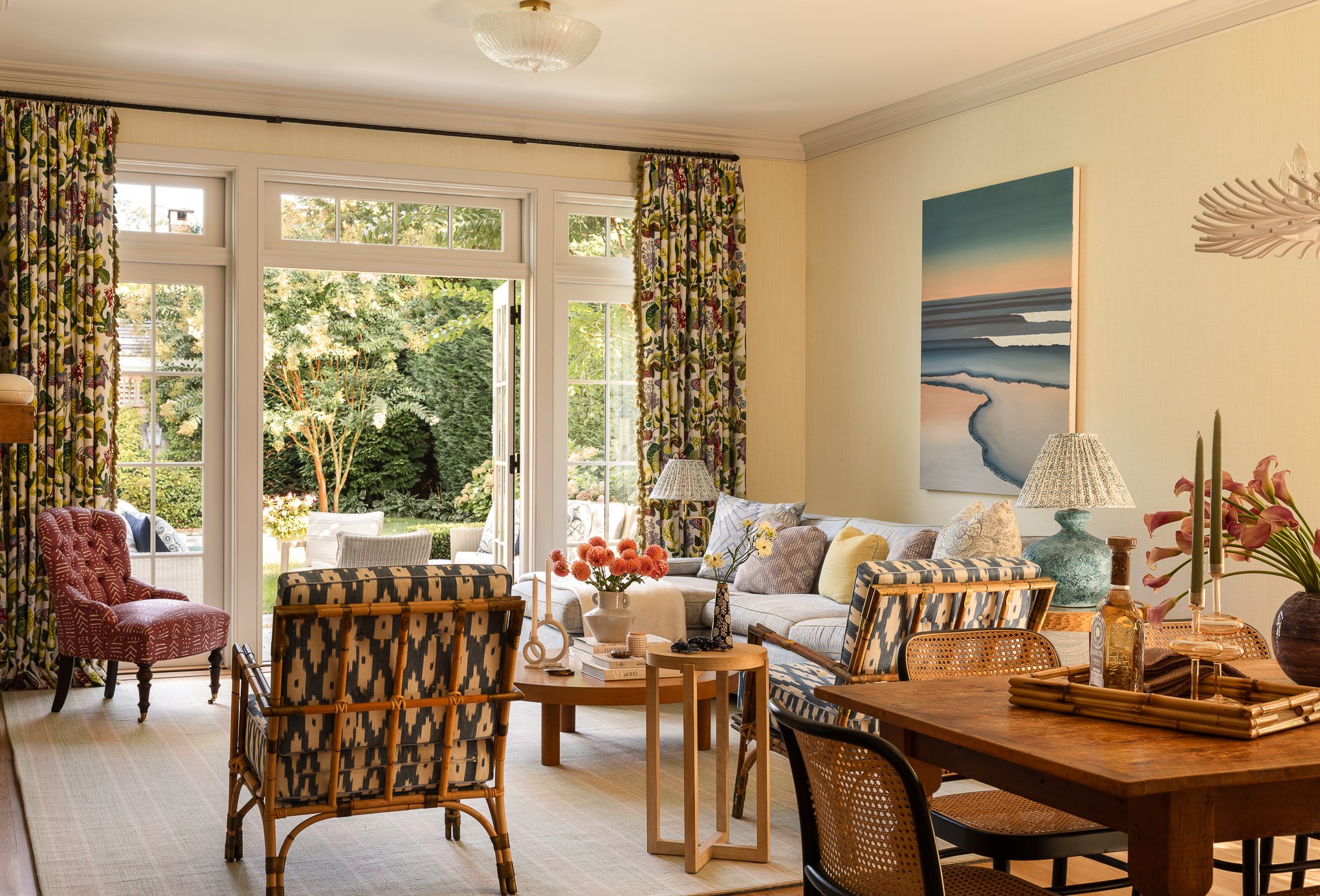
Respectful Reinvention: How Modern Living Fits Within Historic Bones
While the architectural shell may remain timeless, modern life places new demands on kitchens, bathrooms, storage, lighting, and technology. The question becomes: How do we integrate contemporary luxury without disrupting the apartment’s inherent character?
1. Reimagining the Kitchen as a Living Space
Many prewar layouts isolate the kitchen deep within the apartment—originally a service zone. Today’s families desire open, light-filled kitchens that serve as extensions of the living space.
Where structure and board rules allow, we explore:
Opening kitchen walls while preserving original moldings
Integrating custom millwork that references prewar paneling
Using sculptural stone and elevated hardware that complement rather than compete with historic detail
A beautifully redesigned kitchen becomes a bridge between eras.
2. Modern Bathroom Suites with Classic Underpinnings
Historic bathrooms often contain charming—but outdated—details: tiny tubs, aging plumbing, and impractical layouts. We re-envision these spaces with:
Heated stone floors
Marble slabs selected for veining that feels timeless
Classic wainscoting rendered in stone or millwork
High-performance fixtures designed with traditional silhouettes
The result is a sanctuary that embodies luxury without feeling anachronistic.
3. Integrating Technology Invisibly
Lighting control, home automation, radiant heat, and mechanical upgrades must be inserted with precision. In prewar work, we strive for invisible integration:
Recessed lighting treated sparingly, using millwork or cove lighting instead
Concealed AV storage integrated into paneling
Mechanical routing planned to avoid interrupting historic beams
You feel the calmness and comfort of modern technology—but never see the mechanics behind it.
“The architecture should feel as if it has always been there—even when the infrastructure is entirely new.”
⸻
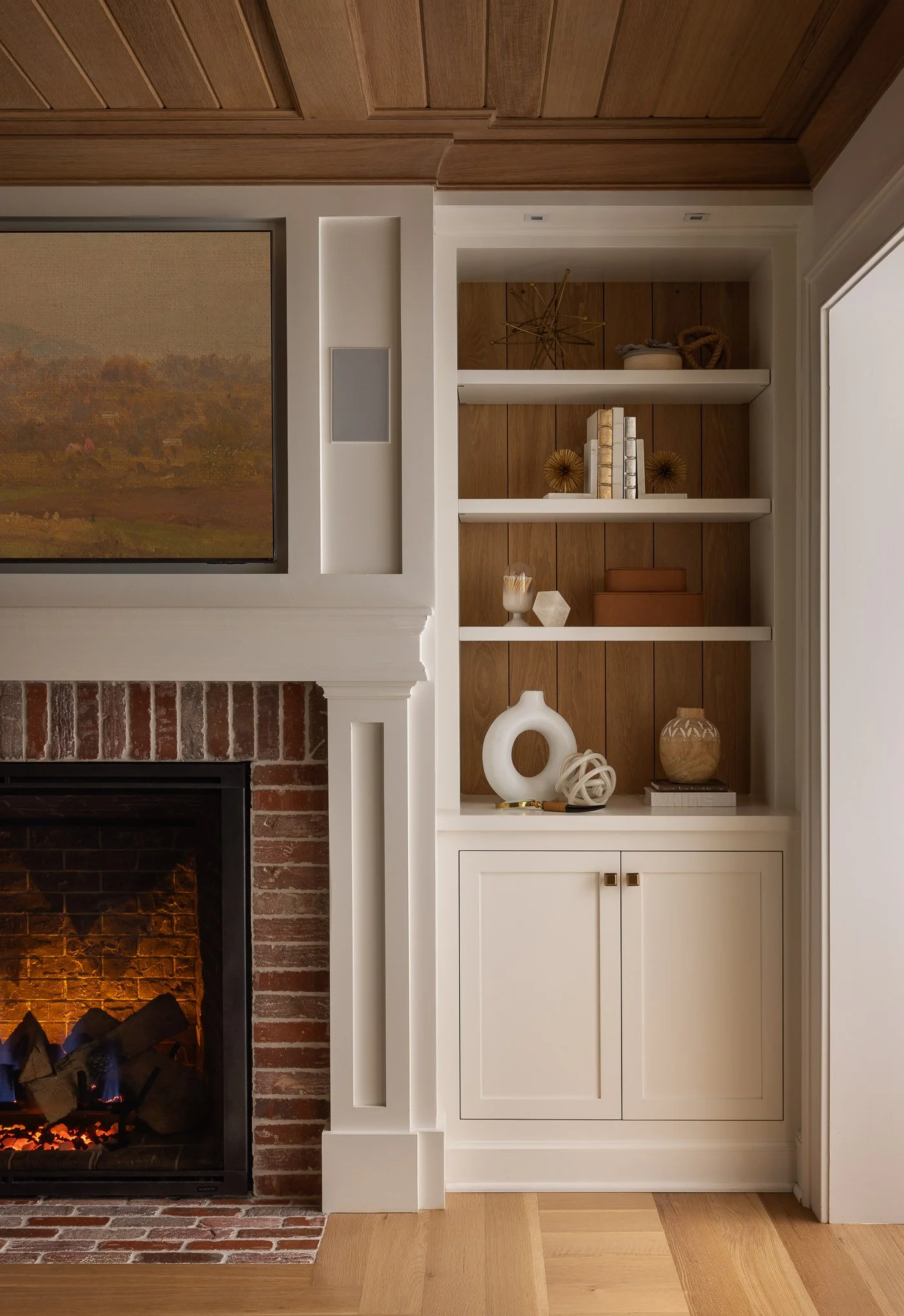
Preservation Through Craft: Why Millwork Matters
Craftsmanship is the soul of a prewar apartment, and nowhere is this more evident than in the millwork.
At MANNINO, our millwork team plays an integral role in restoring and elevating these interiors. The level of customization required is far beyond typical cabinetry—it is architectural millwork, built as part of the home’s language.
Our millwork approach includes:
Hand-matched veneers for bookcases, libraries, and wall paneling
Custom knife profiles to replicate or reinterpret original moldings
Solid wood door construction with period-appropriate rails and stiles
Built-in storage designed to appear original to the apartment
When done well, new millwork “disappears”—it feels like it has always belonged. This is the essence of respectful renovation.
⸻
Correcting the Flaws of Time Without Erasing the Past
Prewar apartments often come with complications: sloping floors, sagging ceilings, outdated electrical systems, and plumbing stacks constrained by building rules. Addressing these challenges requires both technical expertise and aesthetic sensitivity.
Common structural and systems improvements include:
Leveling floors while preserving historic patterns
Reinforcing sagging joists without compromising ceiling height
Updating 80-year-old electrical for today’s load requirements
Soundproofing between units using contemporary acoustic assemblies
Replacing aging plumbing risers where allowed
Our guiding principle: correct the flaws, preserve the fabric.
The result is a home that feels both beautifully aged and impeccably modern.
⸻
Reconfiguring the Layout for Modern Life
One of the most transformative aspects of prewar renovation is the reorganization of space. Original layouts often include small staff rooms, long corridors, compartmentalized kitchens, and separated formal rooms.
Today’s luxury clients seek:
Larger primary suites
Open or semi-open kitchens
Expanded living rooms
Home offices or studies
Better flow for families and entertaining
The art lies in reconfiguration without disruption.
For example:
Removing a non-structural wall between the kitchen and dining room but retaining a historic arch
Converting a staff room into a walk-in closet within a new primary suite
Opening a corridor by introducing millwork portals that echo the prewar casings
Every new gesture must converse with the old.
⸻
The Role of the Co-op or Condo Board: Preserving Building Integrity
Prewar buildings rely on strict alteration agreements to protect their historic structures. These guidelines can include limitations on:
Plumbing locations (no wet-over-dry)
Structural modifications
Noise mitigation
Work hours
Electrical load balancing
HVAC installations
Rather than seeing these restrictions as obstacles, we treat them as parameters that help shape a more thoughtful design. Much of our work involves:
Preparing board submission packets
Coordinating architecturals, MEP plans, and structural drawings
Working with building supers, engineers, and reviewers
Navigating DOB filings
A successful renovation respects both the home and the building that surrounds it.
⸻
Elevating a Classic: The MANNINO Philosophy
When renovating a prewar Manhattan apartment, the goal is not to recreate the past; it is to reinterpret it.
Our work draws from the craftsmanship and sophistication of early 20th-century architecture, but we combine it with the clarity, functionality, and serenity of contemporary design.
The result is a home where:
Historic detail enhances daily life
Modern luxury feels intuitive and understated
Every room carries a sense of permanence and intention
The apartment’s legacy continues into the next century
“A prewar home should feel both deeply rooted and beautifully renewed—a living dialogue between eras.”
⸻
Conclusion: Creating Homes That Honor the Past and Shape the Future
Renovating a prewar Manhattan apartment is a rare privilege. These homes offer a level of architectural integrity nearly impossible to replicate today. But they also require a level of stewardship—of craft, of proportion, of history.
At MANNINO, we approach each project as both architects and builders, ensuring every detail is orchestrated with precision from concept through construction. We preserve the essence of the apartment while rebuilding the luxury within it.
For clients who value both heritage and innovation, prewar renovations offer the possibility of a home that is timeless, personal, and exquisitely crafted.
⸻
Build With Clarity, Craft With Purpose
Every exceptional home begins with a clear foundation: vision aligned with reality.
At MANNINO, our integrated process transforms complexity into confidence — ensuring every detail, from structure to finish, reflects the architecture’s intent.
Ready to begin your Feasibility Study?
Contact MANNINO to start your journey toward a home worthy of its setting — crafted with integrity, precision, and permanence.
⸻
Photography: MANNINO Project Portfolio
Written by: Rosario S. Mannino, AIA, LEED AP
© 2025 MANNINO. All Rights Reserved.