Historic Elegance, Modern Performance: Reimagining Prewar Apartments in the Upper East Side and West Village
By RS MANNINO – Architect-Led Design Build
For more than a century, New York’s prewar apartment buildings have shaped the architectural identity of the Upper East Side and the West Village. These homes—defined by generous ceiling heights, solid plaster walls, finely carved moldings, and beautifully proportioned rooms—carry an inherent sense of permanence. To live in one of these apartments is to experience a quiet dialogue with history.
Yet as timeless as these spaces are, they were built for a different era. Prewar apartments rarely accommodate the conveniences, mechanical systems, or spatial expectations of contemporary living. Modern families desire openness, functional kitchens, private primary suites, integrated technology, and refined comfort—all without erasing the patina and character that make these homes so cherished.
At MANNINO, we view prewar renovations as acts of stewardship. Our aim is to preserve the architectural essence of these homes while elevating them to a level of performance, efficiency, and beauty that aligns with 21st-century lifestyles. Renovating a prewar apartment is not merely about modernization; it is about extending the life of an architectural legacy while ensuring it serves its owners for generations to come.
⸻
The Enduring Appeal of Prewar Architecture
Prewar apartments have a gravitas that new construction rarely replicates. Their appeal begins with craft—materials and methods chosen at a time when durability and artistry defined residential building.
Architectural Qualities That Set Prewar Homes Apart
Proportion: Rooms organized by classical geometry, promoting balance and calm.
Materiality: Plaster, oak, solid wood, brass—substantial and honest.
Sound and Structure: Masonry partitions and concrete slabs that create a quieter, more solid environment.
Detail: Picture rails, archways, coved ceilings, original hardware, and beautifully detailed casings.
These attributes anchor the architectural character of the apartment. They become the framework upon which thoughtful renovations are built.
⸻
Reworking the Layout: Respecting the Past While Improving Function
Prewar plans were conceived around formal entertaining and servant circulation. Today, homeowners prioritize openness, light, efficiency, and flexibility. The goal is not to homogenize the apartment, but to reconsider its purpose while preserving its hierarchy.
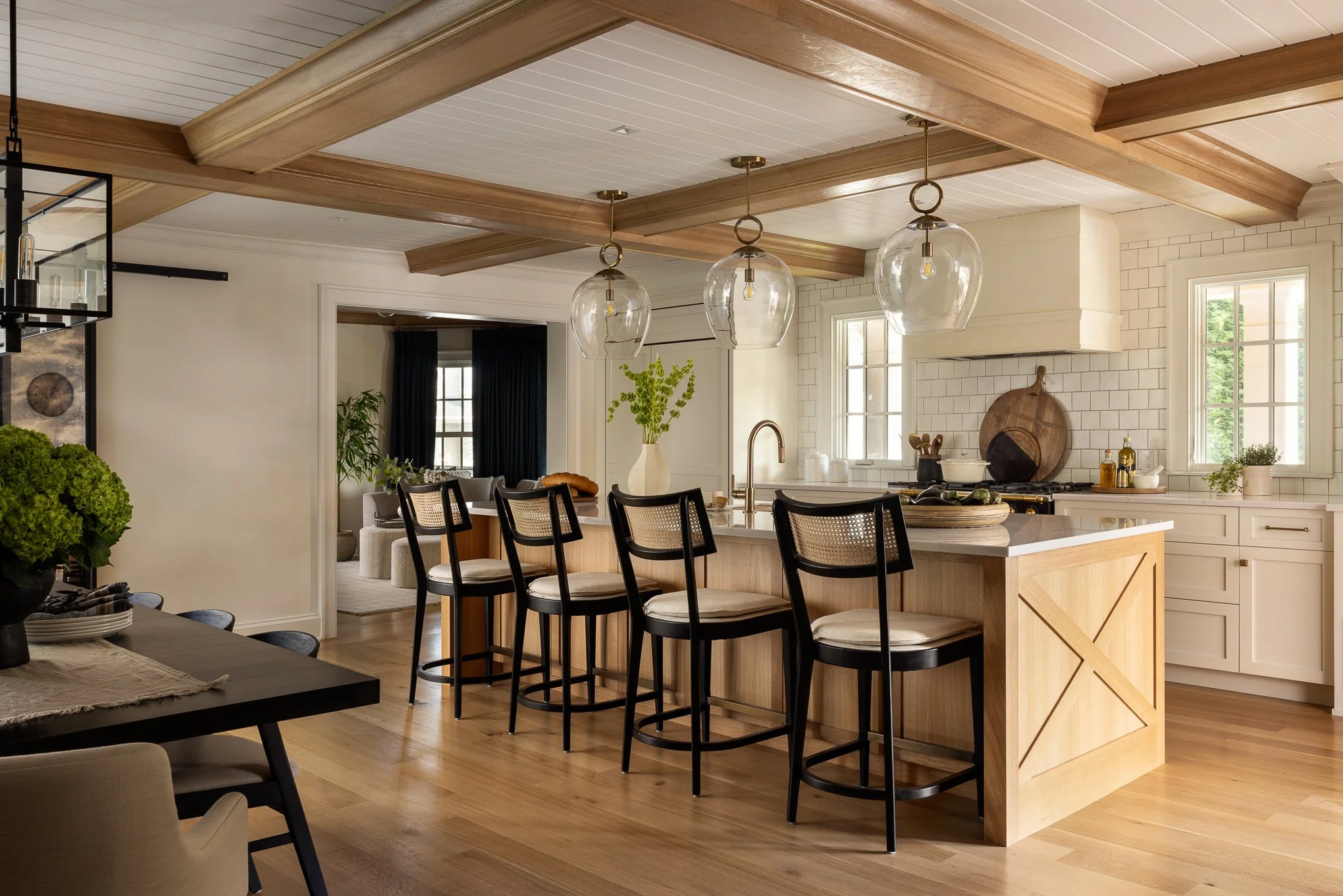
Transforming the Kitchen
The prewar kitchen was typically compact and isolated. Modern renovations often involve:
Creating visual or physical connections between the kitchen and dining room.
Borrowing light to make the kitchen feel more ambitious.
Introducing a breakfast room or pantry that reinforces the original architectural rhythm.
Instead of erasing walls entirely, we use molded portals, cased openings, or millwork thresholds—subtle transitions that allow spaces to flow but not blend indiscriminately.
Creating a Proper Primary Suite
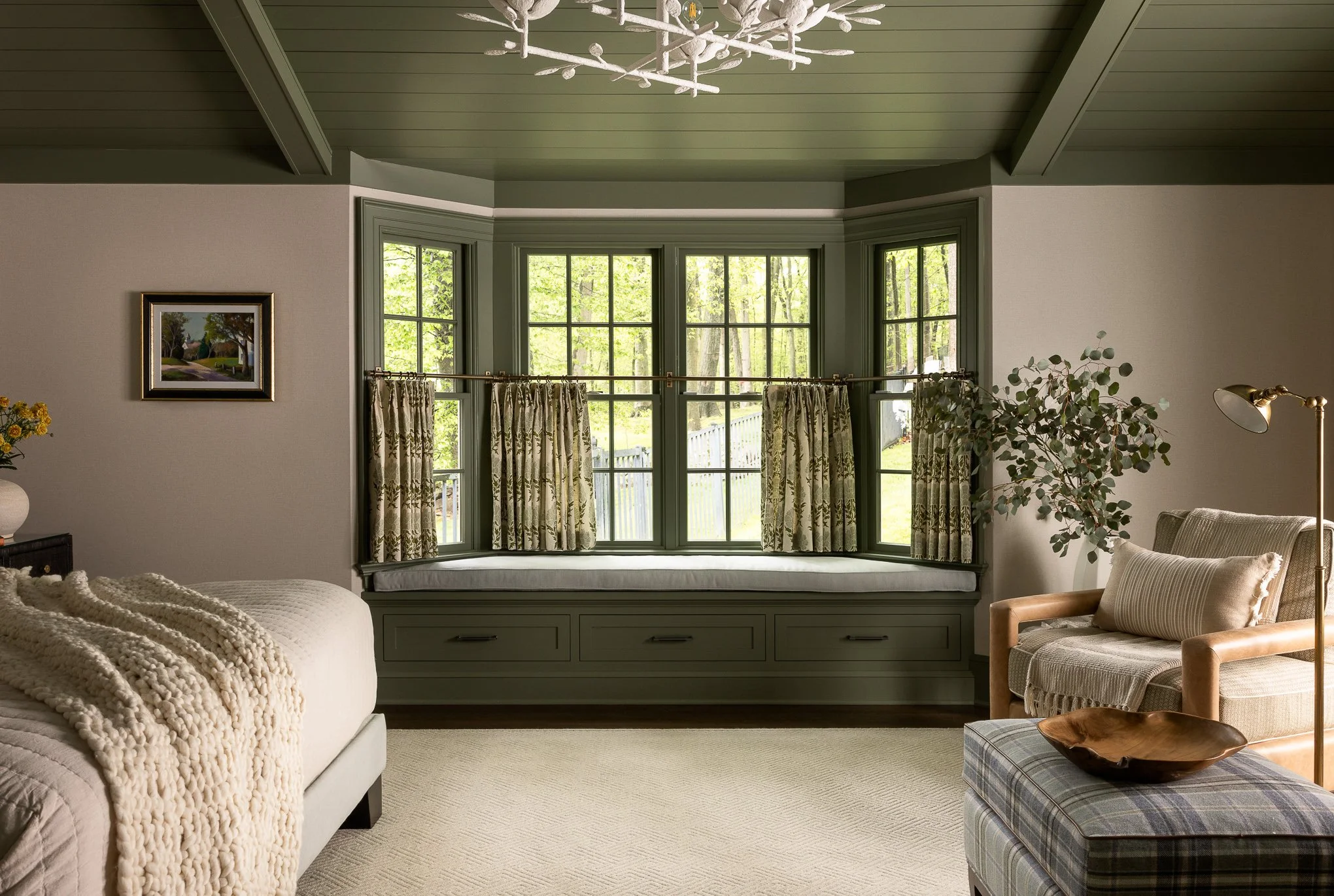
Many prewar bedrooms lack ensuite baths or storage. A thoughtful redesign might involve:
Combining adjacent bedrooms
Relocating closets to improve circulation
Designing ensuite baths that feel like contemporary sanctuaries while respecting classical proportion
Reclaiming Forgotten Corners
Staff rooms, oversized hallways, and underutilized utility spaces often hold the greatest design opportunities:
Home offices
Reading nooks
Laundry rooms
Wine storage
Secondary pantries
Every square foot should feel intentional and architecturally aligned.
Millwork as a Unifying Architectural Language
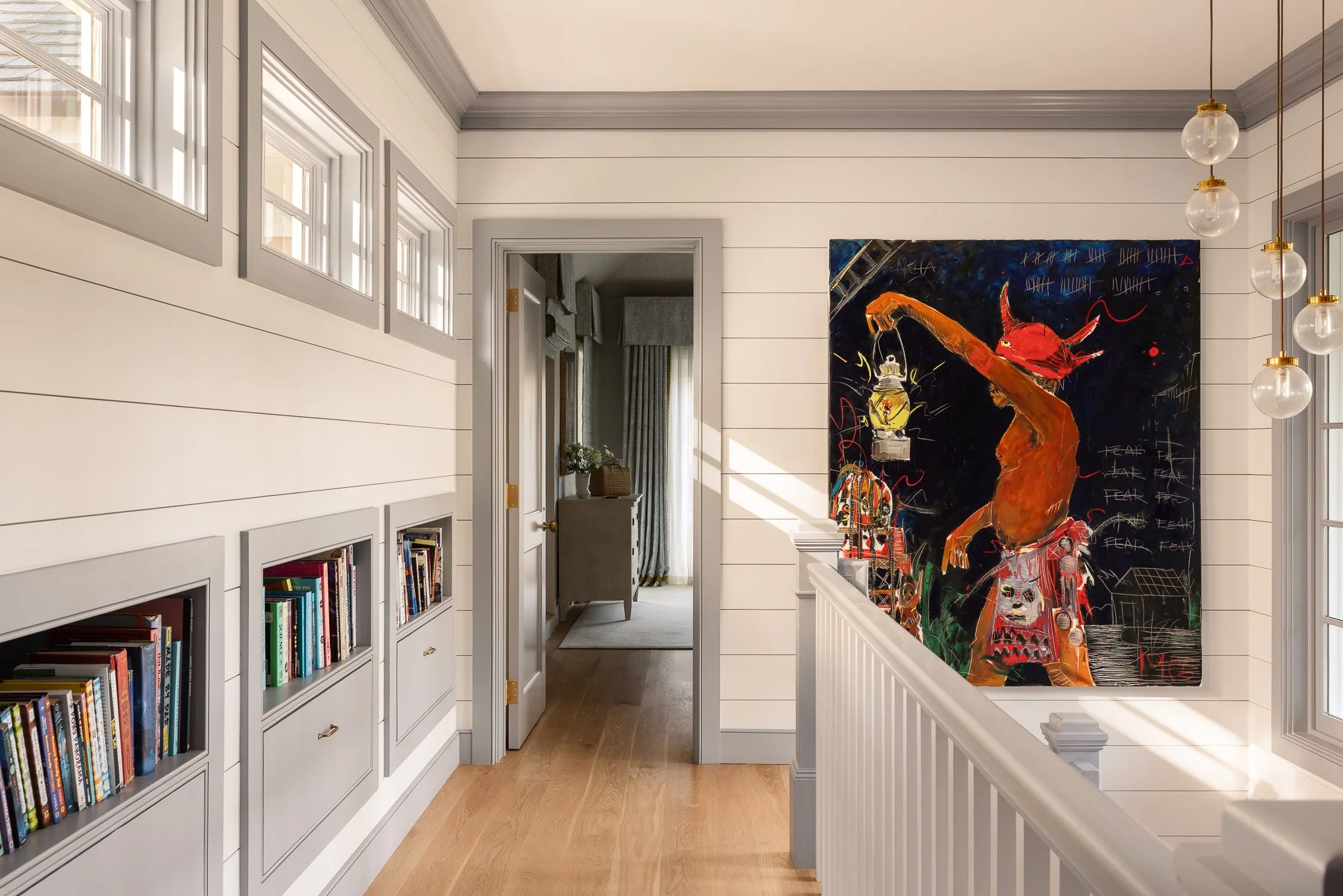
Millwork is where prewar renovations often find their soul. It has the power to unify old and new, restore missing details, and create a sense of cohesiveness.
Restoring Original Profiles
Many prewar apartments have seen decades of renovations that diluted or distorted original details. Reproducing:
Casing profiles
Baseboards
Picture rails
Crown moldings
Paneling
…allows the home to regain its architectural identity.
Modern Millwork, Quietly Integrated
Prewar apartments can achieve new levels of functionality when millwork is used with intention:
Built-in living room storage
Paneled appliance walls
Custom radiator enclosures
Library walls in walnut or oak
Murphy beds designed as architectural elements
Millwork should feel as though it could have always existed in the home—timeless, restrained, and proportionally correct.
⸻
Introducing Modern Systems Without Visual Disruption
The greatest technical challenge of prewar renovation is integrating modern mechanical systems. These buildings were never designed for central air, high-capacity lighting, or modern plumbing.
HVAC Integration
Successful HVAC design requires:
Slim-profile ductwork
Minimal, proportionally sensitive soffits
Concealed returns integrated into millwork
Thoughtful coordination with building limitations
We design systems that disappear visually, preserving ceiling heights and architectural purity.
Lighting
Prewar apartments benefit from layered lighting:
Picture lighting for art
Cove lighting to soften ceilings
Recessed fixtures placed thoughtfully, never in grids
Task lighting integrated into millwork
This enhances the architecture rather than flattening it.
Acoustics and Waterproofing
These upgrades, though invisible, drastically improve quality of life:
Acoustic underlayments
Floating floors
Bathroom waterproofing systems
Sound-isolating wall assemblies
These solutions bring prewar buildings up to modern standards of comfort without compromising their aesthetic integrity.
⸻
Materiality: A Dialogue Between Past and Present
Material selection is central to maintaining architectural authenticity.
Stone
Timeless stones—marbles, limestones, soapstones—honor classical sensibilities while offering durability.
Wood
We frequently use:
Restored or new herringbone floors
Quartersawn oak
Hand-selected walnut paneling
Plaster
Plaster brings depth, texture, and a handmade quality unmatched by drywall.
Metal
Unlacquered brass or steel-framed glass partitions introduce quiet contemporary moments without overwhelming the historic language of the apartment.
Materiality should feel both grounded and serene—an elevated palette that supports the architecture rather than competing with it.
⸻
Technology: Seamless and Invisible
Prewar apartments can embrace modern convenience while maintaining historical discretion.
Examples of Thoughtful Integration
WiFi access points hidden within millwork
Motorized shades recessed into ceiling pockets
Invisible speakers behind plaster
Televisions concealed in millwork or behind artwork
Centralized AV systems housed out of view
Technology should never announce itself; it should simply work elegantly in the background.
⸻
Why Architect-Led Design-Build Matters in Prewar Renovations
Prewar buildings come with layers of complexity—structural, regulatory, historical, and logistical. Architect-led design-build ensures continuity and accountability throughout the entire process.
Advantages of This Approach
Full control of design intent
Thorough coordination between architecture, millwork, and construction
Detailed management of co-op and landmark requirements
Predictable timelines and fewer surprises
Complete protection of architectural integrity
Design-build is not merely a project delivery method; it is a stewardship model that ensures every decision supports the long-term value of the home.
⸻
A Home That Honors Its History While Living for Today
A prewar apartment carries stories—architectural, cultural, and personal. Renovating these homes is a privilege and a responsibility. When approached with thoughtfulness, restraint, and technical mastery, these spaces become something rare: homes that are unmistakably historic, yet fully aligned with the demands of modern life.
The result is not a contradiction but a harmony—historic elegance shaped to meet modern performance, ready to be lived in, cherished, and passed on.
⸻
Build With Clarity, Craft With Purpose
Every exceptional home begins with a clear foundation: vision aligned with reality.
At MANNINO, our integrated process transforms complexity into confidence — ensuring every detail, from structure to finish, reflects the architecture’s intent.
Ready to begin your Feasibility Study?
Contact MANNINO to start your journey toward a home worthy of its setting — crafted with integrity, precision, and permanence.
⸻
Photography: MANNINO Project Portfolio
Written by: Rosario S. Mannino, AIA, LEED AP
© 2025 MANNINO. All Rights Reserved.