
The Case for Walnut: Why Richer Woods Are Replacing White Oak in Luxury Interiors
A Century of Wood Tone Trends
White oak has long held a place of reverence in American architecture. Its durability, neutral tone, and tight grain made it a favorite for craftsmen of the Arts & Crafts era, mid-century modernists, and today’s minimalist designers alike. It surged to popularity in the 2010s, where its blonde tones helped define the “modern farmhouse” and Scandinavian-inspired interiors. Paired with white walls and light furnishings, white oak offered serenity, lightness, and a sense of openness.
But design is cyclical.
Historically, luxury interiors favored richer tones—mahogany libraries, walnut wainscoting, paneled salons in European estates. These darker woods conveyed permanence and patina. And while white oak remains timeless in its own right, a new generation of homeowners is yearning for warmth, contrast, and a return to craftsmanship rooted in tradition.
⸻
The Walnut Revival
Among the woods making a resurgence, walnut stands apart. Native to North America, black walnut has long been prized for its strength, luster, and depth. It was once a status symbol—used in fine furniture, gunstocks, and cabinetry throughout the 18th and 19th centuries. Its natural color ranges from honey to deep chocolate, with a refined grain that adds movement without chaos.
Unlike white oak, which reflects light, walnut absorbs and softens it. The result is a richer, more intimate atmosphere—one that feels grounded rather than ethereal.
⸻
#StoneManor: A Modern Classic in Walnut
In our #StoneManor project, walnut became both backdrop and protagonist. We used it extensively across flooring, trim, ceilings, and built-ins to create a sense of material continuity. The result was a home that felt collected, not staged—where each room told its own story, yet belonged to a unified narrative.
⸻
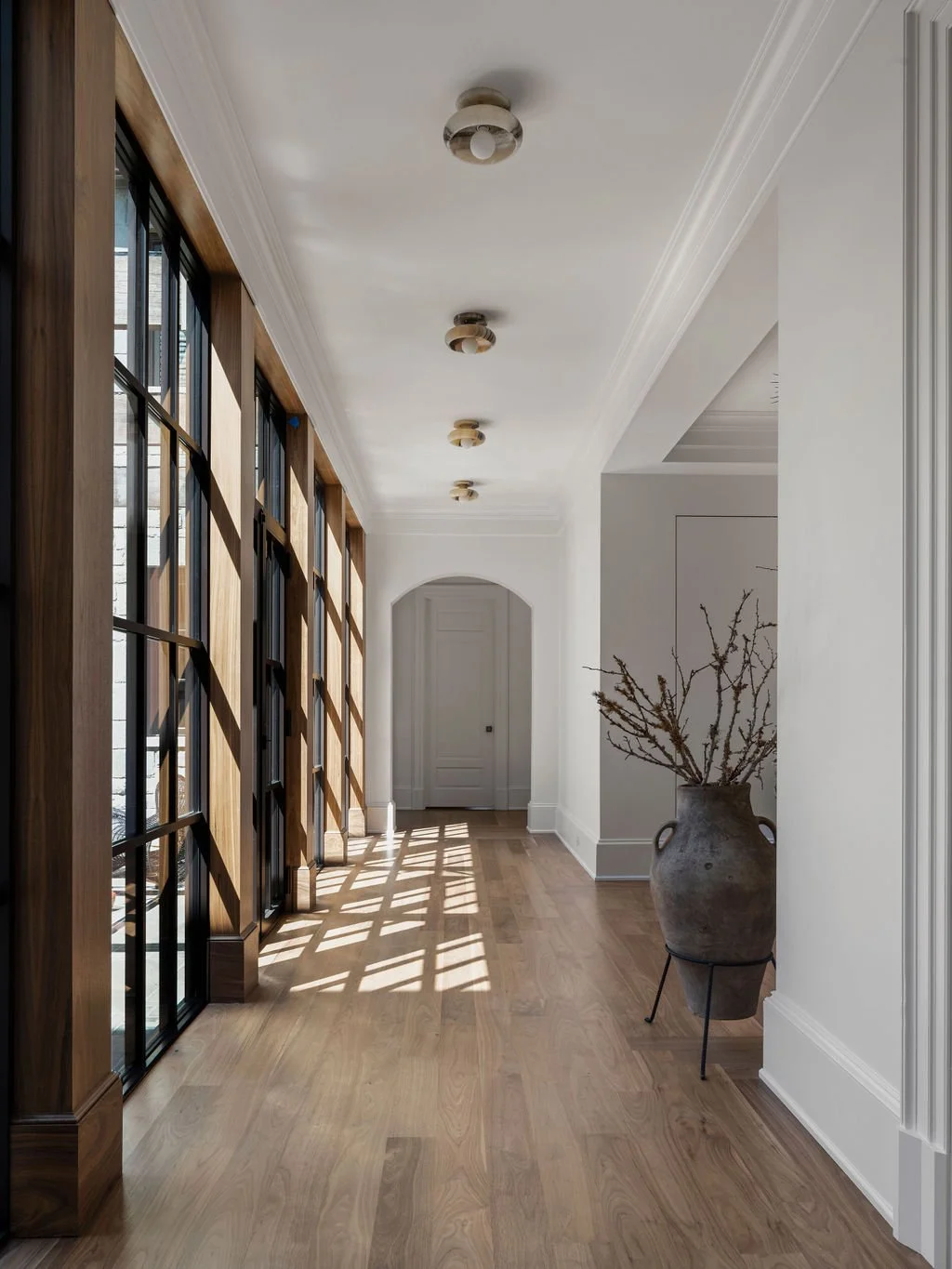
The entry hall introduces the warmth of natural walnut floors—setting the tone for material richness that unfolds throughout the home.
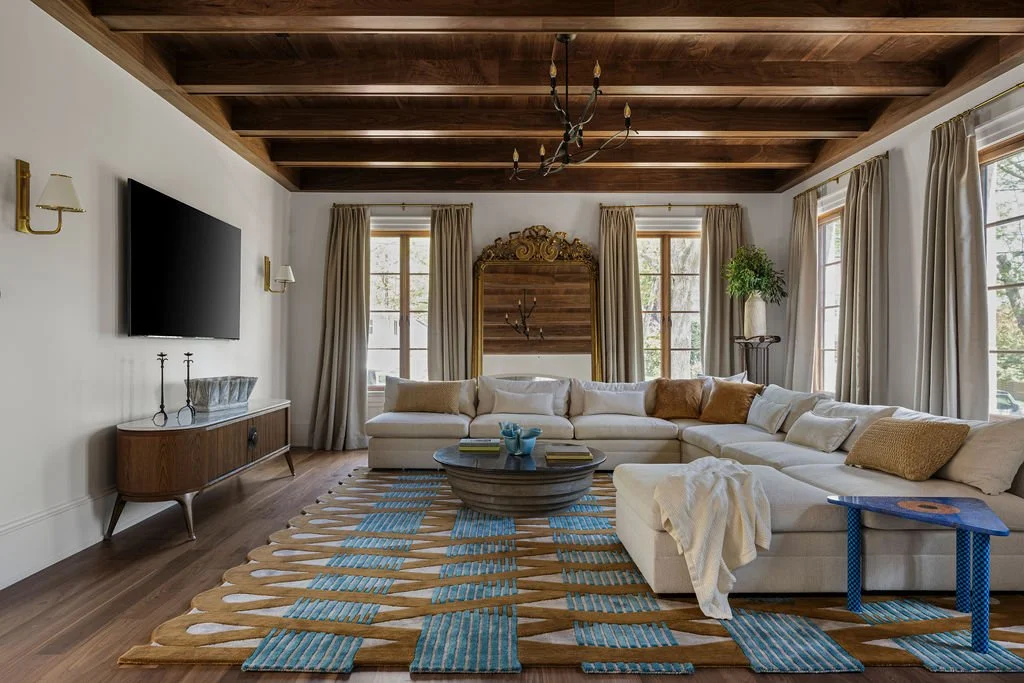
The family room features a walnut coffered ceiling and matching window casings. It offers architectural rhythm while balancing the volume of the space with warmth and intimacy.
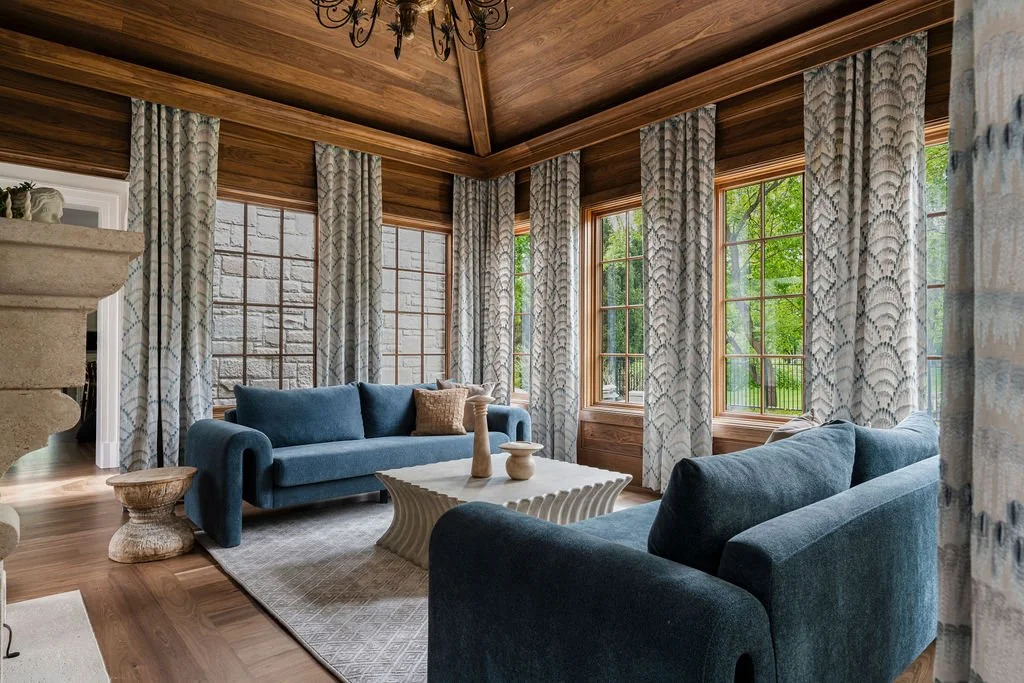
The Jewel Box—a vaulted room clad entirely in walnut millwork. Its cathedral ceiling, natural light, and plush textures create a luxurious retreat.
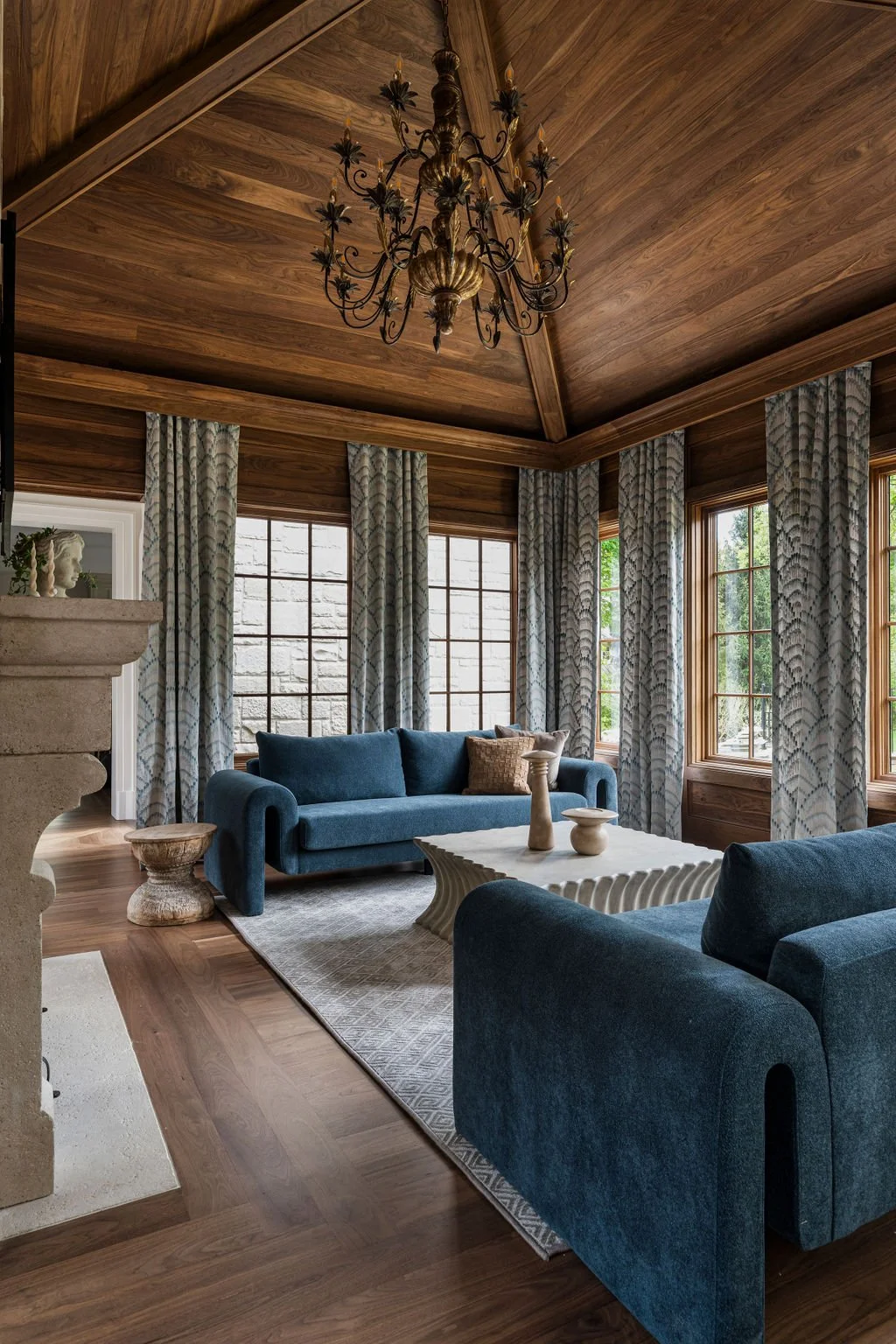
Another view of the Jewel Box, where every surface is wrapped in walnut, creating a unified and immersive architectural experience.
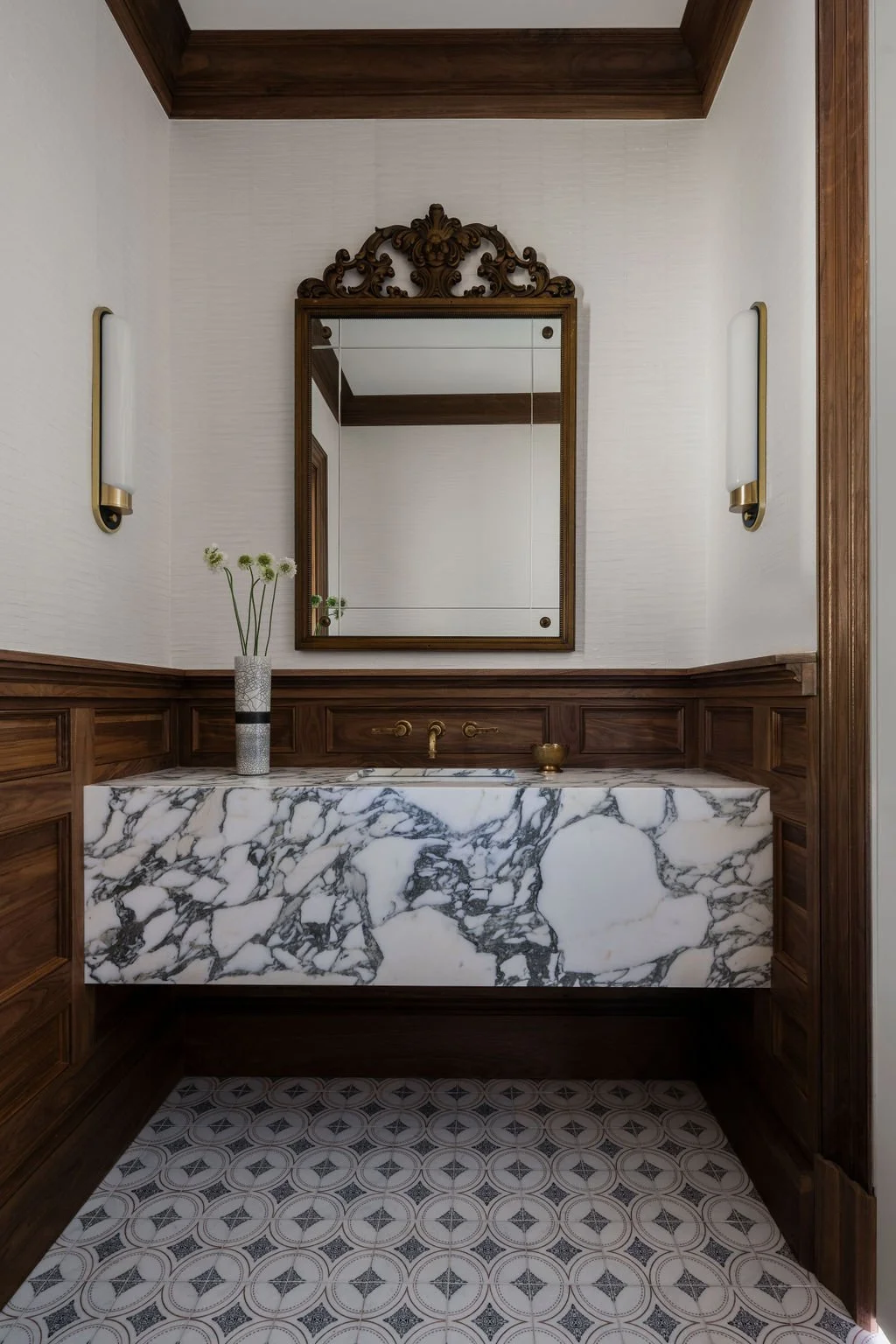
In the powder room, a sculptural Calacatta Viola sink contrasts with rich walnut wainscoting and brass fixtures. It’s a jewel-like vignette.
Throughout #StoneManor, the walnut was finished to highlight its natural tone—allowing the expressive grain and subtle color variation to shine.
⸻
Why Choose Walnut?
For those considering a departure from white oak, walnut offers a series of compelling benefits:
• Visual Depth: Walnut brings quiet drama to interiors, especially when paired with natural light, plaster walls, or honed stone.
• Aging Gracefully: Over time, walnut develops a rich patina—aging not into disrepair, but into distinction.
• Pairing Power: Its tonal versatility allows it to harmonize with both cool and warm palettes—brass, limestone, velvet, glass, and more.
⸻
Other Rich Wood Alternatives
Walnut isn’t the only option for those seeking warmth and weight:
• Smoked or fumed oak offers darker tones with visible grain.
• Sapele or mahogany introduce subtle red or amber undertones.
• Ebonized oak delivers a crisp, architectural edge in contemporary spaces.
The key is selecting a wood that not only suits the architecture but resonates emotionally—because the best homes aren’t just seen, they’re felt.
⸻
A Return to Substance
The shift from white oak to walnut isn’t simply about color—it reflects a broader change in the way we define luxury. Today’s most discerning clients want more than trends. They want homes that feel storied, rooted, and deeply personal. Materials like walnut connect us to craft, to history, and to the enduring beauty of the natural world.
At RS Mannino, we believe materiality is a language—and walnut speaks with quiet confidence.
